




நற்றிணை 278
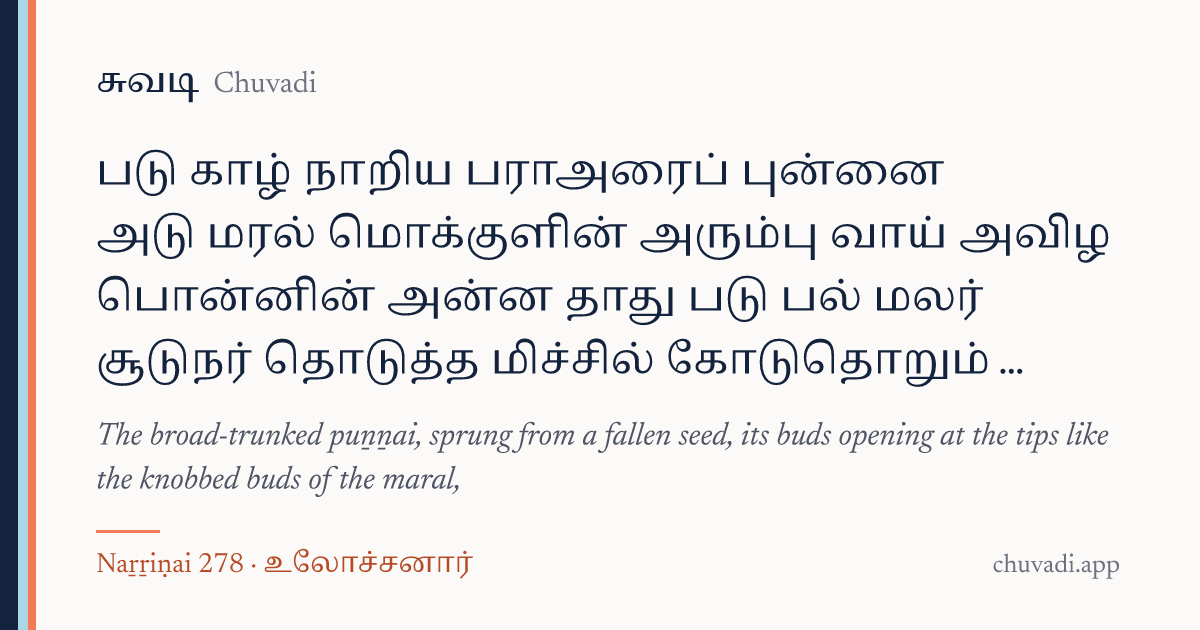
பாடல் · The poem
Tap a word to see where else it occurs.
பொருள் · Meaning in TamilAI
விழுந்த விதையிலிருந்து முளைத்து வளர்ந்த, பருத்த அடிமரத்தையுடைய புன்னை மரத்தின் அரும்புகள், மரலின் மொட்டுகளைப் போல நுனி அவிழ்கின்றன. பொன்னைப் போன்ற மகரந்தம் நிறைந்த அதன் பல மலர்களில், மாலை தொடுப்பவர்கள் தொடுத்து எடுத்தது போக மிச்சமாக இருக்கும் மலர்களும் உண்டு; ஒவ்வொரு கிளையிலும் நெய் கனிந்த பசுங்காய்கள் தொங்குகின்றன. அத்தகைய துறையையுடைய தலைவன் இனி நமக்குக் கொண்கனாக, கணவனாக ஆவான் என்பதை இப்போது அறிந்துகொண்டேன். ஏனென்றால், உப்பங்கழியின் சேற்றில் நடந்து வந்த திரண்ட கால்களையுடைய அத்திரிகளின் குளம்புச் சுவடுகளில் சிவந்த இறால்கள் ஒடுங்கியிருக்கின்றன; குளிர்காற்று வீசும் வெண்மணல் எங்கும் மாலைகளும் சிதறிக் கிடக்கின்றன.
நெய்தல் திணை; தோழி கூற்று. மணம் உறுதியானதைக் கண்டு தோழி மகிழ்ந்து தலைவியிடம் சொல்லியது. தலைவன் தன் சுற்றத்தோடு தேரில் வெளிப்படையாக வந்து மணம் பேசியதை அத்திரியின் குளம்புச் சுவடுகளும் சிதறிய மாலைகளும் காட்டுகின்றன. மரலின் மொட்டு என்ற உவமையின் சரியான பொருளும், மாலைகள் எவை என்பதும் உறுதியாகத் தெரியவில்லை.
ஆங்கிலம் · English translationAI
Translation
- The broad-trunked puṉṉai, sprung from a fallen seed,
- its buds opening at the tips like the knobbed buds of the maral,
- its many flowers full of pollen like gold,
- what the garland-makers have left after stringing: on every branch
- fresh fruits hang, heavy with oil: the lord of that shore,
- now I know he is truly to be our koṇkaṉ, our husband;
- for in the hoofprints of the sturdy-legged mules
- that have waded through the backwater mud, red shrimps lie hidden,
- and garlands too, all over the white sand in the cold wind.
What the poem says
The friend speaks to the heroine with delight: the marriage is now settled (colophon). The poem is by Ulōccaṉār, whose shore poems are full of precise detail.
The first five lines describe the puṉṉai tree of the hero's shore, grown from a seed that dropped there: its buds opening, its flowers full of golden pollen, enough of them left over even after the garland-makers have taken their share, and its branches hung with oily green fruit. A tree that gives its flowers and fruit freely suits the generous, settled life the friend now foresees.
The proof comes in the last three lines. On the backwater shore are the deep hoofprints of the mules (attiri) that pulled the hero's chariot through the mud, with red shrimps hiding in them, and garlands scattered over the sand. This seems to mean that the hero has come openly with his people, bringing gifts, to ask for the heroine's hand. The image of the maral buds in line 2 is uncertain, as is the exact sense of the garlands in line 9, which may be the remains of the visitors' decorations.