




நற்றிணை 279
பாடல் · The poem
Tap a word to see where else it occurs.
பொருள் · Meaning in TamilAI
வேப்ப மரத்தின் ஒளிரும் பழங்களைத் தின்று வெறுத்து, தேன் போன்ற சாறு நிறைந்த இருப்பையின் இனிய பழத்தை விரும்பி, இரவு முழுதும் பனியில் நனைந்து வருந்திய வௌவால், கிளைகள்தோறும் தொங்கிக்கொண்டு, நெய்யில் தோய்த்த திரியைப் போலக் குளிர்ந்த துளிகளைச் சொட்டுகிறது. பகலில் பாலை வழியில் அலைந்து களைத்த ஒளிரும் நிறமுடைய ஆண் விலங்கோடு போரிட்ட யானையின் கால்களைப் போல, பசித்த பெண்யானை உதைத்துப் பட்டையை உரித்த ஓமை மரத்தின் சிவந்த வரிகள், வெயில் காயும் நேரத்தில் பளபளக்கும் வழி அது. அவ்வழியில் நடந்து வருந்தி, என் அணிகலன் அணிந்த மகளின் பாதங்கள் சோர்ந்துபோயினவோ? பரல்கள் நிறைந்த வாயையுடைய அவள் சிலம்புகளைக் கழற்றும் மகிழ்ச்சியான சடங்கு கூட, பிறருடைய வீட்டிலேயே நடந்து முடிந்ததே!
பாலைத் திணை; நற்றாய் கூற்று. உடன்போக்கில் மகள் சென்ற பின் தாய் சொல்லியது. மணத்திற்கு முன் தன் வீட்டில் நடக்க வேண்டிய சிலம்பு கழிக்கும் சடங்கு மணமகன் வீட்டில் நடந்ததே என்பதே தாயின் தனித்துயரம். ஐந்து முதல் ஏழாம் அடிவரையுள்ள உவமையின் பொருள், குறிப்பாகப் புட்டாள் என்ற சொல்லின் பொருள், உறுதியாகத் தெரியவில்லை; யானையோடு போரிட்ட விலங்கு புலியாக இருக்கலாம்.
ஆங்கிலம் · English translationAI
Translation
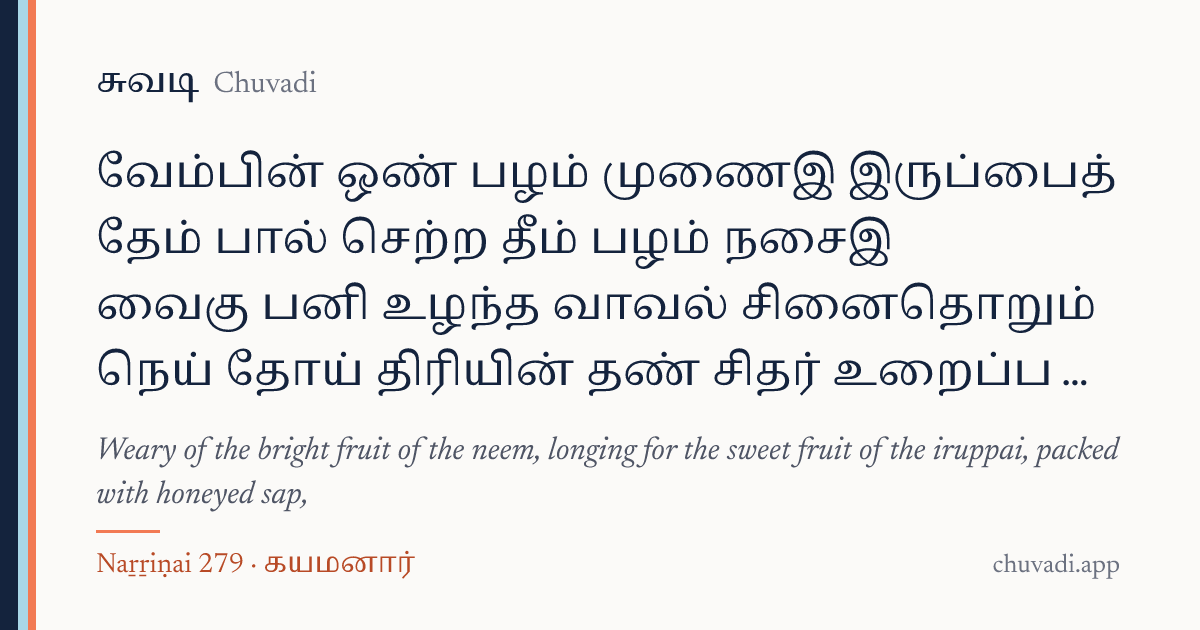
- Weary of the bright fruit of the neem, longing for the sweet fruit
- of the iruppai, packed with honeyed sap,
- the bat that has suffered the lingering dew, on branch after branch,
- drips cool drops like a wick soaked in oil;
- with the bright-hued male that has toiled through the wasteland by day
- the elephant fought; like its scored legs,
- the red-streaked trunks of the ōmai that the hungry she-elephant kicked
- glint in the hours when the sun burns, on the road where,
- toiling along the path, are they weary now, I wonder? The anklets with their crowded mouths,
- the happy rite of taking them off,
- was held in another's house: my jewelled daughter's feet.
What the poem says
Kayamaṉār, known for poems of the mother whose daughter has eloped, gives the mother's words here (colophon: the mother who has let her daughter go).
The wasteland she imagines is harsh and finely observed. A bat, tired of neem fruit and longing for the sweet iruppai, hangs from branch after branch, soaked by the night dew and dripping like a wick soaked in oil. An elephant has fought a bright-hued male beast, probably a tiger, though the text does not say so, and its scarred legs are compared to the red-streaked trunks of ōmai trees that a hungry she-elephant has kicked to strip the bark. These trunks glint in the burning sun along the road. Lines 5 to 7 are difficult, and the meaning of puṭ tāḷ in line 6, rendered "scored legs", is uncertain.
Her thought is for her daughter's feet. Are they tired from that road? The final lines name a particular grief. Before a girl married, there was a ceremony of removing her childhood anklets (cilampu kaḻi nōṉpu), normally held in her own home. Because she eloped, that happy rite was performed in another family's house, and the mother had no part in it.