




நற்றிணை 280
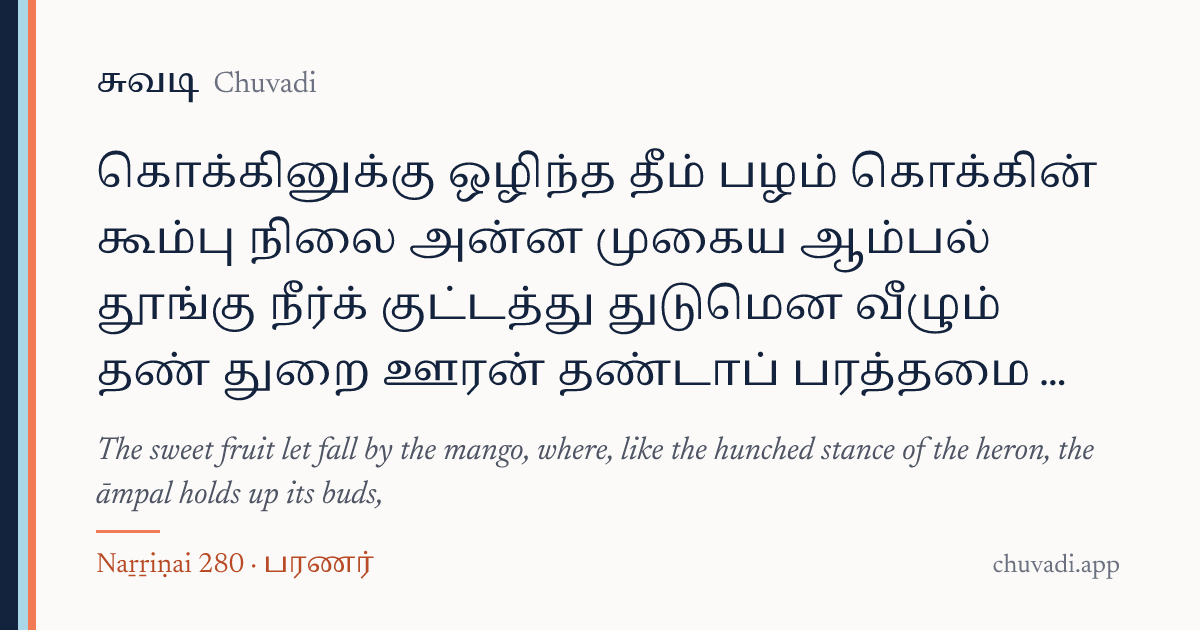
பாடல் · The poem
Tap a word to see where else it occurs.
பொருள் · Meaning in TamilAI
மாமரம் உதிர்த்த இனிய பழம், கொக்கு கூனி நிற்பது போன்ற மொட்டுகளையுடைய ஆம்பல் மலர்ந்திருக்கும், அசையாமல் தேங்கிய நீருடைய குட்டத்தில் துடும் என்று விழும் குளிர்ந்த துறையையுடைய ஊரன் அவன். தோழி, அவனுடைய ஓயாத பரத்தமையை எண்ணி ஊடல் கொள்ளாதே என்கிறாய். நான் ஊடமாட்டேன். ஏனென்றால், வயல் காவலர்கள் பழனக் குளத்து ஆமைகளின் பாசி படர்ந்த முதுகின் மேல் சுருண்ட நத்தைகளை உடைக்கும், தொன்றுதொட்டு வந்த வேளிருடைய குன்றூரைப் போன்ற என் நல்ல வீட்டில், பல விருந்தினர்களை உபசரிப்பதில் கை ஓய்வதே இல்லை; ஆகவே ஊடுவதற்கு எனக்கு நேரமே கிடைப்பதில்லை.
மருதத் திணை; தலைவி கூற்று. தலைவனை ஏற்கும்படி வேண்டி வந்த தோழிக்குத் தலைவி மறுத்துச் சொல்லியது; தலைவனை ஏற்று உபசரித்த பரத்தையைப் புகழ்ந்த தோழிக்குச் சொல்லியது என்றும் கொள்வர். ஊடமாட்டேன் என்று சொல்வதே நகைப்பான ஊடல்; விருந்தோம்பும் இல்லறக் கடமை தனக்கே உரியது என்று நினைவூட்டுகிறாள். கொக்கு என்ற சொல் மாமரத்தையும் பறவையையும் குறிக்கும் சிலேடை; தற்செயலாக நீரில் விழும் பழம் தலைவனின் பொழுதுபோக்கு இன்பங்களைக் குறிக்கலாம்.
ஆங்கிலம் · English translationAI
Translation
- The sweet fruit let fall by the mango, where, like the hunched
- stance of the heron, the āmpal holds up its buds,
- drops into the pool of still water with a plop:
- of the lord of such a town with cool shores, his endless whoring
- you tell me not to resent, friend. I will not resent it,
- for, as on the green-moss backs of the field-pond tortoises
- the field-watchmen crack open the spiral snails,
- like the hill town of the ancient, long-established Vēḷir, my
- good house is so busy feasting its many guests
- that I have no free hand, and so I cannot get round to it.
What the poem says
Paraṇar's heroine answers her friend. The colophon offers two settings: the friend has come asking her to let the straying hero back in, and she refuses; or the friend has come in praising the courtesan who took the hero in and attended on him, and the heroine responds.
The friend has asked her not to be angry at the hero's endless visits to courtesans. Her reply is a masterpiece of polite sarcasm. Very well, she will not sulk, because she has no time to: her house is like the hill town of the ancient Vēḷir chieftains, so full of guests to feed that she cannot spare a moment for resentment. Feeding guests was a central duty of the wife, and by stressing it she reminds everyone who is the true mistress of the household.
The opening image of the hero's town is an uḷḷuṟai. A ripe mango drops with a plop into a pond where water-lily buds stand up like hunched herons. The pun on kokku, which means both "mango" and "heron", links the two. The fruit falling by chance into the water may suggest the hero's casual pleasures. The picture of farm guards cracking snails on the mossy backs of tortoises is given as a sign of the Vēḷir town's rich and settled life; nothing more is known here of that town.