



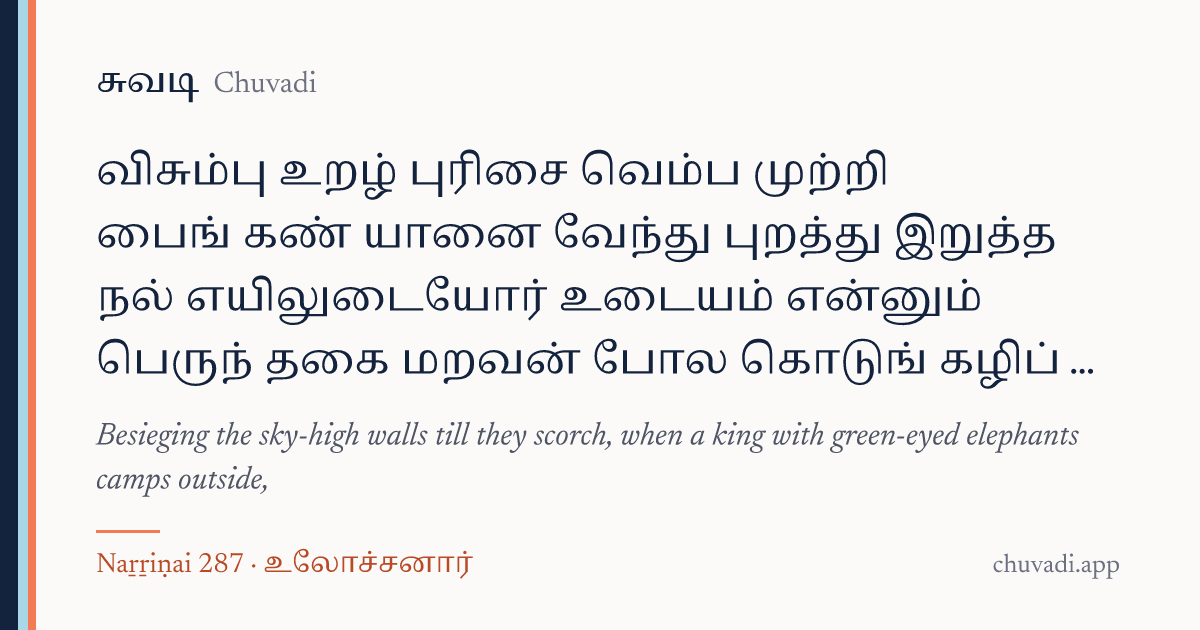

நற்றிணை 287
பாடல் · The poem
Tap a word to see where else it occurs.
பொருள் · Meaning in TamilAI
வானை அளாவும் மதில்கள் வெம்பும்படி முற்றுகையிட்டு, பசிய கண்களையுடைய யானைப்படையோடு வேந்தன் வெளியே பாசறை இட்டிருக்கும்போதும், சிறந்த கோட்டை எம்மிடமே உள்ளது என்று சொல்லும் பெருந்தகை வீரனைப் போன்றவன் அவன். வளைந்த கழியையும், பசிய இலைகளுடைய நெய்தல் பூக்கும் குளிர்ந்த நீரையும் உடைய கடற்கரைத் தலைவன் அவன். அச்சம் தரும் முதலை எல்லோரையும் நடுங்கச் செய்யும் பகைக்கும் அஞ்சாமல், காதல் பெருகியதால் அவன் வந்த அந்நாளில், என் நெஞ்சம் சற்றும் தயங்காமல் அவனிடம் சென்றது. இப்போது, நள்ளிரவில் பறவைகளின் ஒலியைக் கேட்கும்தோறும், இது அவனுடைய தேர் மணியின் தெளிந்த ஓசையோ என்று எண்ணி, ஊரெல்லாம் உறங்கும் இரவிலும் அது தூக்கத்தை மறந்துவிட்டது.
நெய்தல் திணை; வீட்டில் காவல் மிகுந்ததால் தலைவனைச் சந்திக்க முடியாமல் வருந்திய தலைவி சொன்னது. முற்றுகைக்கு அஞ்சாத வீரன் உவமை தலைவனின் அஞ்சாமையைக் குறிக்கிறது; காவலால் சூழப்பட்டும் தளராத தலைவியின் நெஞ்சத்தையும் அது சுட்டக்கூடும். பைங்கண் என்ற சொல்லின் சரியான பொருள் உறுதியாகத் தெரியவில்லை.
ஆங்கிலம் · English translationAI
Translation
- Besieging the sky-high walls till they scorch,
- when a king with green-eyed elephants camps outside,
- saying, "We are the ones who hold the strong fort,"
- like a noble warrior, the man of the curving backwater,
- lord of the cold-watered shore where neytal grows with green leaves,
- not afraid of the dread crocodile's menace that makes all tremble,
- on the day he came, so great was his desire,
- my heart went out to him and never held back, and now,
- each time it hears the cry of birds in the dead of night,
- thinking, "Is that the clear sound of his chariot bells?"
- even in the night when the whole town sleeps, it has forgotten sleep.
What the poem says
The heroine speaks, unable to bear the strict guarding her family has put on her; the colophon calls it kāppu mikuti, "excess of watch". She cannot go out to meet the hero, and so she lies awake hearing his chariot in every bird-call.
The opening simile comes from war. A king's army with its elephants has surrounded a fort whose walls reach the sky, and yet a noble defender inside says, "We still hold this fort." As the lines run, the simile belongs to the hero: like that warrior he is fearless, and he came to her through backwaters full of crocodiles, driven by desire. The siege also fits her own position, closed in by watchers, so the image may point at her heart as well, holding out under siege and refusing to give him up.
The close is a common neytal picture: the night-cries of shore birds, the hope of a chariot's bells, and a sleepless girl in a sleeping town. "Green-eyed" (paiṅkaṇ) is a standard word for elephants; its exact sense, perhaps "small-eyed" or "with tawny eyes", is not certain.