



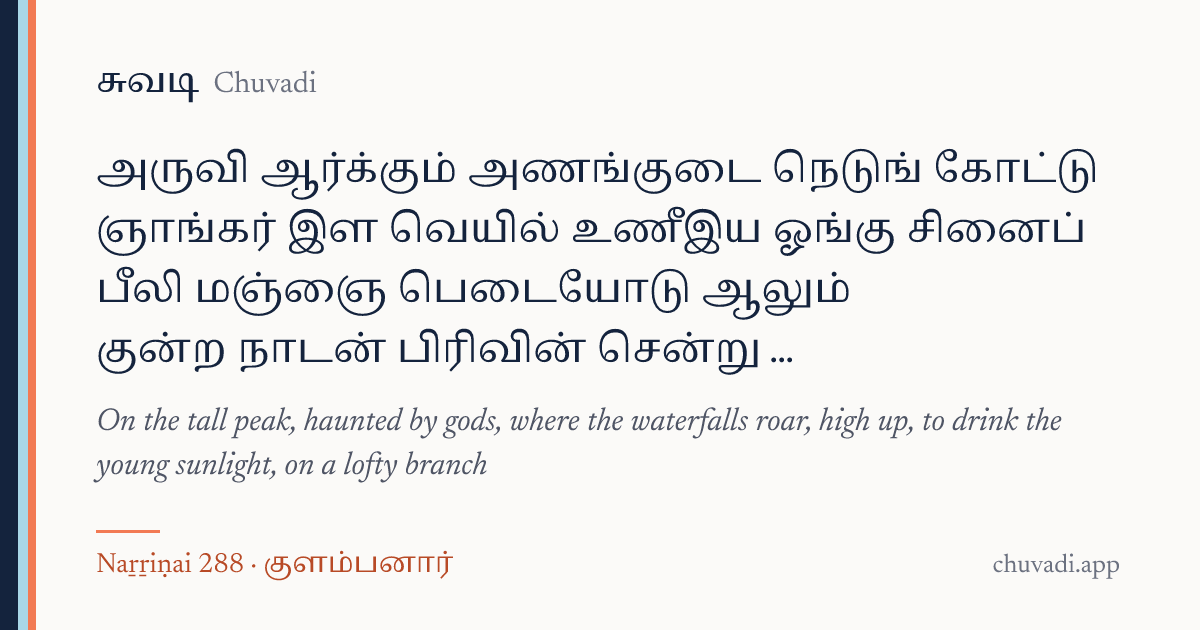

நற்றிணை 288
பாடல் · The poem
Tap a word to see where else it occurs.
பொருள் · Meaning in TamilAI
அருவிகள் முழங்கும், தெய்வம் உறையும் நீண்ட மலையுச்சியில், உயரத்தில் இளவெயிலை நுகர்வதற்காக, உயர்ந்த கிளையில் தோகை மயில் தன் பெடையோடு ஆடுகிறது. அத்தகைய குன்ற நாட்டையுடையவனின் பிரிவால் வந்து உன் அழகிய நெற்றியில் பரவிய பசலையைக் கண்டு, அன்னை, அறிவு முதிர்ந்த மூதாட்டிகளோடு நெல்லை முன்னே பரப்பி வைத்துக் கட்டுவிச்சியிடம் குறி கேட்பாளானால், மலையில் விளைந்த தினைப்புனத்தில் பால் நிறைந்த செழித்த செந்தினைக் கதிர்களை உண்ண வரும் சிறு கிளிகளை ஓட்டவே நாம் சென்றோம்; அதற்காக இவளை நெடுவேள் பற்றிக்கொண்டான் என்று அந்தக் கட்டுக் குறி சொல்லுமோ?
குறிஞ்சித் திணை; தலைவன் வேலிப்புறம் கேட்கும்படி, வெறியாட்டு நிகழப்போவதை அறிவித்துத் தோழி மணம் செய்ய வற்புறுத்தியது. பாடலில் சொல்லப்படுவது நெல் வைத்துப் பார்க்கும் கட்டு; நெடுவேள் என்பது முருகன். பெடையோடு இன்பமாக ஆடும் மயில், தலைவனும் தலைவியும் வெளிப்படையாக இணைந்து வாழ வேண்டும் என்பதை இறைச்சியாகக் குறிக்கிறது.
ஆங்கிலம் · English translationAI
Translation
- On the tall peak, haunted by gods, where the waterfalls roar,
- high up, to drink the young sunlight, on a lofty branch
- the plumed peacock dances with his mate:
- from the parting of the man of that hill country, there came
- pallor spreading over your fine brow; seeing it, mother,
- with the old, wise women, setting paddy before her,
- if she asks the kaṭṭu diviner, then, though on the mountain
- from the rich ears of red millet, full of milk, in the field
- we went to drive away the little parrots, about this
- will it say, "Great Vēḷ has seized her", that divination?
What the poem says
The friend speaks to the heroine while the hero listens outside the fence. The colophon says she lets him know a veṟi rite is coming and urges him to marry. The poem itself describes kaṭṭu, the divination in which a woman diviner reads grains of paddy laid out before her; the two belong together in the same household response to a girl's unexplained illness.
The hero has gone away for a while, and pallor has spread on the heroine's brow. Her mother, with the experienced older women, will call in the diviner. The friend's worry, voiced with mock innocence, is what the grains will say: that Murukaṉ, here called Neṭu Vēḷ, "the great Vēḷ", has possessed her, all because they went up to the millet field to chase off parrots. The truth, of course, is that the field is where she met her lover.
The opening scene is the hero's country: a sacred peak loud with falls, and a peacock dancing with his mate in the morning sun. As iṟaicci it shows creatures living openly together, as the hero and heroine cannot. Let him marry her before the rite turns the household against them.