



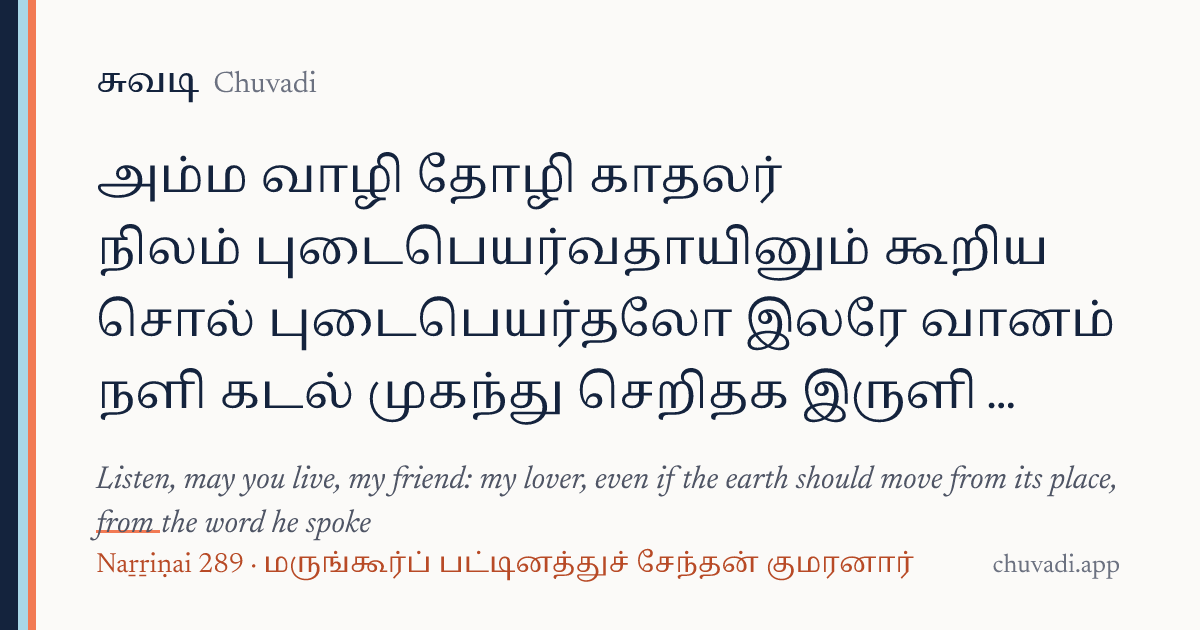

நற்றிணை 289
பாடல் · The poem
Tap a word to see where else it occurs.
பொருள் · Meaning in TamilAI
கேள், தோழி, நீ வாழ்க! நிலமே தன் இடத்தைவிட்டுப் பெயர்ந்தாலும், என் காதலர் தாம் சொன்ன சொல்லிலிருந்து பெயரமாட்டார். ஆனால் இப்போது வானம், பரந்த கடலின் நீரை முகந்துகொண்டு, அடர்த்தியாக இருண்டு, மிகுந்த மழையைப் பொழிந்து, கடுமையான இடிக்குரலை மீண்டும் மீண்டும் முழக்கி, என் அருகிலேயே கார்காலத்தை உண்டாக்கிவிட்டது. இந்நிலையில், முல்லை நிலத்துக் கோவலர் இரவில் குளிர்காயக் கொளுத்தி விட்டுச்சென்ற பெரிய மரத்தின் ஒடிந்த கட்டையைப் போல, அருள் காட்டுவார் யாரும் இல்லாதவளாய் நான் இரங்கத்தக்கவளாய் இருக்கிறேன்.
முல்லைத் திணை; பிரிவுக் காலத்தில் கார்காலம் வந்ததைக் கண்டு தலைவி தோழியிடம் சொன்னது. தலைவன் திரும்புவதாகச் சொன்ன பருவம் வந்தும் அவன் வரவில்லை. மழையில் புகைந்து எரியும் கைவிடப்பட்ட கட்டை, தனியாக மெல்ல மெல்ல வெந்து வாடும் தலைவியைக் குறிக்கிறது. அருள் இலேன் என்பதற்கு அருள் செய்வார் இல்லாதவள் என்பதே பொருத்தமான பொருளாகத் தோன்றுகிறது.
ஆங்கிலம் · English translationAI
Translation
- Listen, may you live, my friend: my lover,
- even if the earth should move from its place, from the word he spoke
- he would never move. And now the sky,
- scooping water from the vast sea, darkening densely,
- pouring thick rain, sounding its harsh voice again and again,
- has made the rainy season here, beside me. Meanwhile,
- like the log the cowherds of the scrubland lit at nightfall,
- a broken piece of some great tree,
- I am left with no one's grace; how pitiable I am!
What the poem says
The heroine speaks to her friend when the rainy season arrives while her lover is still away; the colophon says simply that she speaks on seeing the season. In mullai, the tiṇai of patient waiting, the coming of the rains is the time the hero promised to return.
She begins with complete faith: the earth itself might shift, but he would never go back on his word. Then the sky answers her, as it were, with the season itself: clouds that drink the sea, dark and heavy, thundering and pouring. The promise and the rain have both come, and he has not.
Her closing simile is quiet and bleak. Cowherds on the edge of the scrubland light a broken log of some big tree for warmth at night and leave it; in the rain it smoulders on, half burnt and unwanted. So she burns slowly, forsaken. The phrase aruḷ ilēṉ is usually taken as "I have no one to show me grace", though it could also be read as "I am without mercy toward myself"; the first suits the poem better.