



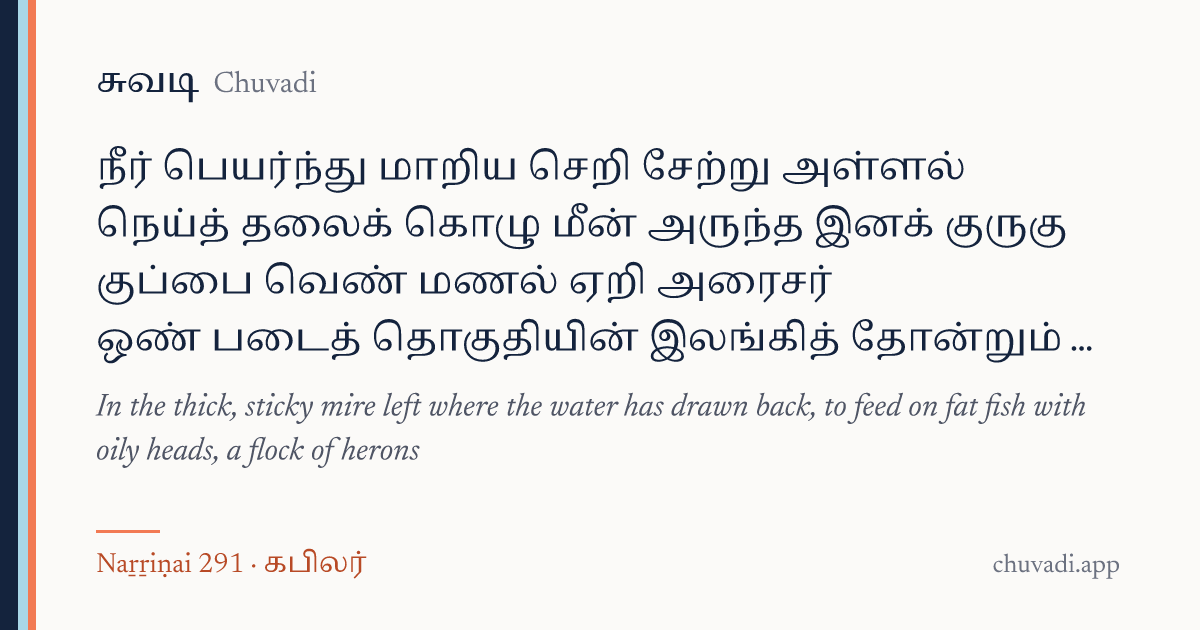

நற்றிணை 291
பாடல் · The poem
Tap a word to see where else it occurs.
பொருள் · Meaning in TamilAI
நீர் வடிந்து நிலைமாறிய, அடர்ந்த சேறு நிறைந்த சதுப்பில், நெய் போன்ற தலையுடைய கொழுத்த மீன்களை உண்பதற்காகக் கூட்டமான நாரைகள் குவிந்த வெண்மணல் மேட்டில் ஏறி, அரசர்களுடைய ஒளிரும் படைத்தொகுதியைப் போல விளங்கித் தோன்றுகின்றன. அத்தகைய குளிர்ந்த பெருங்கடல் துறையை உடைய தலைவனிடம், பாணனே, நீயும் கண்டதைக் கண்டபடியே சொல்; இதை எடுத்துக்கொள். பெரிய முள்ளூரின் மன்னன் குதிரை மேல் ஏறிச் சென்று மாலைப்பொழுதில் கவர்ந்து கொண்டுவந்த கூட்டமான பசுநிரைகளை இழந்த பல பசுக்களின் உரிமையாளரைப் போல, இவளுடைய அழகு அழிந்துவிட்டது.
நெய்தல் திணை; தலைவனுக்காகத் தூது வந்த பாணனிடம், தலைவியின் உள்ளக் கருத்தை அறிந்த தோழி சொன்னது. முள்ளூர் மன்னன் என்பவன் மலையமான் காரி என்று பொதுவாகக் கருதப்படுகிறான். ஆநிரை முழுவதையும் இழந்தவர்போல் தலைவி தன் நலனை இழந்தாள் என்பது உவமை. எளிய இரைக்காகக் கூடும் நாரைகள் தலைவனின் பரத்தையரைக் குறிக்கலாம் என்பது ஊகமே.
ஆங்கிலம் · English translationAI
Translation
- In the thick, sticky mire left where the water has drawn back,
- to feed on fat fish with oily heads, a flock of herons
- climbs onto the heaped white sand, and like kings'
- bright massed armies they appear, shining:
- to the lord of the shore of the cool, vast sea, you too
- say it just as you have seen it; take this, bard.
- Like those whose herds the king of great Muḷḷūr, riding his horse,
- carried off at nightfall, a whole line of cattle,
- like those owners of many cows, ruined is her beauty.
What the poem says
The heroine's friend speaks to the bard who has come as the hero's messenger, and the colophon says she speaks knowing the heroine's mind. She will not plead; she tells the bard to carry back a plain report of what he sees.
The herons gathered on the white sand to eat the fish stranded in the mud, gleaming like a king's army drawn up for battle, give the poem its neytal setting. They may also hint at the many women the hero now enjoys, crowded where easy prey is left. That is a reading of the image, not something the poem states.
The final simile is a cattle raid. The king of Muḷḷūr, a hill-town usually linked with the chieftain Malaiyamāṉ Kāri, rides out on his horse and drives off a whole herd at nightfall. The owners, rich in cows that morning, are left with nothing; just so the heroine's beauty has been carried off and ruined. A bard as go-between for a straying husband is usually a marutam theme, so the neytal label rests mainly on the shore scene.