



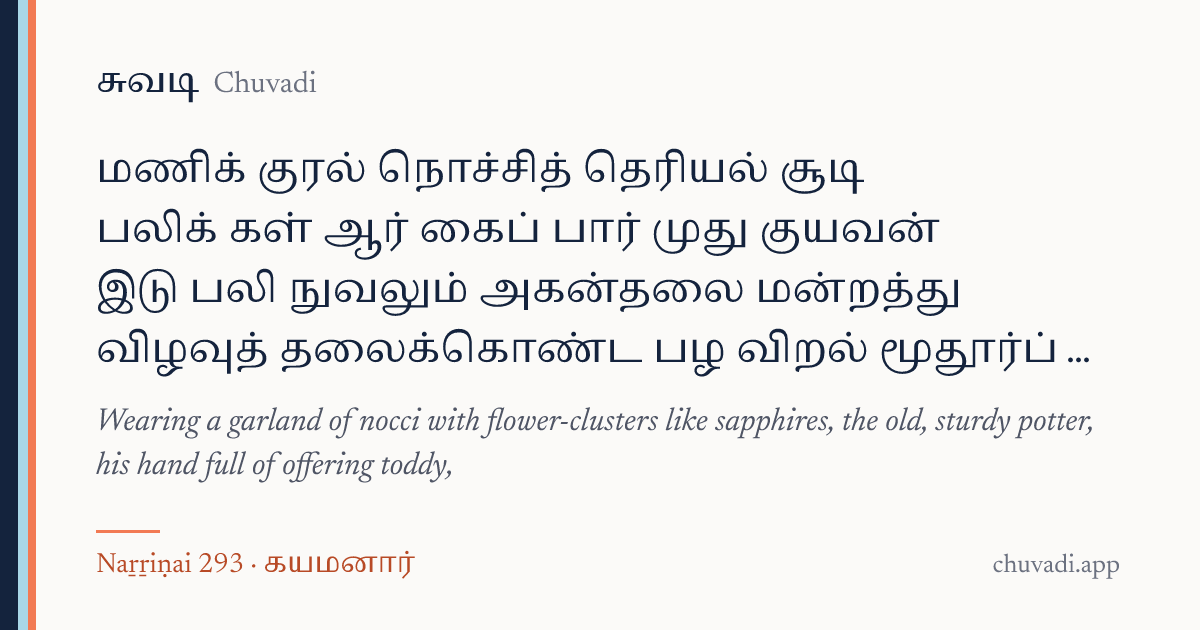

நற்றிணை 293
பாடல் · The poem
Tap a word to see where else it occurs.
பொருள் · Meaning in TamilAI
நீலமணி போன்ற பூங்கொத்துகளையுடைய நொச்சி மாலையைச் சூடி, பலியாகப் படைக்கும் கள்ளை ஏந்திய கையுடைய முதிய வலிய குயவன், இடவேண்டிய பலிப்பொருள்களை அறிவிக்கிறான்; விழாக் கொண்டாட்டம் தொடங்கிய, பழைய பெருமையுடைய இந்த மூதூரின் அகன்ற மன்றத்தில் அது நடக்கிறது. என் வீட்டில் இருந்த, அடர்ந்த கூந்தலுடைய என் மகளைத் தன் இனிய சொற்களால் இணங்கச் செய்து, அவளைக் கூட்டிக்கொண்டு உடன்போக்குச் செல்லத் துணிந்த அந்தக் கல்நெஞ்சக் காளையைப் பெற்ற தாய், மலர் போன்ற கண்களையுடைய இளம்பெண்களின் கூட்டத்தைக் காணும்தோறும், என்னைப் போலவே பெருந்துயரத்தால் நடுங்கட்டும்!
பாலைத் திணை; மகள் தலைவனோடு உடன்போக்குச் சென்றபின் வெறுமையான வீட்டில் மயங்கிய நற்றாய் சொன்னது; தலைவனைச் சார்ந்தவரைக் கண்டு சொன்னதாகவும் கொள்ளலாம் என்கிறது கொளு. ஊர் விழாவில் இளம்பெண்கள் கூடும் காட்சி மகள் இல்லாத குறையை மிகுவிக்கிறது. அவனைப் பெற்ற தாயும் இத்துயரை அறியட்டும் என்ற வேண்டுதல் சாபம் போல ஒலிக்கிறது.
ஆங்கிலம் · English translationAI
Translation
- Wearing a garland of nocci with flower-clusters like sapphires,
- the old, sturdy potter, his hand full of offering toddy,
- calls out the offerings to be laid, in the broad common ground
- of this ancient town of old glory, now caught up in its festival;
- each time she sees the flower-eyed band of girls, like me
- may she tremble with a great ache, the woman who, my household's
- girl with the thick hair, having won her over with his words,
- taking her, made up his mind to run off with her,
- bore that hard-eyed young bull: that mother!
What the poem says
The heroine's mother speaks after her daughter has eloped with her lover (uṭaṉpōkku), a common pālai situation. The colophon says she speaks bewildered in the empty house, or alternatively on seeing the young man's own people.
The town is celebrating a festival. In the open common ground an old potter, who in this village also serves as a priest, wears a garland of nocci flowers, holds the toddy offering and calls out the offerings to be laid down. The girls of the town come out in a bright crowd, and the mother, looking at them, sees that her own daughter is not among them.
Her wish turns into something close to a curse. Whoever bore that hard-hearted youth, the "young bull" (kāḷai) who talked her daughter round and carried her off, may she too feel this ache whenever she sees the festival girls. Underneath the anger there is plain grief: the festival, the girls and the potter's calls all mark the gap left in her own house.