



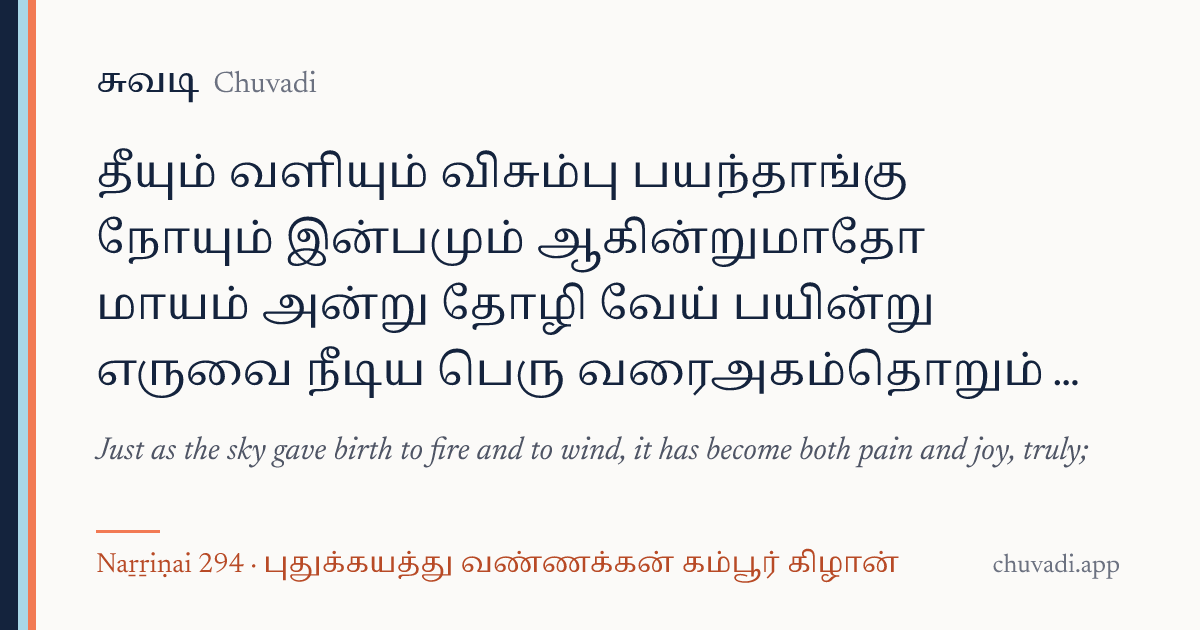

நற்றிணை 294
பாடல் · The poem
Tap a word to see where else it occurs.
பொருள் · Meaning in TamilAI
ஒரே வானம் நெருப்பையும் காற்றையும் தோற்றுவித்ததுபோல, அது துன்பமாகவும் இன்பமாகவும் ஆயிற்று. தோழி, இது மாயம் அன்று! மூங்கில் அடர்ந்து, எருவைப் புல் உயர்ந்து வளர்ந்த பெரிய மலையின் ஒவ்வொரு பள்ளத்திலும், நெடுங்காலம் நிலைத்த வலிமையோடு பகை மிகுந்து சினந்து கொன்ற யானையின் கொம்பைக் கண்டாற்போல, சிவந்த பக்கங்களையுடைய கொழுத்த மொட்டுகள் மலர்ந்த காந்தள், மலை முழுவதும் மணம் கமழும் சாரலையுடைய, ஒளிரும் மலைநாட்டுத் தலைவனின் அகன்ற மார்புதான் அது.
குறிஞ்சித் திணை; மணவீட்டுக்குள் சென்ற தோழி தலைவியின் அழகைக் கண்டு சொன்னது. களவுக் காலத்தில் துன்பம் தந்த அதே மார்பு இப்போது மணத்தால் இன்பம் தருகிறது. குருதி படிந்த யானைக் கொம்பைப் போன்ற காந்தள் மொட்டு, கொடுமையும் மணமும் ஒன்றாய் இருப்பதைக் காட்டி, துன்பமும் இன்பமும் ஒருங்கே வந்ததற்கு ஒப்பாகிறது. யானையைக் கொன்றது எது என்று பாடல் சொல்லவில்லை; புலி என்று கொள்வது மரபு.
ஆங்கிலம் · English translationAI
Translation
- Just as the sky gave birth to fire and to wind,
- it has become both pain and joy, truly;
- this is no trick, my friend. Where bamboo grows thick
- and eruvai grass stands tall, in every hollow of the great mountain,
- raging in fierce enmity with its age-old strength,
- the tusk of the elephant it has killed, as it looks,
- so the kāntaḷ, its plump red-sided buds burst open,
- fills the whole hillside with fragrance, on the slopes
- of the man of the shining mountain land: his broad chest.
What the poem says
The friend speaks after entering the wedding house and seeing the heroine's new beauty (the colophon's setting). The secret love has ended in marriage, and she reflects on what the hero has meant to her companion.
The opening is a small piece of cosmology: from the one sky came both fire and wind, things opposite in nature. So the hero's broad chest, a single thing, has brought both pain, in the days of secret meetings and separation, and joy, now that they are married. "This is no trick" insists that the paradox is real.
The landscape is his mountain, with its thick bamboo, tall eruvai grass and the kāntaḷ in bloom. The plump buds, red along their sides, look like the tusk of an elephant killed in a fierce fight, still streaked with blood; the killer is not named, though a tiger is the usual enemy. The image joins violence and fragrance, as the poem joins pain and joy. Eruvai here seems to be a tall grass or reed; elsewhere the word can mean a vulture.