



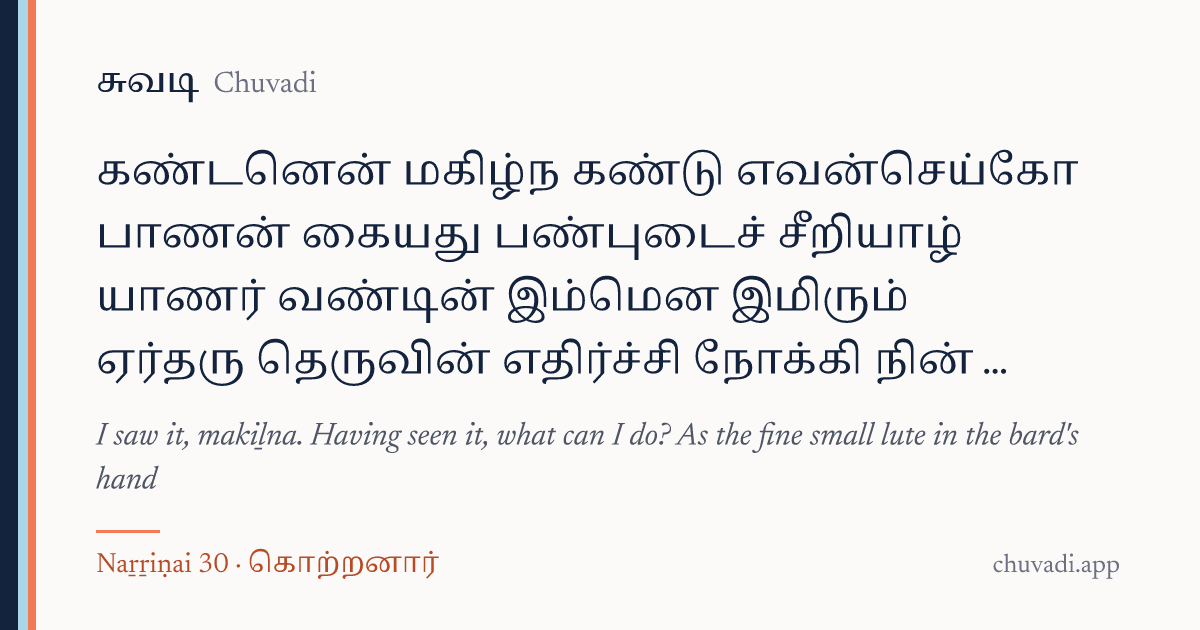

நற்றிணை 30
பாடல் · The poem
Tap a word to see where else it occurs.
பொருள் · Meaning in TamilAI
கண்டேன், மகிழ்நனே! கண்டு நான் என்ன செய்வேன்? பாணனின் கையில் உள்ள இனிமையான சிறிய யாழ், புதுப் பருவத்து வண்டுகளைப் போல 'இம்' என்று ஒலிக்க, அழகு மிகுந்த தெருவில் நீ வருவதை எதிர்பார்த்து நின்று, உன் மார்பைத் தமக்கு உரியதாகக் கொண்ட சிறந்த அணிகலன்களை அணிந்த பெண்கள், கவலையால் மயங்கி வெப்பமான கண்ணீர் சொரிந்தனர். புயல் காற்று வெறிகொண்டு வீசும் துன்பமான வேளையில், கடலில் கப்பல் கவிழ்ந்ததால் கலங்கி ஒன்றாக நீரில் விழுந்தவர்கள், பலரும் பற்றிக்கொள்ளும் ஒரே பலகையைப் பிடித்து இழுப்பது போல, ஒவ்வொருத்தியும் இழுக்க இழுக்க அவர்கள் அங்கே நிற்கும் துன்ப நிலையைக் கண்டேன்!
மருதத் திணை; பரத்தையிடம் சென்று வந்து 'நான் யாரையும் அறியேன்' என்ற தலைவனுக்குத் தோழி சொல்லியது. கப்பல் உடைந்தவர்கள் ஒரே பலகையைப் பற்றி இழுக்கும் உவமை, பல பரத்தையர் அவனைத் தமக்கென இழுத்துக்கொள்வதைக் காட்டுகிறது; அந்தப் பலகையே தலைவன். பரத்தையிடம் தூது செல்லும் பாணனின் யாழோசையும் அவனுக்கு எதிரான சான்றாகிறது.
ஆங்கிலம் · English translationAI
Translation
- I saw it, makiḻna. Having seen it, what can I do?
- As the fine small lute in the bard's hand
- hums 'im' like bees of the new season,
- watching for your coming down the handsome street, the women
- of splendid jewels who have laid claim to your chest,
- with hot tears falling, crazed with grief,
- like people in a storm-crazed hour of distress,
- when their sea-ship has capsized, thrown together, falling,
- clutching at a plank that many hold:
- the more each pulls, the more they stand there in anguish!
What the poem says
The hero has returned from the courtesans' quarter and claims he knows no other woman. The friend answers him (marutam, poem by Koṟṟaṉār). Makiḻna, 'man of pleasures', is the usual marutam way of addressing the hero.
'I saw it,' she says. 'What can I do about having seen it?' What she saw was a scene in the street: as the hero's bard played his little lute, humming like bees, the courtesans who all claim the hero's chest watched for him to come, crying hot tears.
The simile that follows is one of the most vivid in the anthology. They are like shipwrecked people in a storm, thrown together in the water after their ship has capsized, all clutching one plank. The more each one pulls it towards herself, the worse their distress. The hero is that plank, shared and fought over by many women.
The bard (pāṇaṉ) in marutam poems is often the hero's go-between with courtesans, so his music in the street is part of the evidence against the hero.