



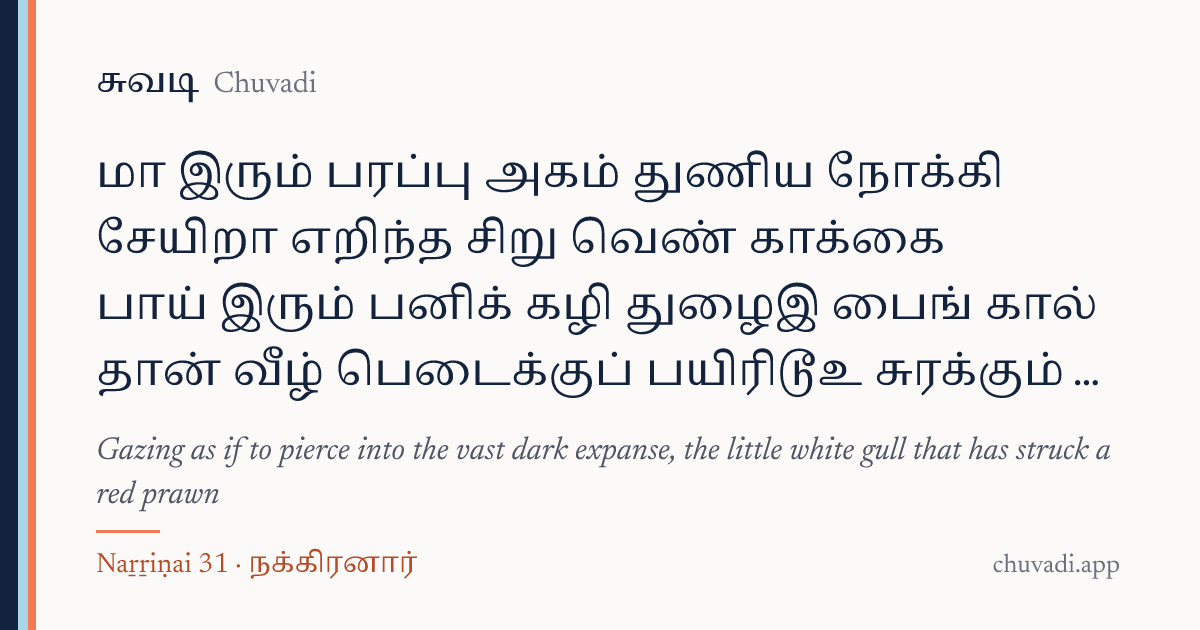

நற்றிணை 31
பாடல் · The poem
Tap a word to see where else it occurs.
பொருள் · Meaning in TamilAI
கரிய பெரிய கடற்பரப்பின் உள்ளே ஊடுருவிப் பார்ப்பது போல நோக்கி, சிவந்த இறாலைக் கொத்தி எடுத்த சிறிய வெண்ணிறக் கடற்காக்கை, அகன்ற கரிய குளிர்ந்த கழியில் துழாவித் தேடி, பச்சைக் கால்களோடு தான் விரும்பும் பெடையை அழைக்கும்; சிறிய பூக்களையுடைய ஞாழல் மரங்கள் நிறைந்த இந்தத் துறை இனியதுதான். ஆனால், பெருந்தனிமையில் வாடும் நெஞ்சத்தோடு பலவற்றையும் நினைத்து நான் இப்படி வருந்தாமல் இருந்தால் மட்டுமே அது இனிதாகும். பல்வேறு நாடுகளிலிருந்து காற்றால் கொண்டுவரப்பட்ட பல வகைப் பண்டங்கள் இறக்கப்படும் நிலவொளி போன்ற மணல் உள்ள, நீண்ட கிளைகளையுடைய புன்னை மரத்தில் முட்டை சுமந்த வெண்குருகு, அலைந்து வரும் அலைகளின் ஓதத்தைக் கண்டு அஞ்சும் வலிய கடற்கரையின் தலைவனை நான் மணப்பதற்கு முன்பு வரை இந்த வருத்தம் ஓயாது.
நெய்தல் திணை; தலைவன் வேலிக்கு அப்பால் நிற்கும்போது, தோழி உறுதியாகத் தேற்றியும் தலைவி ஆற்றாமல் வருந்திச் சொல்லியது. பெடைக்கு இரை கொண்டு அழைக்கும் கடற்காக்கை அவள் விரும்பும் இல்வாழ்க்கையையும், அலைக்கு அஞ்சும் சூல்கொண்ட குருகு அலருக்கு அஞ்சும் அவளையும் குறிக்கும் உள்ளுறைகளாகக் கொள்ளலாம்.
ஆங்கிலம் · English translationAI
Translation
- Gazing as if to pierce into the vast dark expanse,
- the little white gull that has struck a red prawn
- searches through the wide, dark, cold backwater, and with green legs,
- calls to the mate it loves; where they abound,
- the small-flowered ñāḻal, this shore would be sweet indeed,
- if, with a heart in deep loneliness, brooding on many things,
- I did not grieve like this; endlessly,
- where many goods brought by the wind from many other lands
- are unloaded on the moonlit sand,
- on the long branch of the punnai, the white heron heavy with young
- fears the tide of rolling waves:
- before I am married to the lord of that shore of the mighty sea.
What the poem says
The friend has tried to reassure the heroine firmly that the hero will marry her, but the heroine gives way to grief anyway, with the hero hidden beyond the fence and listening (neytal, poem by Nakkīraṉār).
She says the shore would be lovely, with its little gull diving for red prawns and calling to its mate, and its ñāḻal trees in small flower, if only she were not so full of anxious thoughts. That will not end until she is married to the lord of the shore.
His shore is described in the last lines: a trading port where goods from many lands, carried by the wind, are unloaded on bright sand, and a white heron heavy with eggs sits on a punnai branch, afraid of the rising tide.
The two birds work as hidden meaning. The gull feeding its mate is the shared life she longs for; the pregnant heron, frightened of the waves, is close to her own state, vulnerable and afraid of something she cannot control, perhaps the gossip of the village. The hero overhears all of this.