



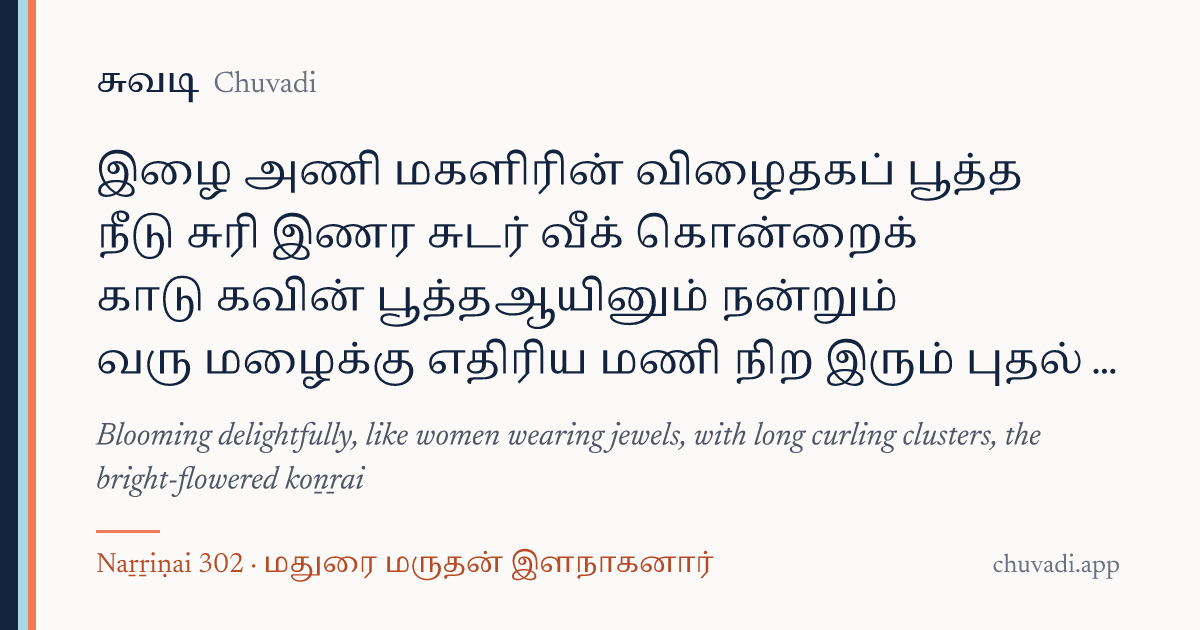

நற்றிணை 302
பாடல் · The poem
Tap a word to see where else it occurs.
பொருள் · Meaning in TamilAI
அணிகலன் அணிந்த பெண்களைப் போல விரும்பத்தக்க வகையில் மலர்ந்த, நீண்ட சுருண்ட பூங்கொத்துகளையும் ஒளிரும் மலர்களையும் உடைய கொன்றை மரங்களால் காடு அழகாகப் பூத்திருக்கிறது. அதற்கு மேலும், வரப்போகும் மழையை எதிர்கொண்டு வளர்ந்த நீலமணி நிறமுடைய கரிய புதர்களில், வெளிர் நிறம் தோன்றும்படி அழகிய கொத்துகளையுடைய தெறுழ் மலர்கள் பரவிக் கிடக்கின்றன. சேய்மையான நாட்டில், களிறுகள் உதைத்து விளையாடியதால் எழுந்து பள்ளங்களில் படிந்த புழுதி, உள்ளே வயிரம் பாய்ந்த வேலமரங்கள் உயர்ந்து நிற்கும் துயரம் தரும் பழைய வழியை மூடிவிடும், கடப்பதற்கு அரிய காட்டைக் கடந்து சென்றவர் இவற்றைப் பார்க்கவில்லையோ?
பாலைத் திணை; தலைவன் திரும்புவதாகச் சொன்ன பருவம் கழிந்ததைக் கண்டு தலைவி சொன்னது. கொன்றையும் தெறுழும் கார்காலத்தில் பூப்பவை; அவை பிரிந்தவரைத் திரும்ப அழைக்கும் அறிகுறிகள். புழுதி மூடிய பழைய வழி, அவன் திரும்பும் வழியே மறைந்ததுபோல் தோன்றும் அச்சத்தைக் குறிக்கிறது. தெறுழ் என்பது எந்தச் செடி என்று உறுதியாகத் தெரியவில்லை.
ஆங்கிலம் · English translationAI
Translation
- Blooming delightfully, like women wearing jewels,
- with long curling clusters, the bright-flowered koṉṟai
- has made the forest lovely with blossom; and still more,
- on the dark sapphire-coloured bushes that rose to meet the coming rain,
- the teṟuḻ flowers in fine clusters, giving a pale grey colour,
- lie scattered: does he not see them? In a distant country,
- the dust that tuskers kicked up in play, settling in the hollows,
- where hard-cored vēlam trees stand tall,
- hides the old and sorrowful path,
- the forest hard to travel, that he has crossed and gone.
What the poem says
The heroine speaks when the season he promised has passed and he has not come; the colophon says she speaks on seeing the season over. The tiṇai is given as pālai, the separation theme, though the setting is the rains of mullai.
She sees two signs of the rains. The koṉṟai is in full bloom, its long curling clusters like jewellery on women. Even plainer, on the dark bushes that have sprung up to greet the rain, the teṟuḻ has spread its pale flowers. Does he not notice them, wherever he is? In Tamil convention these flowers tell absent lovers that it is time to come home.
The last lines picture the far country he has gone through: a hard forest where vēlam trees stand tall and the dust kicked up by playful elephants has filled the old path and hidden it. The image is part fear for him and part reproach: the way back seems lost. Teṟuḻ is a rainy-season shrub; its exact identity is not certain.