




நற்றிணை 303
பாடல் · The poem
Tap a word to see where else it occurs.
பொருள் · Meaning in TamilAI
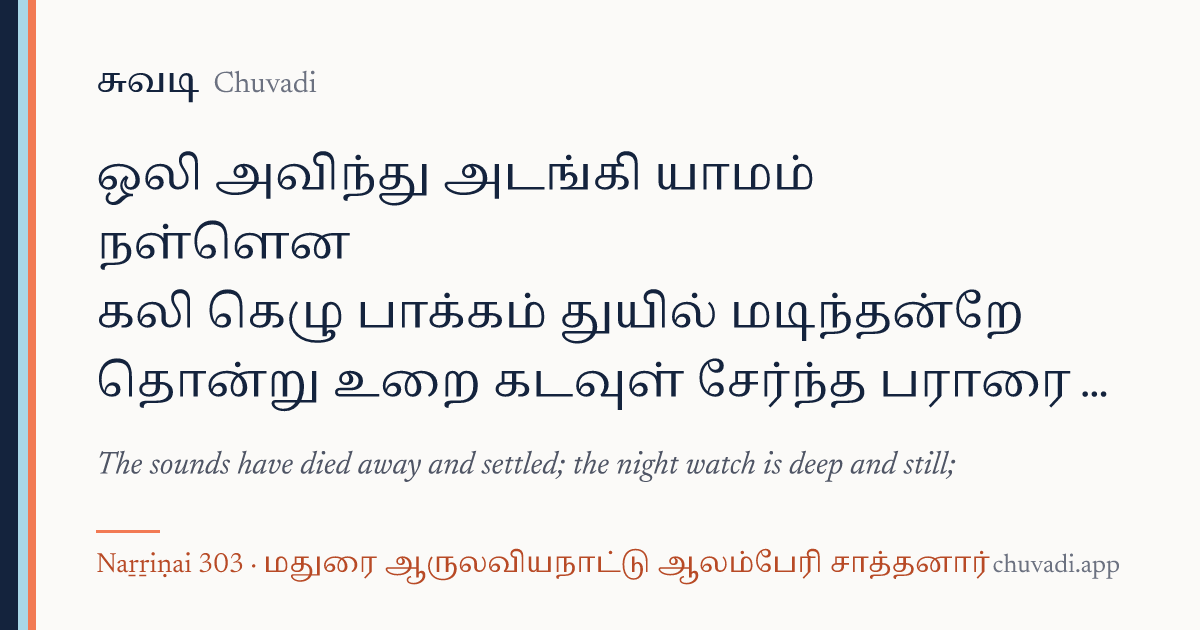
ஒலிகள் எல்லாம் அவிந்து அடங்கி, நள்ளிரவு நள்ளென்று அமைதியாயிற்று. ஆரவாரம் மிகுந்த கடற்கரைச் சிற்றூர் உறக்கத்தில் ஆழ்ந்துவிட்டது. பழங்காலம் முதல் தெய்வம் உறையும், பருத்த அடியுடைய மன்றத்துப் பனைமரத்தின் வளைந்த மடலில் கட்டிய கூட்டில், துணையோடு சேர்ந்திருக்கும் அன்றில் பறவையின் வருந்தும் குரலைக் கேட்கும்தோறும், உறங்காத கண்களோடு துயரம் வருத்த மெலிந்து, அழகிய நெற்றியுடையவள் நம்மால் வருந்துகிறாள் என்ற நினைவு, தோழி, நீ வாழ்க, தெளிந்த கடலில் வலிய கையுடைய பரதவர் இட்ட, சிவந்த கோல்களும் வளைந்த முடிச்சுகளும் உடைய அழகிய வலையை அறுத்துக்கொண்டு தப்பிச் செல்லும், கடும் பகையோடு தாக்கும் சுறாமீன் திரியும் ஆழ்கடல் துறைவனின் நெஞ்சத்தில் இருக்குமோ?
நெய்தல் திணை; காம வேட்கையைத் தாங்க முடியாத தலைவி தோழியிடம் சொன்னது; தலைவன் வேலிப்புறத்தில் இருப்பதை அறிந்து சொன்னதாகவும் கொள்ளலாம். துணையோடு இருந்தும் வருந்திக் கூவும் அன்றில் தலைவியின் தனிமைத் துயரை மிகுவிக்கிறது. வலையை அறுத்துத் தப்பும் சுறா, எந்தக் கட்டுக்கும் அடங்காத தலைவனை உள்ளுறையாகக் குறிக்கிறது.
ஆங்கிலம் · English translationAI
Translation
- The sounds have died away and settled; the night watch
- is deep and still;
- the bustling seaside village has sunk into sleep.
- In the thick-trunked palmyra where an ancient god has his dwelling,
- the palmyra of the common ground, in the nest on its curving fronds,
- each time she hears the aching call of the aṉṟil joined with its mate,
- with sleepless eyes, worn thin as sorrow crushes her,
- "she of the fair brow is suffering for me": that thought,
- is it there, may you live, my friend? Of the clear sea,
- where the red-poled lovely net with its crooked knots,
- cast by fishermen with hard hands, it rips apart and escapes,
- the fierce, warring, striking shark that roams there,
- is it there in the heart of the lord of that deep-watered shore?
What the poem says
The heroine speaks to her friend, unable to bear her longing; the colophon adds that she may know the hero is standing just outside. It is midnight, the busy fishing village is asleep, and she alone lies awake.
The aṉṟil, a bird always shown in pairs, calls from its nest in the fronds of the old palmyra in the village common, where a god is believed to live. Even when joined with its mate it sounds as if in pain, and each time she hears it she grows thinner and more wakeful. She refers to herself in the third person, imagining his view: does he ever think, "She of the fair brow is suffering for me"?
The closing image answers her question with doubt. On his shore the fierce shark tears through the fishermen's red-poled nets and swims free. As uḷḷuṟai it suggests a man who breaks every tie meant to hold him. The Tamil sets the very short second line (naḷḷeṉa, "deep and still") on its own, and the English follows.