



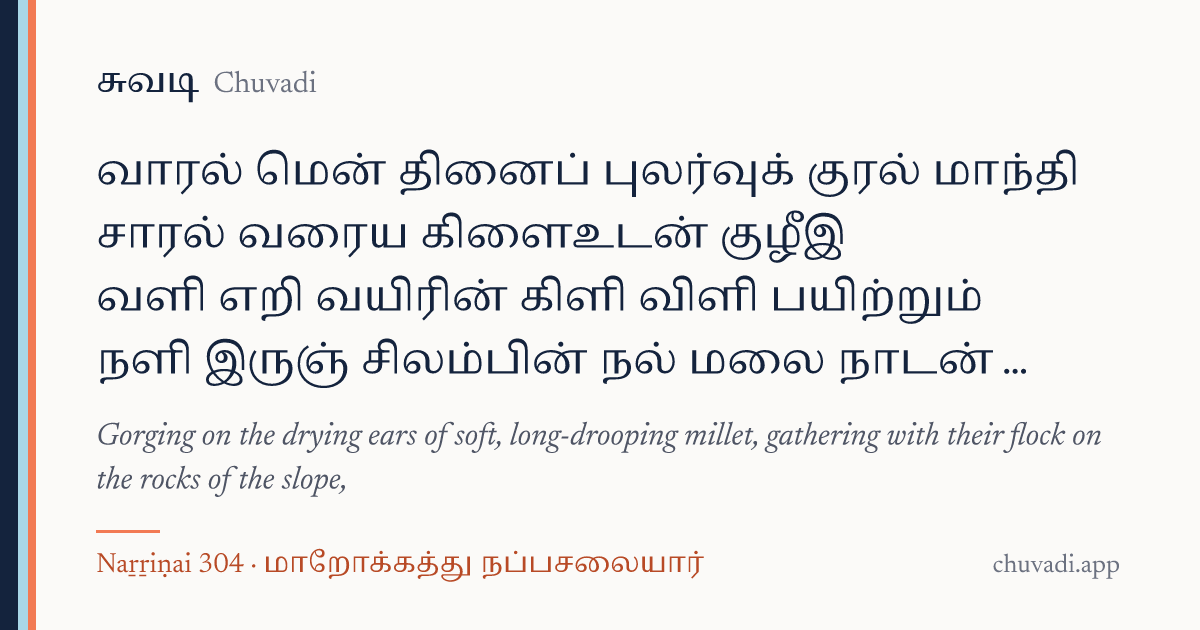

நற்றிணை 304
பாடல் · The poem
Tap a word to see where else it occurs.
பொருள் · Meaning in TamilAI
நீண்டு தொங்கும் மென்மையான தினையின் உலரும் கதிர்களை நிறைய உண்டு, சாரலில் உள்ள பாறைகளில் தம் கூட்டத்தோடு திரண்டு, காற்று ஊதும் கொம்பைப் போலக் கிளிகள் மீண்டும் மீண்டும் கூவும் பரந்த கரிய மலைச்சரிவுகளையுடைய நல்ல மலைநாட்டுத் தலைவன் அவன். அவன் என்னோடு கூடினால் என் அழகும் என்னோடு கூடும்; பிரிந்தால், மணிகள் பதித்த பொன்னைப் போன்ற என் மாமை நிறம் மங்கி, என் அணிநலத்தைப் பசலை சிதைத்துவிடும். ஆகவே, அசுணப் பறவையைக் கொல்வோரின் கை போல, குளிர்ந்த மணமுள்ள நறுமாலை அணிந்த அந்த வலியவனின் மார்பு இன்பத்தையும் துன்பத்தையும் நிறைய உடையது.
குறிஞ்சித் திணை; மணம் செய்யாமல் நெடுங்காலம் களவில் வந்து போகும் தலைவனால் வருந்திய தலைவி, தோழியின் ஆறுதல் மொழிக்கு மறுமொழியாகச் சொன்னது. இசையை விரும்பும் அசுணத்தை இனிய இசையால் மயக்கிப் பின் கொடிய ஒலியால் கொல்வர் என்பது இலக்கிய மரபு; அதே கை இன்பமும் சாவும் தருவதுபோல் தலைவனின் மார்பு இன்பமும் துன்பமும் தருகிறது. அசுணம் உண்மையில் எந்த உயிர் என்று தெரியவில்லை.
ஆங்கிலம் · English translationAI
Translation
- Gorging on the drying ears of soft, long-drooping millet,
- gathering with their flock on the rocks of the slope,
- the parrots keep up their calls like a horn blown by the wind,
- in the vast dark hills of the man of that good mountain land:
- if he joins me, beauty joins me too; if he parts from me,
- my dark glow, like gold set close with gems, fades, and my
- adorned beauty is ruined by pallor; and so,
- like the hands of those who kill the acuṇam, it has, in full,
- both joy and pain, holding them both,
- the chest of that strong man with the cool, fragrant garland.
What the poem says
The heroine answers her friend's words of comfort. The colophon says that the hero has kept coming for a long time without marrying her, and she can no longer bear it.
The parrots on his hills fill their crops with drying millet and call to each other, loud as a wind-blown horn. They are greedy and noisy, and perhaps an image of a man who takes his fill and never settles. Then comes her plain statement: when he is with her, her beauty returns; when he leaves, her dark gold-like glow fades and pallor ruins her.
The final simile turns on the acuṇam, a creature that, by Tamil literary tradition, delights in sweet music. Hunters charm it with a sweet instrument and then kill it with a harsh sound, so the same hands bring it pleasure and death. The hero's chest is like those hands: it gives her both joy and pain. The tradition is known only from literature, and what animal the acuṇam was is not known.