




நற்றிணை 305
பாடல் · The poem
Tap a word to see where else it occurs.
பொருள் · Meaning in TamilAI
என் மகளுடைய கோடுகளால் அழகுபடுத்திய பந்தும், வாடிப்போன வயலைக் கொடியும், மயிலின் அடியைப் போன்ற கரிய பூங்கொத்துகளையுடைய நொச்சியும், காவல் மிகுந்த இந்தப் பெரிய வீட்டில் என் கண்முன் தோன்றுகின்றன; தனியாக நான் பார்க்கும் சோலையும் கொடுமையாக எனக்குத் துன்பம் ஆகிறது, பெண்ணே! உன் தோழி, தீயின் கொடுமை தணிந்த இலையில்லாத அழகிய கிளையில் இருக்கும், வரிகளையுடைய முதுகுடைய புறாவின் தனிமை நிறைந்த தெளிந்த குரலைக் கேட்டு, வெயில் தகிக்கும் நேரத்தில் கலங்கிய கண்களோடு பார்த்து, ஒளிரும் இலைவடிவ வெள்வேல் ஏந்திய இளைஞனை, குறுக்கே நிற்கும் மலைகளின் அரிய வழி வருத்துமோ என்று எண்ணுவாளோ!
பாலைத் திணை; மகள் உடன்போக்குச் சென்றபின் நற்றாய் தோழியிடம் சொன்னது; வீட்டில் மயங்கிச் சொன்னதாகவும் கொள்ளலாம். மகள் விட்டுச்சென்ற பந்தும் கொடியும் சோலையும் தாயின் துயரை மிகுவிக்கின்றன. வழியில் மகள் தன்னைப் பற்றி அன்றித் தலைவனைப் பற்றியே கவலைப்படுவாள் என்று தாய் எண்ணுகிறாள். அமர்ப்பனள் நோக்கி என்பதன் சரியான பொருள் உறுதியாகத் தெரியவில்லை.
ஆங்கிலம் · English translationAI
Translation
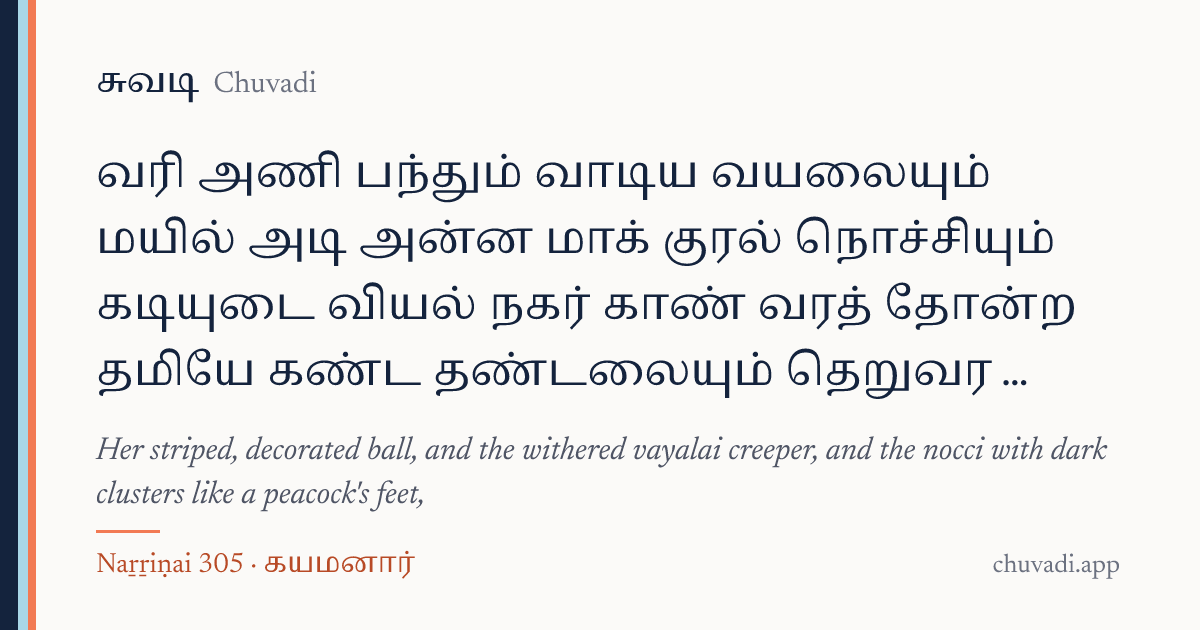
- Her striped, decorated ball, and the withered vayalai creeper,
- and the nocci with dark clusters like a peacock's feet,
- rising before my eyes in this wide, well-guarded house,
- and the garden, seen now alone, cruelly
- have all become pain to me, my girl. Your friend,
- on the leafless lovely branch where the fire's fury has died down,
- hearing the lonely clear call of the dove with the striped back,
- at the hour when the heat shimmers, will gaze with troubled eyes
- and think, "The young man with the white spear and its shining blade,
- on the hard road through the mountains that block the way, will it hurt him?"
What the poem says
The heroine's mother speaks to the friend after her daughter has eloped with her lover; the colophon also allows the reading "bewilderment in the house". The poet is Kayamaṉār, several of whose Naṟṟiṇai poems give voice to a mother after an elopement.
The first lines are the things the girl has left behind: her painted ball, the vayalai creeper she tended, now withered, the nocci bush, and the garden, which the mother now looks at alone. Each one hurts. She calls the friend "my girl" (makaḷai), drawing her close in the shared loss.
Then she imagines her daughter on the road. At blazing noon, on a bare branch scorched by heat, a dove calls lonely and clear. Hearing it, the girl does not think of herself but of her young man with his spear: will the mountain road harm him? The mother's grief has turned into an uneasy pride in her child's love. The phrase amarppaṉaḷ nōkki is taken here as "gazing with troubled eyes"; its exact force is not certain.