



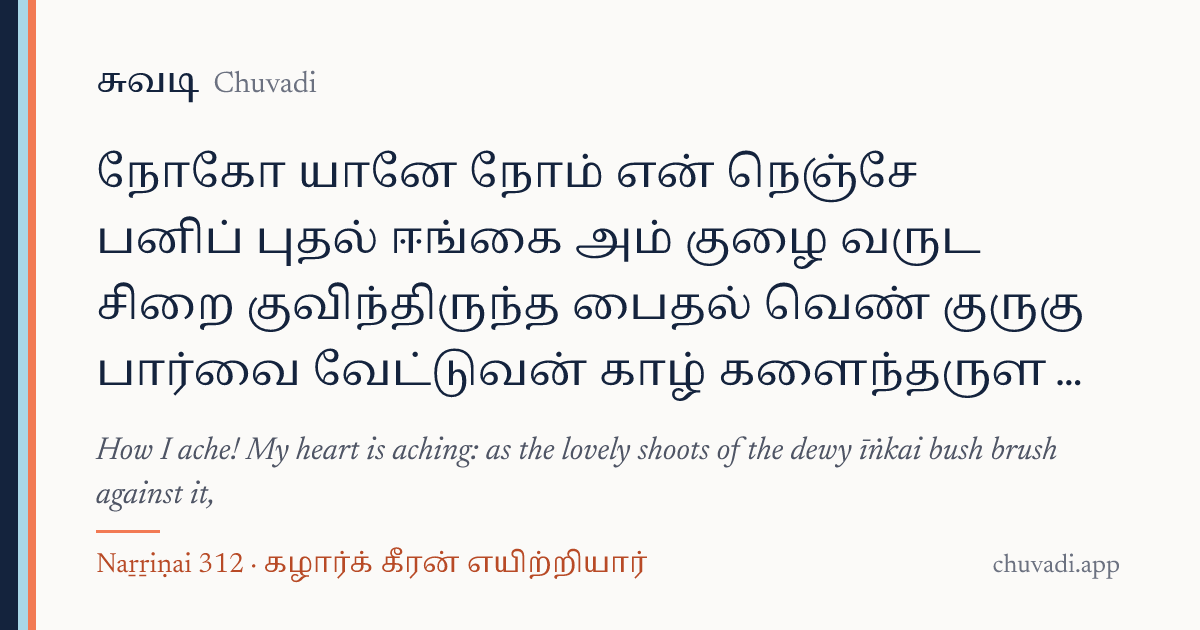

நற்றிணை 312
பாடல் · The poem
Tap a word to see where else it occurs.
பொருள் · Meaning in TamilAI
நான் வருந்துகிறேன்; என் நெஞ்சு நோகிறது. பனி படிந்த ஈங்கைப் புதரின் அழகிய தளிர்கள் வருட, சிறகுகளைக் குவித்து ஒடுங்கியிருந்த துன்பமுற்ற வெண்ணிறக் குருகை, பார்வைப் பறவையாக வைத்திருந்த வேட்டுவன் இரக்கம் கொண்டு அதைக் கட்டிய முளையைப் பிடுங்கி விடுவிக்கும் மயக்கம் தரும் முன்பனிக் காலம் இது. நான் அவள் அருகில் இருக்கும்போதும் கூட, புதிதாகத் தோன்றிய தேமலும் முதிராத முலைகளும் உடைய அவள், வேனில் மாதங்களிலும் குளிரால் நடுங்குவாள். வாடைக் காற்றின் பெரும் குளிருக்கு அவள் என்ன ஆவாளோ என்று எண்ணி என் நெஞ்சு நோகிறது.
பாலைத் திணை; பொருள் தேடச் செல்ல உறுதிகொண்ட தலைவன் தன் நெஞ்சோடு சொன்னது. இளமையான தலைவி தனியே வாடைக் குளிரை எப்படித் தாங்குவாள் என்ற கவலை அவனுடைய உறுதியைத் தளர்த்துகிறது. கட்டிலிருந்து விடுவிக்கப்படும் பார்வைக் குருகின் உவமையின் சரியான நோக்கம் உறுதியாகத் தெரியவில்லை.
ஆங்கிலம் · English translationAI
Translation
- How I ache! My heart is aching:
- as the lovely shoots of the dewy īṅkai bush brush against it,
- the wretched white heron that sat with its wings drawn in,
- the decoy-bird, is freed when the hunter, in pity, pulls out its stake,
- in the bewildering cool season after the rains have held,
- even when I am here beside her, she herself,
- with fresh spots on her skin and breasts not yet full-grown,
- who shivers even in the months of summer,
- what will become of her in the great cold of the north wind? So thinking.
What the poem says
The hero speaks to his own heart. The colophon says he has resolved to go after wealth; the poem shows him thinking about what the coming cold season will do to the girl he is leaving.
The season is aṟciram, the early cold after the rains, when dew lies on the bushes. A white heron that a hunter has kept tethered as a decoy sits huddled with its wings folded, brushed by dewy īṅkai shoots, until the hunter, in pity, pulls out the stake that holds it. The image suggests misery in the cold, and perhaps the pity he himself ought to show her. Its exact point is not certain.
The tenderness of the poem lies in its last lines. She is very young, her breasts not yet full and her skin newly spotted, and she shivers even in summer, even with him beside her. How will she bear the great cold of the north wind (vāṭai) alone? The heart's ache is the beginning of doubt about the journey, though the poem does not say whether he stays. The poet is Kaḻārk Kīraṉ Eyiṟṟiyār, who also composed narr.281.