




நற்றிணை 313
பாடல் · The poem
Tap a word to see where else it occurs.
பொருள் · Meaning in TamilAI
கரிய அடிமரமுடைய வேங்கையின் அன்று மலர்ந்த புதிய பூக்கள், பொன்வேலை செய்யும் கம்மியனின் கைவினையைப் போல அழகும் பொலிவும் உடையவை. அவற்றின் இறுக்கமான கட்டை அவிழ்த்து, அடர்ந்த பல கூந்தல் அழகு பெறும்படி அணிவித்து, அவளைக் காணும் காதல் எல்லை மீறியவனுக்கு, தோழி, நாம் என்ன ஆவோமோ? காந்தளின் மணமுள்ள குலைகள் மலர்ந்த இனிய சாரலும், கூதளம் நிறைந்த மணமுள்ள சோலையும் தனிமையுற, நாம் ஊருக்குத் திரும்பிவிடுவோம் போலத் தோன்றுகிறது. நாம் கூவிக் காவல் செய்யும் தினை, இலைகள் உலர்ந்து, அருவியைப் போல ஓயாமல் ஒலித்து, அறுவடைப் பருவத்தை அடைந்துவிட்டது.
குறிஞ்சித் திணை; தலைவன் வேலிப்புறம் கேட்கும்படி தோழி தலைவியிடம் சொல்வதுபோல், தினைப்புனம் அறுவடையாவதைச் சொல்லித் தலைவி இனி வீட்டில் அடைக்கப்படுவாள் என்று அறிவித்தது. வேங்கை மலர் குறிஞ்சிக்குரிய மணப்பருவத்தையும் நினைவூட்டுகிறது. மூன்றாம் வரியும், ஐந்தாம் வரியின் வினைச்சொல்லும் தெளிவாக இல்லை; பொருள் ஊகமே.
ஆங்கிலம் · English translationAI
Translation
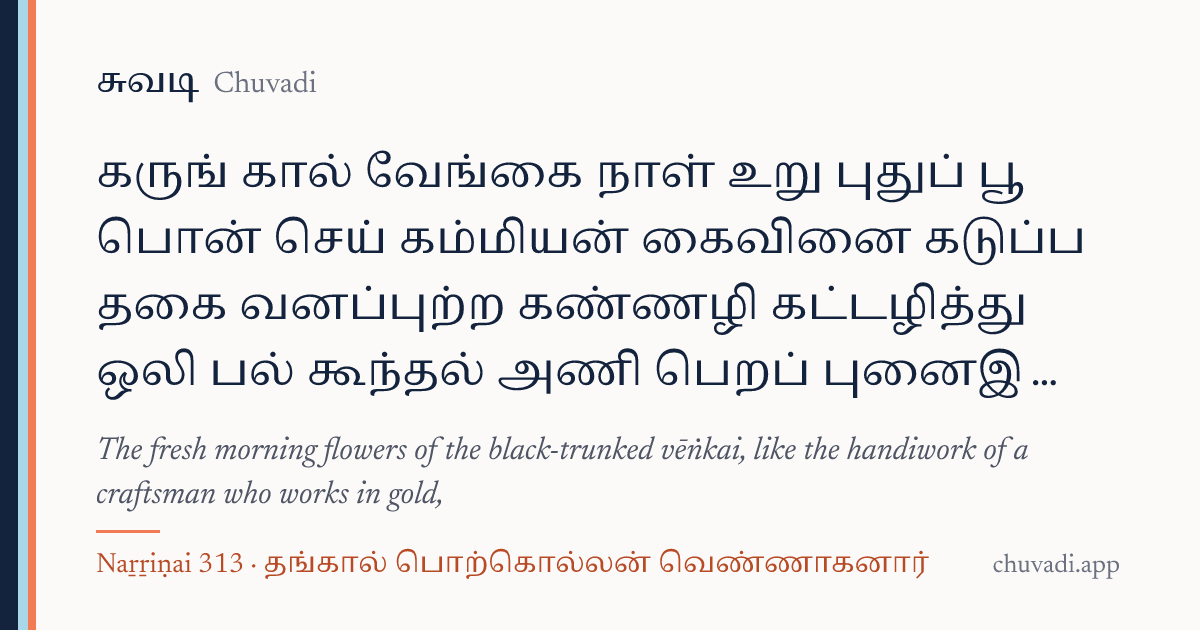
- The fresh morning flowers of the black-trunked vēṅkai,
- like the handiwork of a craftsman who works in gold,
- graceful and lovely, loosened from their tight bindings,
- set to adorn her thick, abundant hair so it shone:
- to him who did this, his longing to see her overflowing,
- what will become of us, my friend? With kāntaḷ
- opening its fragrant clusters on the lovely slope,
- leaving the sweet kūtaḷam grove lonely, to the village
- we must go back, it seems. Their leaves dried out,
- rustling without pause like a waterfall,
- the millet we guard with our cries has come to reaping time.
What the poem says
The friend speaks to the heroine while the hero stands within hearing. The colophon says she tells of the end of the millet field, and so lets him know that the heroine will be confined at home.
The first five lines recall a tender moment. The hero gathered fresh vēṅkai blossoms, golden and finely made like a goldsmith's work, and set them in the heroine's thick hair, so great was his wish to see her adorned. The vēṅkai is itself a sign of the kuṟiñci season, and in tradition its flowering marks a time fit for marriage.
Now the millet the girls have been guarding has dried. Its leaves rustle like a waterfall, and it is ready to be cut. When the harvest is over they must leave the slope with its kāntaḷ and the kūtaḷam grove and go back to the village. "What will become of us?" is aimed at the listener: the daytime meetings are ending. Line 3 (kaṇṇaḻi kaṭṭaḻittu) and the verb in line 5 (kaṭīiyāṟku) are obscure, and the reading of both is tentative.