




நற்றிணை 319
பாடல் · The poem
Tap a word to see where else it occurs.
பொருள் · Meaning in TamilAI
கடல் ஓதமும் ஒலி ஓய்ந்துவிட்டது; மகரந்தத்தைக் கிளறும் குளிர்ந்த ஊதைக் காற்றும் கடற்கரைச் சோலையில் அடங்கிவிட்டது. மணல் நிறைந்த பழைய ஊரின் அகன்ற நீண்ட தெருவில், ஆண் கூகை தன் பெண் கூகையோடு உயரத்தில் ஏறி, இருள் நிறைந்த நாற்சந்தியில் அச்சம் தரும்படி குழறுகிறது. அணங்குகள் உலவும் மயக்கம் தரும் இருள் சூழ்ந்த நள்ளிரவு இது. பாவையைப் போலப் பலரும் ஆராய்ந்து போற்றும் அழகும், பெரிய மென்மையான மூங்கில் போன்ற தோள்களும், மிகுந்த மடமும் உடைய இளம்பெண்ணின் தேமல் அணிந்த அழகிய முலைகளைத் தழுவுவதை நினைத்து, மீன்களும் கண்ணுறங்கும் நேரத்திலும் நான் கண்ணுறங்கவில்லை. என் நிலை என்னவோ!
நெய்தல் திணை; வீட்டில் காவல் மிகுந்ததால் தலைவியைக் காண இயலாமல் வருந்திய தலைவன் தனக்குள் சொல்லியது. ஓசை அடங்கிய நள்ளிரவும் கூகையின் குரலும் அவனுடைய தனிமையை மிகுவிக்கின்றன. மீன்கள் கண் மூடுவதில்லை என்பது பழைய நம்பிக்கை; ஆகவே மீன் கண் துஞ்சும் பொழுது என்பது நள்ளிரவைக் குறிக்கலாம், அல்லது ஒருபோதும் வாராத நேரத்தைக் குறிக்கலாம்.
ஆங்கிலம் · English translationAI
Translation
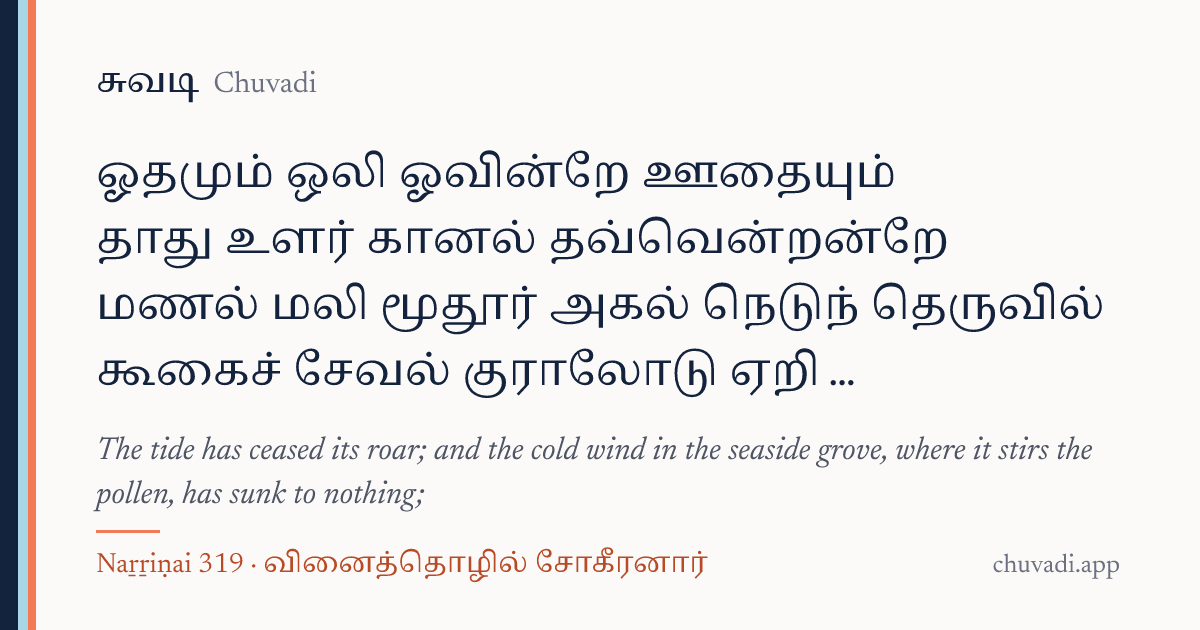
- The tide has ceased its roar; and the cold wind
- in the seaside grove, where it stirs the pollen, has sunk to nothing;
- in the wide long street of the sandy old town,
- the male owl, perched up high with his mate,
- hoots fearfully at the dark crossroads,
- at midnight in a bewildering darkness, when spirits walk abroad;
- with beauty like a doll's, admired by many,
- the innocent young girl with broad soft shoulders like bamboo,
- thinking of embracing her lovely breasts adorned with spots,
- even at the hour when the fish close their eyes in sleep,
- I do not sleep. What state is this of mine?
What the poem says
The hero speaks to himself. The colophon says the heroine's household has set a strict guard, so he cannot reach her, and lies awake thinking of her.
The poem builds silence and fear before it reaches desire. The tide has gone quiet, the wind in the shore grove has dropped, and the long sandy streets of the old town are empty. Only owls call, a frightening sound, from the dark crossroads where, as people believe, spirits (aṇaṅku) walk at midnight. It is the hour when no one should be awake.
Against that darkness he sets her: doll-like, admired by all, young, with soft broad shoulders. The thought of holding her keeps him from sleep. The tenth line has a small twist: fish were thought never to close their eyes, so "even when the fish sleep" may mean the deepest part of the night, or else a time that never comes, which would make his sleeplessness endless. The sentence works either way.