




நற்றிணை 320
பாடல் · The poem
Tap a word to see where else it occurs.
பொருள் · Meaning in TamilAI
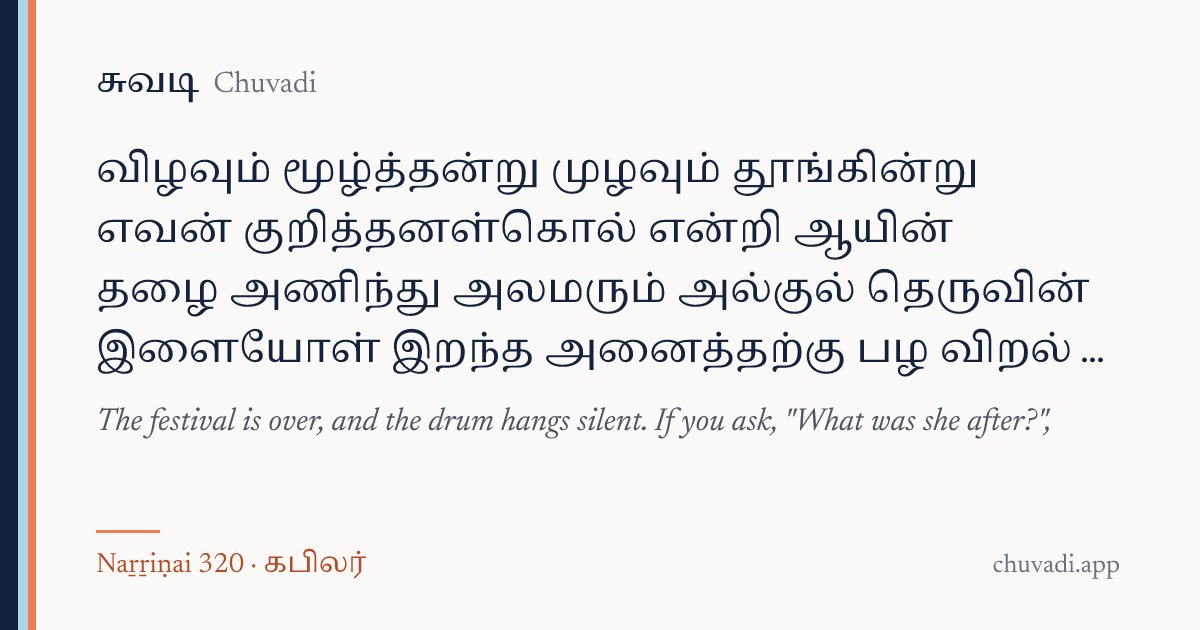
விழாவும் முடிந்துவிட்டது; முழவும் ஒலிக்காமல் தொங்குகிறது. அவள் எதை எண்ணி வந்தாள் என்று நீ கேட்டால், தழையாடை அணிந்து அசையும் அல்குலோடு ஓர் இளம்பெண் தெருவழியே கடந்து சென்றாள், அவ்வளவுதான். அதற்காகவே, பழம்பெருமை உடைய வீரனான ஓரி கொல்லப்பட்ட அந்தப் பெரிய தெருவைப் போலவும், காரி புகுந்த பகைவர் நாட்டைப் போலவும், ஊர் முழுவதும் கல்லென்று ஆரவாரம் செய்தது. அன்றுமுதல், ஆராய்ந்த தொடிகளும் அழகிய கரிய மேனியும் உடைய மனைவியர், நெருக்கமாகக் காவல் வைத்துத் தம் கணவரைக் காத்து வருந்துகின்றனர்.
மருதத் திணை; தலைவிக்குப் பாங்காக உள்ளவர்கள் கேட்கும்படி பரத்தை சுட்டிச் சொன்னது. ஓர் இளம்பெண் தெருவில் கடந்ததற்கே ஊர் போர்க்களம் போல் கலங்கியது என்று மனைவியரின் பொறாமையை ஏளனம் செய்கிறாள். மலையமான் காரி வல்வில் ஓரியைக் கொன்ற வரலாற்றுச் செய்தி உவமையாக வருகிறது.
ஆங்கிலம் · English translationAI
Translation
- The festival is over, and the drum hangs silent.
- If you ask, "What was she after?",
- along the street, in a leaf-skirt that sways on her hips,
- for no more than this, that a young girl walked past, like the street
- where Ōri of long-famed valour was killed, that one great street,
- like the land of his foes when Kāri entered it,
- the whole town was in uproar; and from then on,
- setting a close guard, women with chosen bangles,
- lovely, with dark glowing skin,
- have worn themselves out, keeping watch on their husbands.
What the poem says
A courtesan speaks, making sure that the heroine's companions can hear (the colophon's setting). She mocks the wives of the town, and the heroine above all, for their jealousy.
Her story is simple. During the festival a young woman, the courtesan herself, walked down the street in a leaf-skirt. That was all, and yet the town erupted. Since then the wives have kept a close guard on their husbands and are exhausted by it. "What was she after?" is the question they ask, and the courtesan answers it with scorn.
The simile for the uproar is drawn from history known to the anthologies. Kāri, the chieftain Malaiyamāṉ Kāri, killed Ōri, the archer-chief of the Kolli hills, and the poem compares the town's alarm to the clamour in Ōri's street when Kāri's forces entered the enemy land. The comparison is deliberately overblown: a girl passing is treated as a war. The poem is by Kapilar, whose works refer to several of these chieftains.