




நற்றிணை 33
பாடல் · The poem
Tap a word to see where else it occurs.
பொருள் · Meaning in TamilAI
மறையும் கதிரவன் சென்று சேர்ந்த, பிளந்த வாயையுடைய நீண்ட மலையும், பரற்கற்கள் நிறைந்த நிலத்தைச் சேர்ந்த சிற்றூரும், மாலை பரவும் பொழுதில் தனிமையே நிறைந்திருக்கும் பொலிவற்ற ஊர்மன்றமும் உள்ள வழி அது. அங்கே, நிறைந்த மழையை அறியாத குன்றில், பாறைக் குழியிலிருந்து கலங்கிய நீரைக் கொண்டுவந்து இரவில் உண்டு, துவராடை உடுத்திக் குறி தவறாத வில்லேந்திய மறவர்கள் வழியைப் பார்த்துக் காத்திருப்பார்கள். 'அப்படிப்பட்ட அச்சம் தரும் வழியைக் கடந்து செல்ல அவர் எண்ணினால், மென்மையான நாம் அவரைத் தடுக்க முடியுமா?' என்று விம்மிய சொற்களோடு என் முகத்தைப் பார்த்தாள். அப்போது மலர் போன்ற அவள் கண்களிலிருந்து பெருகிய நீர், அழகிய மார்பகங்களாகிய கரையை வந்து சேர்ந்தது.
பாலைத் திணை; பிரிவைப் பற்றி அறிந்த தலைவியின் உள்ளத்தை உணர்ந்த தோழி தலைவனிடம் சொல்லியது. தலைவியின் கண்ணீரை விவரிப்பதன் மூலமே தோழி அவனுடைய பயணத்தைத் தடுக்க முயல்கிறாள். 'ஊண் அல்லில்', 'செந் தொடை' ஆகிய தொடர்களின் பொருள் உறுதியாகத் தெரியவில்லை.
ஆங்கிலம் · English translationAI
Translation
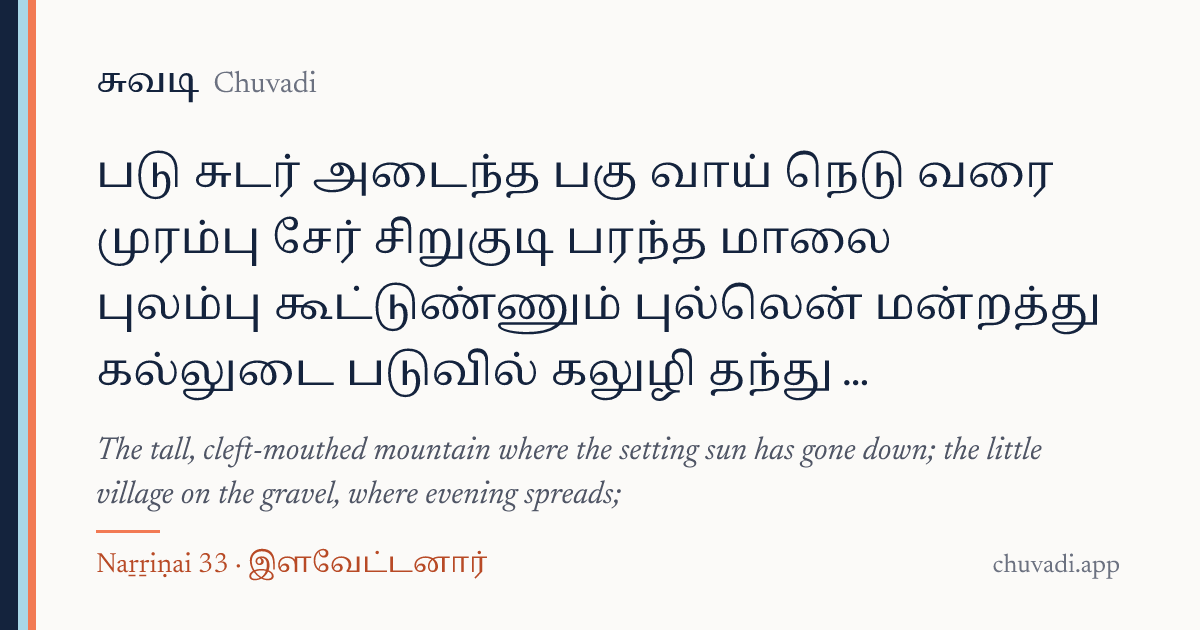
- The tall, cleft-mouthed mountain where the setting sun has gone down;
- the little village on the gravel, where evening spreads;
- the dull meeting ground where loneliness feeds;
- from a pit in the rock they bring muddy water,
- and on the hill that has never known full rain, eat their food at night,
- warriors in ochre-dyed clothes, with sure-aimed bows,
- who wait there watching the trails: on that fearful road
- 'if he means to cross it, will we be able to refuse him,
- we who are so gentle?' she said,
- in words choked with sobs, looking into my face,
- and to the bank of her lovely breasts, so fine,
- the brimming flood spread from her flower-like eyes.
What the poem says
The heroine has been told that the hero means to leave. The friend has read her feelings and reports them to him (pālai, poem by Iḷavēṭṭaṉār).
The first seven lines describe the road he will take, as the heroine imagines it: a gaunt mountain at sunset, a poor village on stony ground, an empty public square where loneliness 'feeds', muddy water drawn from rock pits on a hill that never gets enough rain, and bandits in ochre clothes waiting by the paths with their bows.
The heroine's words are short and pitiful: 'If he means to cross it, can we, weak as we are, stop him?' She says it looking at her friend, sobbing, and her tears flow down to her breasts like a river reaching its bank. The friend does not argue; she simply tells the hero what she saw, which is the strongest argument there is.
Ūṇ allil in line 5 is obscure; 'eat their food at night' is a guess. Cen toṭai in line 6 may mean straight-flying arrows or red-painted bows.