



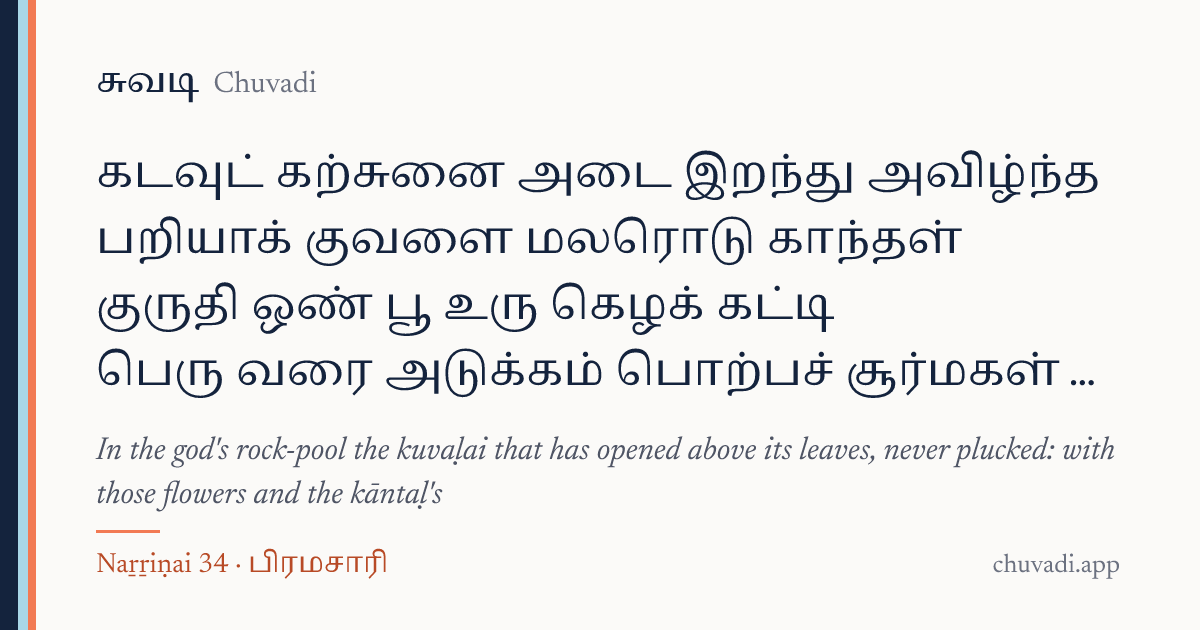

நற்றிணை 34
பாடல் · The poem
Tap a word to see where else it occurs.
பொருள் · Meaning in TamilAI
தெய்வம் உறையும் பாறைச் சுனையில், இலைகளுக்கு மேலே உயர்ந்து மலர்ந்த, யாரும் பறிக்காத குவளை மலர்களோடு, குருதி போன்ற ஒளிரும் காந்தள் பூக்களையும் சேர்த்து அச்சம் தரும் அழகோடு மாலையாகக் கட்டி அணிந்து, பெரிய மலைச்சாரல் பொலிவு பெறும்படி, சூர்மகள் அருவியின் இனிய இசைக்கு ஏற்ப ஆடும் நாட்டின் தலைவன் அவன். அவனுடைய மார்பு தந்த, ஏக்கம் நிறைந்த இந்தக் கொடிய நோய் உன்னால் வந்தது அன்று என்று அறிந்திருந்தும், தலையை நிமிர்த்திக்கொண்டு, மழைக்காலத்து மணமுள்ள கடம்பு மாலையைச் சூடி, வேலன் அழைத்ததற்காக வெறியாட்டு நடக்கும் இந்த வீட்டுக்கு வந்திருக்கிறாய். நீ கடவுளாகவே இருந்துவிட்டுப் போ; ஆனால் உறுதியாக நீ அறியாமை உடையவன், முருகனே, நீ வாழ்க!
குறிஞ்சித் திணை; தலைவியின் நோய்க்குக் காரணம் அறியாமல் வீட்டார் வெறியாட்டு நடத்தியபோது, தெய்வத்திடம் சொல்வது போலத் தோழி அதைத் தடுத்தது. முருகனையே 'அறியாமை உடையவன்' என்பது துணிவான எள்ளல்; இந்நோய் தலைவனால் வந்தது, மணமே மருந்து என்பதை வீட்டாருக்கு உணர்த்துவதே நோக்கம்.
ஆங்கிலம் · English translationAI
Translation
- In the god's rock-pool the kuvaḷai that has opened above its leaves,
- never plucked: with those flowers and the kāntaḷ's
- bright, blood-red blossoms, she ties a garland of fearsome beauty,
- and, adorning the slopes of the great mountain, the spirit-woman
- dances to the sweet music of the waterfall: the man of that land,
- his chest brought on this hard sickness thick with longing;
- though you knew it was not your doing, with head held high,
- wearing a garland of fragrant monsoon kaṭampu,
- at the vēlaṉ's call you have come to the house of the frenzy rite:
- you may be a god, let that be so;
- but you are surely foolish, long life to you, Murukaṉ!
What the poem says
The heroine is wasting with love, and her family, not knowing the cause, have called the vēlaṉ, the priest of Murukaṉ, to perform the veṟi rite, in which the god possesses the dancer and the girl's illness is blamed on him. The friend stops the rite by speaking directly to the god (kuṟiñci, poem credited to Piramacāri, 'the celibate').
The hero's land is introduced with an image of wild divinity: in a rock pool sacred to a god, flowers no one dares pick, and a cūr woman, a mountain spirit, dancing in a garland of blue kuvaḷai and red kāntaḷ to the music of the waterfall. In such a land even nature seems possessed.
The friend's address to Murukaṉ is bold and witty. Her sickness comes from the hero's chest, she says, not from you; you know that perfectly well. Yet here you are, head held high, wearing your garland of kaṭampu flowers, come to the veṟi house because the vēlaṉ asked you. A god you may be, but you are certainly foolish.
To call a god foolish is unusual and comic; it also tells the family, who are listening, that the true cure is marriage to the hero.