



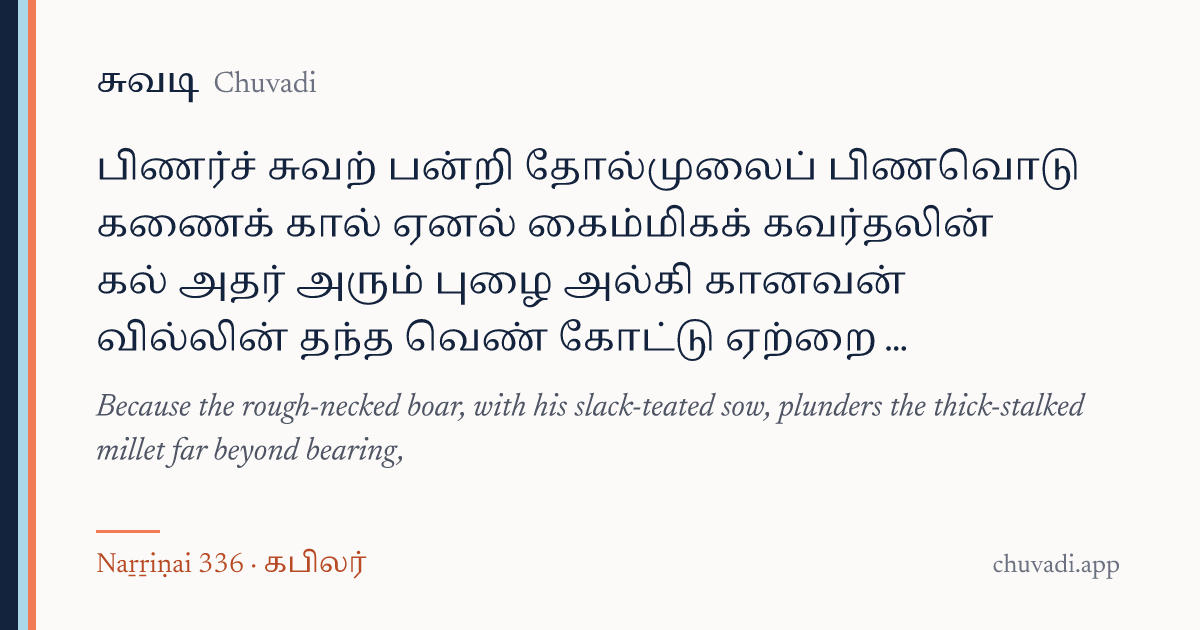

நற்றிணை 336
பாடல் · The poem
Tap a word to see where else it occurs.
பொருள் · Meaning in TamilAI
சொரசொரப்பான கழுத்துடைய ஆண்பன்றி, தொங்கிய முலைகளையுடைய தன் பெண்பன்றியோடு சேர்ந்து, திரண்ட தாளுடைய தினையை அளவுக்கு மீறிக் கவர்ந்து உண்டதால், குறவன் கற்கள் நிறைந்த வழியின் கடினமான ஒடுக்கமான இடைவெளியில் பதுங்கியிருந்து, வெண்மையான கொம்புடைய அந்த ஆண்பன்றியை வில்லால் வீழ்த்திக் கொண்டுவந்தான். அழகாகப் புனைந்த கரிய கூந்தலுடைய அவன் மனைவி அதை அறுத்து, வீடுகளுக்கு முறைப்படி பங்கிட்டுக் கொடுப்பாள். அத்தகைய உயர்ந்த மலைநாட்டை உடையவனே, வலிமையும் சினமும் உடைய யானை தாக்க வரும் புலியை எதிர்நோக்கியிருக்கும் இரவைக் கண்டு நீ அஞ்சவில்லை; ஆனால் நான் அஞ்சுகிறேன். பாம்பின் குளிர்ந்த வளைகளுடைய புற்று கார்மேகம் போல முற்றி வளர்ந்திருக்க, இரை தேடும் கரடிக் கூட்டம் அதைத் தோண்டும் மலையடுத்த சிறுவழியில் நீ வர வேண்டாம்.
குறிஞ்சித் திணை; இரவு வழியின் அச்சத்தை எண்ணித் தோழி தலைவனிடம் சொல்லியது. தினையைக் கவர்ந்த பன்றி கொல்லப்படுவது, களவில் வரும் தலைவனுக்கும் இடையூறு நேரலாம், ஊருக்கும் தெரியவரும் என்ற குறிப்பைத் தரும் உள்ளுறை. வர வேண்டாம் என்பது, வெளிப்படையாக மணம் செய்து வா என்ற குறிப்பு. கார் என முற்றி என்ற தொடரின் பொருள் உறுதியாகத் தெரியவில்லை.
ஆங்கிலம் · English translationAI
Translation
- Because the rough-necked boar, with his slack-teated sow,
- plunders the thick-stalked millet far beyond bearing,
- the hunter, waiting at the hard narrow gap of the stony track,
- brings down with his bow the white-tusked male,
- and his wife, her dark hair finely dressed, cuts it up
- and shares it out house by house in due order: lord of the tall mountains,
- when the mighty, angry elephant keeps watch for the attacking tiger,
- you have no fear of the night; but I am afraid. Where the snake's
- cool-holed anthill, grown full and dark as a rain cloud,
- is dug open by bears searching for food,
- by that small path along the mountain, do not come.
What the poem says
The friend, fearful of the road, asks the hero not to come at night (kuṟiñci, poem by Kapilar).
The opening scene is a hunting episode. A boar and his sow keep raiding the millet field, so the hunter lies in wait on the rocky track and shoots the tusker, and his wife butchers it and shares the meat among the houses of the village. The picture carries a warning: someone who keeps raiding the millet field, as the hero keeps visiting the girl who guards it, may be waylaid in the end, and then the whole village will know.
The rest is direct. Elephants and tigers face each other on the hills at night; the hero does not fear the dark, but the friend does. She names the very path: a narrow way where bears dig into snake-holed anthills for food. 'Do not come' by it is, as often, a hint that he should come openly instead, as a husband.
The phrase 'kār eṉa muṟṟi' in line 9 may describe the anthill as dark like a rain cloud, or say that it has swelled in the rainy season.