



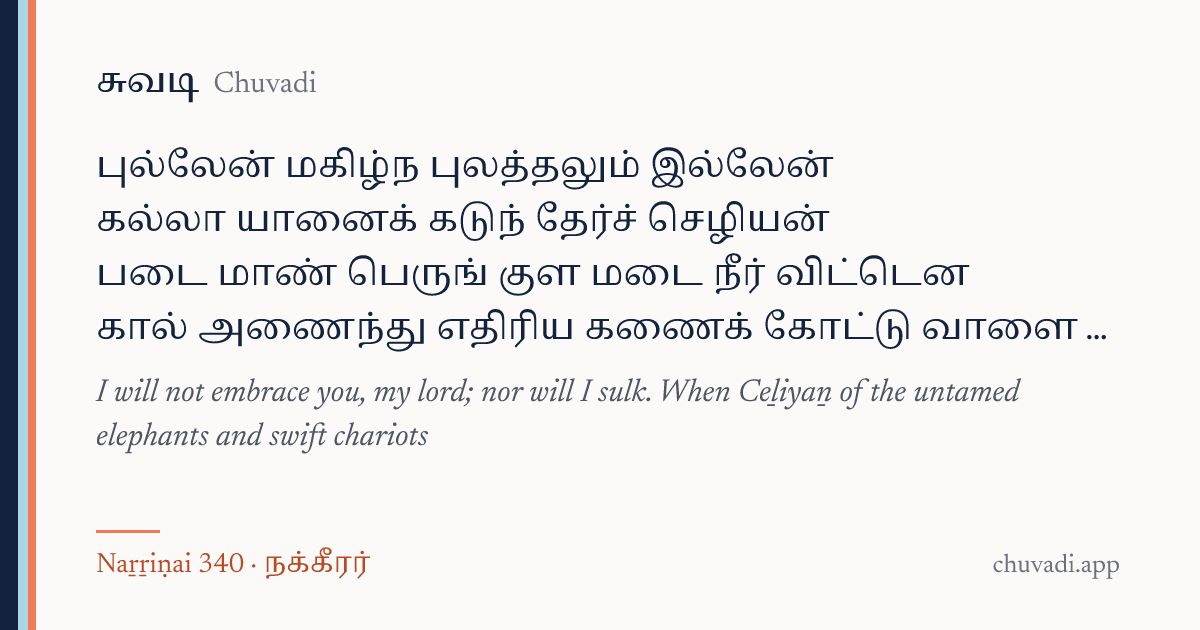

நற்றிணை 340
பாடல் · The poem
Tap a word to see where else it occurs.
பொருள் · Meaning in TamilAI
மகிழ்நனே, நான் உன்னைத் தழுவ மாட்டேன்; உன்னோடு ஊடவும் மாட்டேன். பின்வாங்கப் பழகாத யானைகளையும் விரைந்த தேர்களையும் உடைய செழியன், வலிமையாக அமைந்த தன் பெரிய குளத்தின் மடையைத் திறந்து நீரை விட்டபோது, அம்பு போன்ற முள்ளுடைய வாளைமீன் கால்வாய் நீரோடு வந்து எதிர்த்துத் திரும்பி, சேறு நிறைந்த அழகிய வயலின் உட்பகுதிக்கு ஓடி, சேற்றை மிதித்த எருதுகளின் புள்ளிகளையுடைய வெண்மையான முதுகின் மேல் துள்ளும்; சிவந்த சால் உழும் உழவர்களின் கோலடிக்கு அஞ்சாமல் செருக்கி, பசுமையான தாள்களையுடைய வயலின் வரப்படியில் புரளும். அத்தகைய வாணனின் சிறுகுடி என்ற ஊரைப் போல வளமான அழகுடையவளாக இருந்த என், பொருந்திய ஒளிரும் வளையல்களை நெகிழச் செய்தவர் நீரே.
மருதத் திணை; பரத்தையிடமிருந்து திரும்பிய தலைவனிடம் தலைவி நொந்து சொல்லியது. கோலுக்கு அஞ்சாமல் வயலில் துள்ளும் வாளை, பழிக்கு அஞ்சாமல் தன் விருப்பப்படி திரியும் தலைவனைக் குறிப்பதாகக் கொள்ளலாம். கணைக் கோடு, கோள் நேர் என்ற தொடர்களின் சரியான பொருள் சற்று ஐயத்திற்கு உரியது.
ஆங்கிலம் · English translationAI
Translation
- I will not embrace you, my lord; nor will I sulk.
- When Ceḻiyaṉ of the untamed elephants and swift chariots
- lets the water out through the sluice of his great, strongly built tank,
- the vāḷai fish with arrow-straight fins, meeting the channel's flow and turning against it,
- runs up into the lovely field's muddy inner reaches,
- and on the white, speckled backs of the oxen that kicked up the mud,
- fearless of the goad strokes of the red-furrow ploughmen,
- it flips about at the foot of the bund in the green-stalked field;
- like Vāṇaṉ's Ciṟukuṭi, that town, was I,
- and you have loosened my bright, close-fitting bangles.
What the poem says
The hero has come back from a courtesan, and the heroine speaks to him in pain (marutam, poem by Nakkīrar).
She begins with a flat refusal of both closeness and quarrel: she will neither embrace him nor sulk, which leaves only cold distance. Then comes a long description of a fertile town. When the Pāṇṭiya king Ceḻiyaṉ opens the sluice of his great tank, the vāḷai fish swim up the channels into the muddy fields, leap even onto the backs of the ploughing oxen, ignore the ploughmen's goads, and thrash about by the bunds.
That busy, overflowing scene is the town of Ciṟukuṭi belonging to Vāṇaṉ, a chieftain named here and in other Sangam poems. The heroine says she was once as rich in beauty as that town; he is the one who has made her bangles slip. The bold fish that ignores the goad may also hint at the hero himself, roaming where he likes without fear of reproach.
The exact sense of 'kaṇaik kōṭṭu' (arrow-like horns or fins) for the vāḷai, and of 'kōḷ nēr' (well-fitting, or shining like planets) for the bangles, is not quite certain.