




நற்றிணை 341
பாடல் · The poem
Tap a word to see where else it occurs.
பொருள் · Meaning in TamilAI
கோடுகள் உள்ள சிறகுடைய வங்காப் பறவையின் சிறிய பாட்டைக் கேட்டுச் சலித்தால், சிவந்த புள்ளிகளையுடைய அரக்கினால் ஆன வட்டுகளை வைத்து விளையாடுவாள்; விளையாட்டின் இனிய சிரிப்பு அவளிடம் குறைவதில்லை; பாலை அருந்துவாள்; யாரையும் அடிக்காத உலர்ந்த கொம்பை ஓங்கி அசைப்பாள்; சில உறவினர் சூழ்ந்திருக்க, மலையில் வாழும் குறவனோடு சிறு விடுகதைகள் சொல்லி விளையாடுவாள். அந்த இளம்பெண்ணுக்கு நல்ல துணை இருக்கிறது. நாமோ, கொடிய பகை நிறைந்த அரிய போர்முனையில், குளிர்ந்த மழை பொழிந்ததால் நீர் முழங்கும் நள்ளிரவில் மயங்கி, குளிரோடு வேற்று நாட்டிலிருந்து வரும் வாடைக்காற்று அலைக்கழிக்க, துணையில்லாமல் தனியாகப் பாசறையில் இருக்கிறோம்.
கொளுவின்படி வினைக்காகப் பிரிந்த தலைவன் ஆற்றாமையால் சொல்லியது. குறிஞ்சித் திணை என்று குறிக்கப்பட்டாலும், மழைக்காலப் பாசறையில் பிரிந்திருக்கும் சூழல் முல்லை அல்லது பாலைக்கே பொருந்தும்; ஆகவே இக்குறிப்பு சரியாகப் பொருந்தவில்லை. இரண்டு முதல் ஐந்து வரிகளில் வரும் நா வடிக்கும், அழுங்கா பால் மடுத்து, அலையா உலவை, குறு நொடி போன்ற தொடர்களின் பொருள் உறுதியாகத் தெரியவில்லை; இங்கு தந்தது ஓர் இயல்பான பொருள் மட்டுமே.
ஆங்கிலம் · English translationAI
Translation
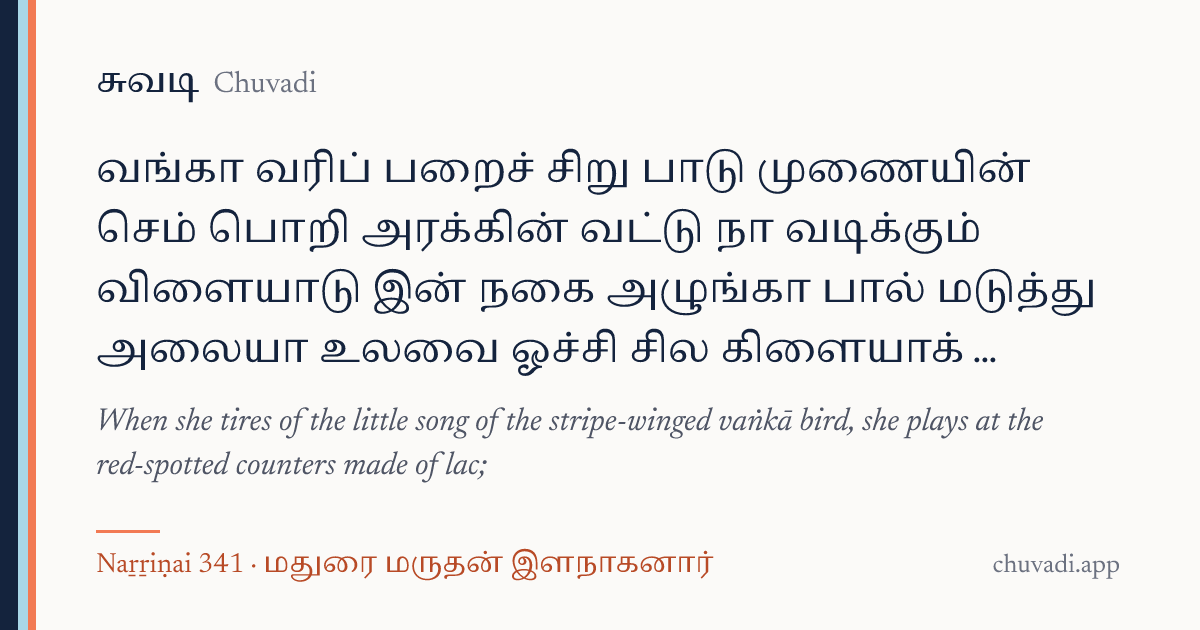
- When she tires of the little song of the stripe-winged vaṅkā bird,
- she plays at the red-spotted counters made of lac;
- her sweet laughter at play never fades; she takes her milk,
- waves a dry twig that strikes no one, and, with a few gathered round as kin,
- practises little riddles with the hill-dwelling kuṟavaṉ:
- she has good company, that young girl. But we,
- at the hard front of bitter enmity, now that cool rain has poured,
- are bewildered at midnight as the waters roar, while with the chill
- the north wind from foreign lands buffets us;
- we have no companion, we are alone, we in the war camp.
What the poem says
The hero has gone away on a royal task and cannot bear the separation (labelled kuṟiñci, poem by Maturai Marutaṉ Iḷanākaṉār). He is in a war camp in the rainy, cold season, a setting that would more usually be mullai or pālai; the kuṟiñci label may come only from the hill-country details of the girl's home.
He pictures the heroine at home: tired of listening to a bird's song, she plays with lac counters, laughs, drinks her milk, waves a harmless twig, and swaps riddles with a hill-man of her family's people. Whatever the exact details, the sense is that she is surrounded by company and play. He, by contrast, is at a dangerous frontier, kept awake at midnight by rain, roaring water and an icy north wind from strange country, with no one beside him.
The contrast between her full home and his empty camp carries the poem, although it may be his imagination that she is untroubled. Lines 2 to 5 are very difficult: 'nā vaṭikkum', 'aḻuṅkā pāl maṭuttu', 'alaiyā ulavai' and 'kuṟu noṭi' are all uncertain, and the translation gives only a likely sense.