




நற்றிணை 348
பாடல் · The poem
Tap a word to see where else it occurs.
பொருள் · Meaning in TamilAI
நிலவு நீல நிற வானத்தில் பல கதிர்களைப் பரப்பி, பால் நிறைந்த கடல் போல எங்கும் பரந்து கிடக்கிறது. ஊர், பேரொலியோடு மக்கள் பெருகித் திரண்டு நெருங்கி, ஆரவாரம் நிறைந்த தெருக்களில் விழா கொண்டாடுகிறது. காடு, பூக்கள் மலர்ந்து நெருங்கிய ஒவ்வொரு சோலையிலும், வண்டுகள் தாம் விரும்பும் துணையோடு ஒலிக்கின்றன. நானோ, அணிந்த அணிகலன்கள் நெகிழும்படி செய்த தனிமைத் துயரத்தோடு, அடர்ந்த இருண்ட இரவிலும் உறக்கம் இல்லாமல் இருக்கிறேன். ஆகவே இந்த உலகம் என்னோடு போர் செய்கிறதா, அல்லது துயரம் நிறைந்த என் நெஞ்சு உலகத்தோடு போர் செய்கிறதா?
நெய்தல் திணை; வேட்கை பெருகித் தாங்க முடியாமல் ஆற்றாமை மிகுந்த தலைவி சொல்லியது. நிலவு, ஊர், காடு எல்லாம் நிறைவும் கூட்டமுமாக இருக்க, அவள் மட்டும் தனித்திருப்பதே பாடலின் மையம். பாடலில் கடற்கரைக் காட்சி இல்லை; இரங்கல் என்ற உணர்வாலேயே நெய்தல் திணை பொருந்துகிறது.
ஆங்கிலம் · English translationAI
Translation
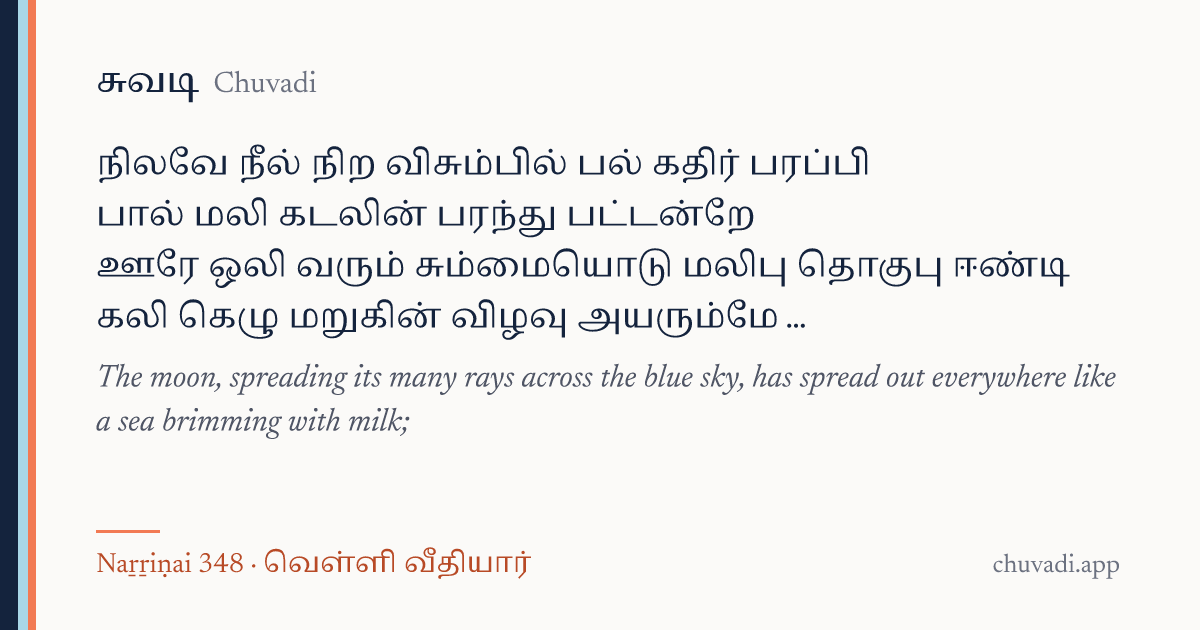
- The moon, spreading its many rays across the blue sky,
- has spread out everywhere like a sea brimming with milk;
- the town, swelling, gathering, crowding with a roaring din,
- holds a festival in its noisy streets;
- the woods: in every grove crowded with blossoming flowers
- the bees hum with the mates they love;
- and I, with the lonely grief that has loosened my fine jewels,
- even through the thick dark night find no sleep;
- so, is it this world that is fighting with me,
- or is my grieving heart fighting with the world?
What the poem says
The heroine's longing has grown past bearing, and she speaks out of it (neytal, poem by Veḷḷivītiyār).
The poem is built on a clear pattern: the moon, the town, the woods, and then 'I'. The moonlight spreads like a sea of milk; the town is crowded and loud with a festival; in every flowering grove the bees hum beside their mates. Everything around her is full, bright and joined. She alone is apart, her ornaments loose from wasting, awake all through the dark night.
The last two lines turn the contrast into a question: is the world at war with her, or is her own suffering heart at war with the world? Its very gladness seems hostile to her.
The neytal label fits the poem's mood of pining rather than any seashore scene; there is no shore in it at all. The repeated '-ē' endings (nilavē, ūrē, kāṉē, yāṉē) give the Tamil a measured, almost formal rhythm.