



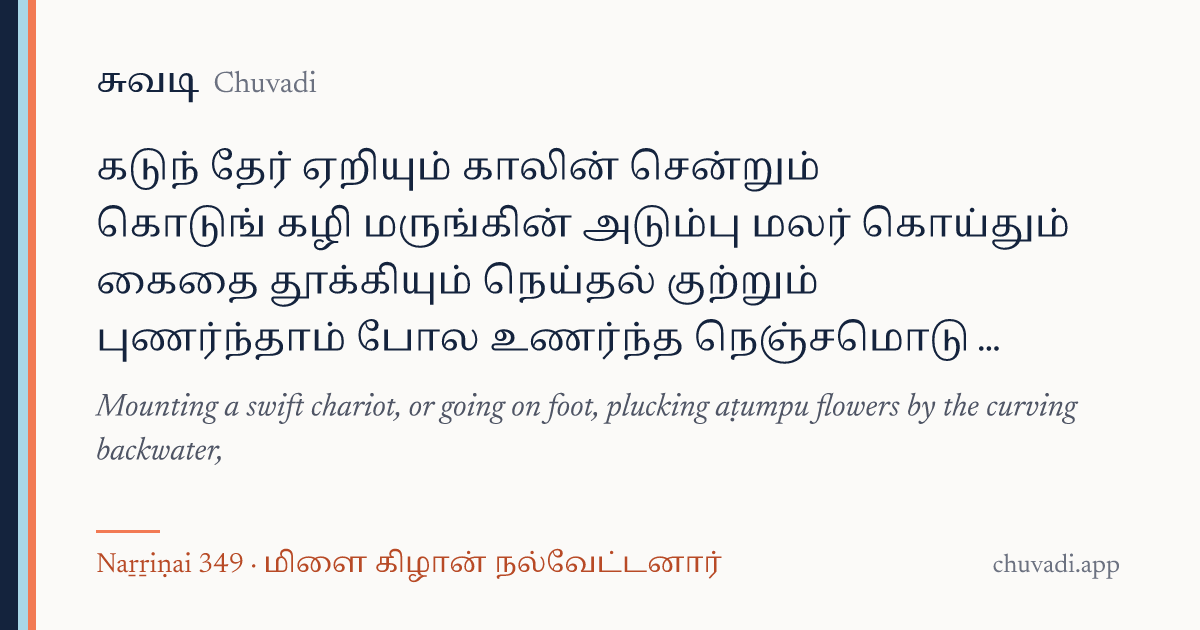

நற்றிணை 349
பாடல் · The poem
Tap a word to see where else it occurs.
பொருள் · Meaning in TamilAI
விரைந்த தேரில் ஏறியும், காலால் நடந்தும், வளைந்த கழியின் அருகே அடும்பு மலர்களைப் பறித்தும், தாழையைத் தூக்கியும், நெய்தல் மலர்களைக் கொய்தும், அவளோடு ஏற்கெனவே கூடிவிட்டது போல உணரும் நெஞ்சத்தோடு, நாள்தோறும் இவ்வாறு இருக்கிறோம். புனைந்த மாலையும் பசும்பொன் அணியும் உடைய வேந்தர்கள் ஒளிரும் வேல்கள் நிறைந்த போர்க்களத்தில் யானைகள் வீழும்படி போரிட்டு அழிந்த பாசறையில், பெரிய புண்பட்டுக் கிடப்பவர்களின் அருகே சுற்றித் திரியும் பேய் போல, அவள் பின்னால் நின்று காத்திருப்பதில் சலிக்காத நம்மைப் பற்றி, அந்தப் பரதவர் மகள் என்ன நினைக்கிறாளோ?
நெய்தல் திணை; தோழி கேட்கும்படி தலைவன் தனக்குள் சொல்லியது. போர்க்களத்தில் புண்பட்டவர்களைச் சுற்றும் பேய் என்ற கடுமையான உவமை, அவனுடைய விடாத காத்திருப்பையும், தன்னைத் தானே எள்ளும் தொனியையும் காட்டுகிறது. தோழி கேட்பதால், இது அவளுடைய உதவியை வேண்டும் குறிப்பு.
ஆங்கிலம் · English translationAI
Translation
- Mounting a swift chariot, or going on foot,
- plucking aṭumpu flowers by the curving backwater,
- lifting the kaitai, and picking the neytal,
- with a heart that feels as though we were already joined,
- though day after day we are like this; of kings with woven garlands
- and fresh gold ornaments, in their shattered war camp,
- who fought in the press of flashing spears till elephants fell,
- like a ghoul hovering by those who lie with great wounds,
- about us, who never tire of waiting behind her,
- what does she think, I wonder, the fisherman's daughter?
What the poem says
The hero speaks to himself, but loud enough for the friend to hear (neytal, poem by Miḷai Kiḻāṉ Nalvēṭṭaṉār).
He lists the ways he spends his days near the heroine: coming by chariot or on foot, picking aṭumpu blossoms by the backwater, holding up the screw-pine (kaitai), gathering neytal lilies. In his heart it is as if they were already united, yet nothing has come of it.
Then comes a startling comparison. After a battle in which kings in gold ornaments clashed and elephants fell, a ghoul (pēy) lingers beside the badly wounded, waiting. He is like that ghoul, always hanging about behind her, never tiring of it. What, he wonders, does the fisherman's daughter think of him?
The grim image from the battlefield is unusual in a love poem. It conveys the doggedness of his waiting and also a certain self-mockery. Since the friend is listening, the words are a plea for her help.
The syntax of lines 5–9 is long and runs across the lines; the ghoul is the point of comparison, and the kings and war camp are only its setting.