




நற்றிணை 350
பாடல் · The poem
Tap a word to see where else it occurs.
பொருள் · Meaning in TamilAI
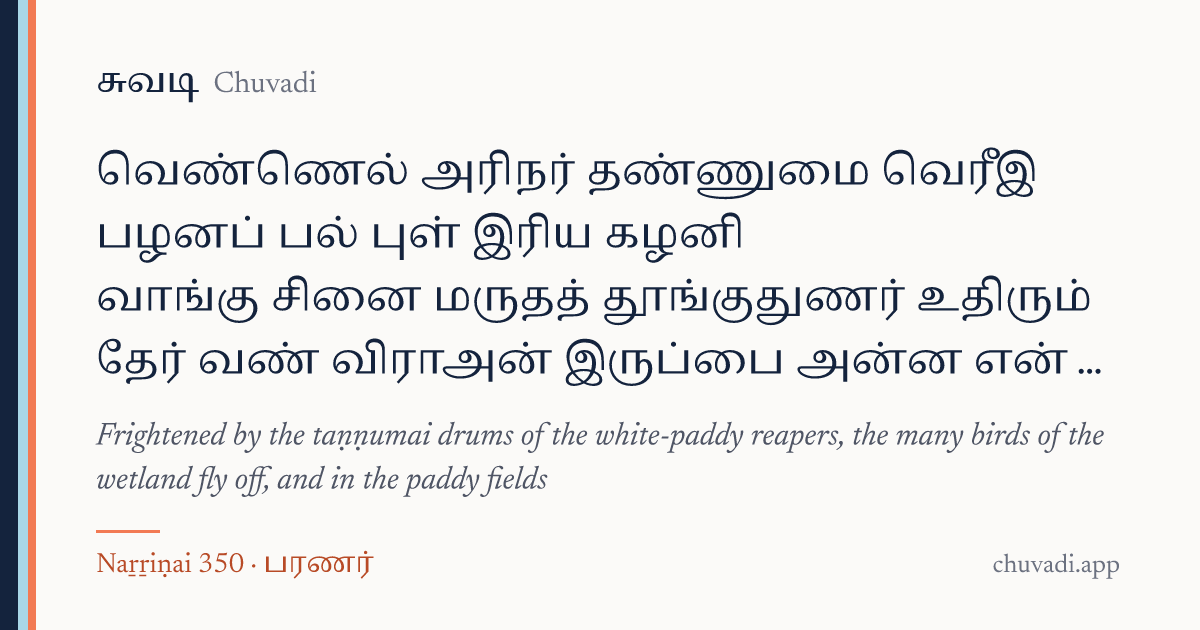
வெண்ணெல் அறுப்பவர்கள் அடிக்கும் தண்ணுமை ஓசைக்கு அஞ்சி, வயல்வெளியின் பல பறவைகள் பறந்தோட, வளைந்த கிளைகளையுடைய மருதமரத்தின் தொங்கும் பூங்கொத்துகள் கழனியில் உதிரும்; தேர்களை வாரி வழங்கும் வள்ளலான விராஅனின் இருப்பை என்ற ஊரைப் போன்றது என் பழைய அழகு. அந்த அழகு அழிந்தாலும் அழியட்டும்; உன்னை என் அருகே வர விடமாட்டேன். விட்டால், தழுவும் கைகளைத் தாங்கும் வலிமையுடைய திரண்ட முலைகள் உன் சந்தனத்தைச் சிதைத்திருக்கின்றன; உன் மாலை வாடியிருக்கிறது; அப்படிப்பட்ட உன்னைத் தழுவுவது, குற்றமில்லாத ஒரு கலத்தைத் தழுவியது போலவே ஆகும். வர வேண்டாம்; உன்னைத் தழுவி நின்றவள் நீடு வாழட்டும்!
மருதத் திணை; பரத்தையிடமிருந்து திரும்பிய தலைவனின் வேண்டுகோளைத் தலைவி மறுத்துச் சொல்லியது. சிதைந்த சந்தனமும் வாடிய மாலையும் அவன் வேறொருத்தியைத் தழுவியதற்குச் சான்று. விராஅன் வள்ளல் தன்மைக்குப் புகழ் பெற்ற ஒரு குறுநில மன்னன். ஆசு இல் கலம் தழீஇயற்று என்ற தொடரின் பொருள் உறுதியாகத் தெரியவில்லை; இது எள்ளலாக இருக்கலாம், அல்லது பாடம் சிதைந்திருக்கலாம்.
ஆங்கிலம் · English translationAI
Translation
- Frightened by the taṇṇumai drums of the white-paddy reapers,
- the many birds of the wetland fly off, and in the paddy fields
- the hanging clusters of the bending-branched marutam fall:
- like Iruppai of Virāaṉ, so generous in giving chariots, was my
- old beauty; if it is lost, let it be lost. Come close
- I will not let you; for if I did let you, it would be, as you press me,
- with the strength to bear embracing arms, heaped breasts
- have smeared your sandal paste, your garland is withered,
- like clasping to oneself a spotless vessel.
- Do not come; long may she live, the one who stood holding you close!
What the poem says
The heroine refuses the hero when he comes back from a courtesan (marutam, poem by Paraṇar). The colophon says she turned away from sulking, here meaning she will not even play the usual game of reconciliation.
The poem opens with a lively harvest scene: reapers beat drums, the wetland birds take fright, and the clusters of marutam flowers drop into the fields. This is the town of Iruppai, belonging to Virāaṉ, a chieftain famed for giving away chariots. Her former beauty was as rich as that town; if it is now gone, she says, let it go. She will not let him come near.
The reason is on his body. The sandal on his chest has been rubbed by another woman's breasts and his garland is crushed and faded. She ends with bitter courtesy: let him not come, and long may the woman who held him live.
Line 9 is genuinely unclear. 'Ācu il kalam taḻīiyaṟṟu' seems to mean 'like embracing a spotless vessel'; how this fits is not certain. It may be ironic, or the text may be damaged.