




நற்றிணை 357
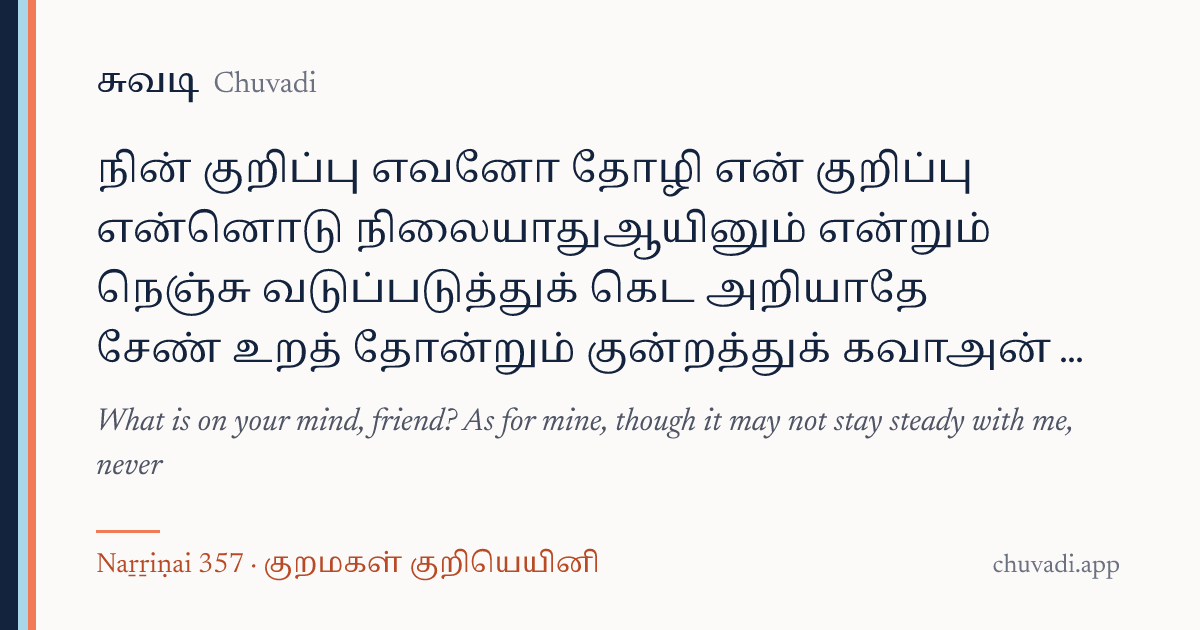
பாடல் · The poem
Tap a word to see where else it occurs.
பொருள் · Meaning in TamilAI
தோழி, உன் மனத்தில் என்ன இருக்கிறது? என் மனமோ என்னோடு நிலையாக நிற்காவிட்டாலும், என் நெஞ்சில் வடுவை உண்டாக்கி அழிந்துபோவதை ஒருபோதும் அறியாது. தொலைவிலிருந்தே தெரியும் குன்றத்தின் சரிவில், மழையில் நனைந்து வருந்திப் பின் உலர்ந்த, மணி போன்ற புள்ளிகளையுடைய கொண்டையும் தோகையும் உடைய மயில் ஆடும் சோலையில், அழகிய அகன்ற பாறையில் உள்ள அகன்ற வாயுடைய பசுமையான சுனையில், மையுண்ட கண்களைப் போன்ற நீலமலர்களைச் செருகிக்கொண்டு, நீரலைகளால் கலைந்த மாலையோடு, மலைச்சாரல் நாடனோடு நான் விளையாடிய அந்த நாளை என் மனம் மறக்காது.
குறிஞ்சித் திணை; தலைவன் மணம் செய்யத் தாமதித்தபோது, தான் பொறுத்துக்கொள்வேன் என்று உணர்த்தும்படி தலைவி தோழியிடம் சொல்லியது; வீட்டில் மனம் கலங்கி மாறிவிட்டாய் என்ற தோழிக்குத் தலைவி சொன்னதாகவும் கொள்ளலாம். அவனோடு சுனையில் ஆடிய இனிய நினைவே அவளுக்கு வலிமை தருகிறது. இரண்டு மூன்றாம் வரிகளின் அமைப்பு சுருக்கமானது; அவற்றை இறுதி நினைவோடு சேர்த்துப் பொருள் கொண்டோம்.
ஆங்கிலம் · English translationAI
Translation
- What is on your mind, friend? As for mine,
- though it may not stay steady with me, never
- will it scar my heart and fade away, the memory of
- how, on the slope of the hill that stands out from far away,
- where the peacock, its crest gem-spotted and its plumes dried after struggling with the rain,
- dances with its feathers in the grove,
- in the broad-mouthed green pool on the rock of lovely open space,
- tucking in nīlam flowers like kohl-lined eyes,
- my garland tossed loose by the rippling water,
- I played, that day, with the man of the mountain slopes.
What the poem says
The heroine speaks to her friend while the hero's marriage plans drag on, meaning to show that she can bear it (kuṟiñci, poem by Kuṟamakaḷ Kuṟiyeyiṉi, 'Kuṟiyeyiṉi, daughter of the hill people', one of the women poets of the anthology). The colophon offers a second setting: the friend has said the heroine looks changed and distracted at home, and this is her reply.
She admits her mind may waver, but one thing will never fade or leave a wound: the memory of the day she played with him in a green rock pool on the hillside. The scene is precise and happy. A peacock, its feathers dried after the rain, dances in the grove; she has tucked blue nīlam lilies, like eyes, into her hair, and the water tosses her garland loose.
The memory is her strength. Because that day is secure in her, she can wait.
The grammar of lines 2–3 is compressed; the translation joins them to the final memory, which seems the most natural reading.