



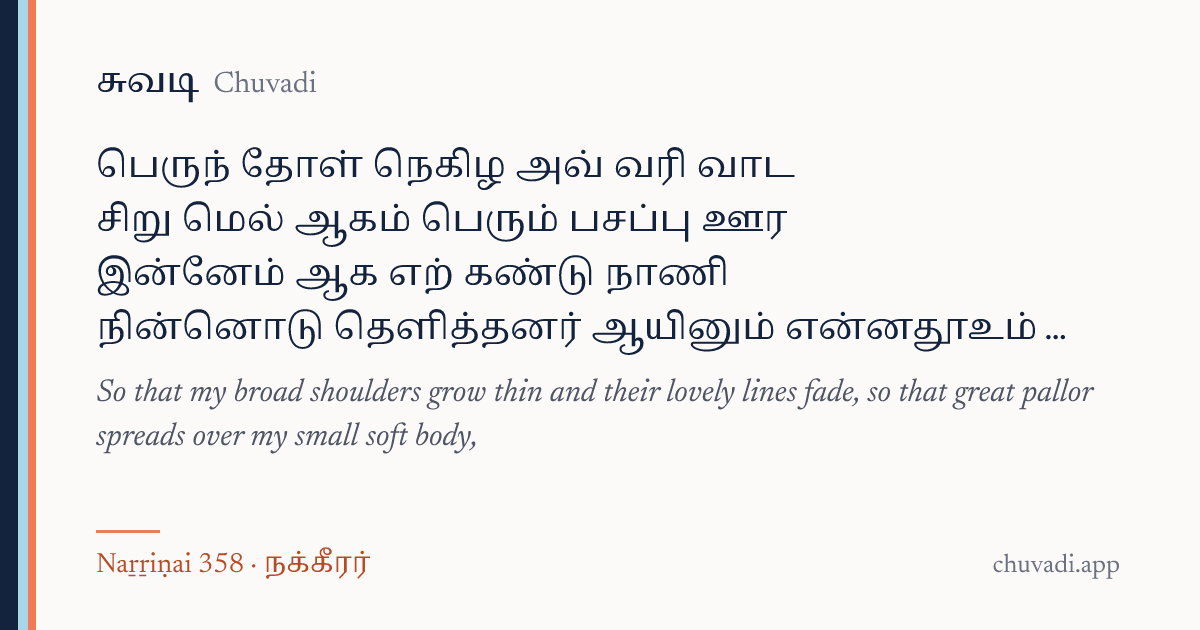

நற்றிணை 358
பாடல் · The poem
Tap a word to see where else it occurs.
பொருள் · Meaning in TamilAI
என் பெரிய தோள்கள் மெலிந்து அவற்றின் அழகிய வரிகள் வாடவும், என் சிறிய மென்மையான உடலில் மிகுந்த பசலை படரவும், நான் இந்த நிலைக்கு வந்துவிட்டேன். என்னைக் கண்டு நாணி, அவர் உன் முன்னிலையில் உறுதிமொழி தந்திருந்தாலும், எவ்வகையிலும் அவரை வருத்தாமல் காத்தருள்வாயாக, நீ வாழ்க என்று சொல்லி, கூட்டமான பரிவாரங்களோடு உறையும் தெய்வத்துக்கு உயர்ந்த பலிப்பொருள்களைத் தூவி வழிபட்டு வருவோம்; தோழி, வா, போவோம். பெரிய சிவந்த இறாலின் பஞ்சு போன்ற வளைந்த தலையைச் சிறிய வெண்ணிறக் காக்கை நாள்தோறும் இரையாகப் பெறும், பசும்பொன் அணிந்த வழுதியின் மருங்கை என்ற ஊரைப் போன்ற, பெறுவதற்கு அரிய என் சிறந்த அழகு அழியும்படி, என்னைப் பிரிந்து அங்கே தங்கியிருக்கும் வலிமை உடையவருக்காக அப்படி வேண்டுவோம்.
நெய்தல் திணை; களவுக்குப் பின் மணம் செய்யாமல் பொருளுக்காகத் தலைவன் பிரிந்தபோது, ஆற்றாத தலைவி தோழிக்குச் சொல்லியதாக இங்கு கொண்டோம்; தோழி தலைவியைத் தேற்றியதாகவும் கொளு கூறுகிறது. தெய்வத்தின் முன் தந்த சூளைப் பொய்த்தவனைத் தெய்வம் வருத்தும் என்ற நம்பிக்கையால், அவனைக் காக்கும்படி வேண்டுகிறாள். வழுதி பாண்டிய அரசனைக் குறிக்கும் பெயர். மூன்று முதல் ஐந்து வரிகளில் யார் நாணியது என்பது உறுதியாகத் தெரியவில்லை.
ஆங்கிலம் · English translationAI
Translation
- So that my broad shoulders grow thin and their lovely lines fade,
- so that great pallor spreads over my small soft body,
- now that I have become like this, seeing me, and out of shame,
- 'though he swore his promise before you, in any way
- keep from harming him, may you be blessed,' so saying,
- to the god attended by his hosts we will scatter rich offerings,
- pray, and come back; let us go, friend,
- where the curled, tufted head of the great red prawn
- is the small white crow's daily food,
- like Maruṅkai of Vaḻuti with fresh gold ornaments, my
- rare, hard-won, lovely beauty fading,
- for him who has had the strength to leave and live over there.
What the poem says
The hero went away to earn wealth after their union, without first marrying the heroine (neytal, poem by Nakkīrar). The colophon gives two settings: the friend, fearing she has lost the heroine to grief, steadies her; or the heroine herself, failing, says this to her friend. The translation follows the second.
She has wasted away: shoulders thin, pallor all over her body. The hero swore his promise in the presence of a god, and a god who sees an oath broken may punish the oath-breaker. So she proposes a surprising rite. They will make offerings to the god and pray not for the hero to be punished but for him to be spared.
Her beauty is compared to Maruṅkai, a town of the Pāṇṭiya king (Vaḻuti), where the sea is so rich that small white seabirds feed every day on the heads of big red prawns. That beauty is fading, and still she prays for the man strong enough to leave her.
Lines 3–5 and the ending are compressed, and who is ashamed in line 3 is not certain; the reading here is one reasonable one.