



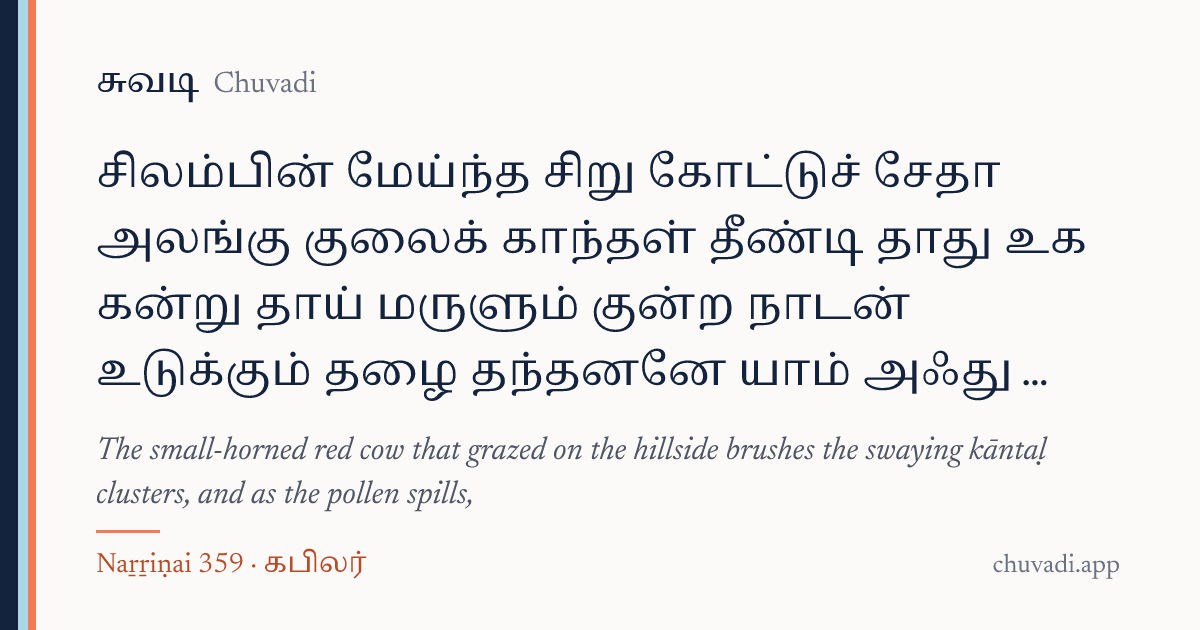

நற்றிணை 359
பாடல் · The poem
Tap a word to see where else it occurs.
பொருள் · Meaning in TamilAI
மலைச்சரிவில் மேய்ந்த சிறிய கொம்புகளையுடைய சிவந்த பசு, அசையும் குலைகளையுடைய காந்தளைத் தீண்டியதால் மகரந்தம் அதன் மேல் உதிர, அதன் கன்று தன் தாயையே அடையாளம் தெரியாமல் மயங்கும். அத்தகைய குன்றநாட்டை உடையவன் நாம் உடுத்திக்கொள்ளத் தழையாடையைக் கொண்டுவந்தான். அதை உடுத்தினால் அன்னைக்கு அஞ்சுகிறோம்; திருப்பிக் கொடுத்தால் அவனோடு உள்ள உறவு கெட்டுவிடுமோ என்று அஞ்சுகிறோம். இதற்கிடையில், போரிடும் வலிய வரையாடும் பாய்ந்து ஏற முடியாத, அச்சம் தரும் தெய்வங்கள் உறையும் அவனுடைய மலைச்சரிவுகளில் பறிப்பதற்கு அரிதான அந்தத் தழைகள் வாடிப்போகாவோ?
குறிஞ்சித் திணை; தலைவன் தந்த தழையை ஏற்றுக்கொண்டு நின்ற தோழி, அவன் குறிப்பின்படி நடந்தது. தழையை அணிந்தால் களவு வெளிப்படும், மறுத்தால் தலைவன் வருந்துவான் என்ற இக்கட்டைச் சொல்கிறாள். மகரந்தம் படிந்த பசுவைக் கன்று அடையாளம் தெரியாமல் மயங்குவது, உடலில் அணிவது ஆளையே மாற்றிக் காட்டும் என்ற குறிப்பைத் தரலாம்; இது பாடலில் வெளிப்படையாக இல்லை.
ஆங்கிலம் · English translationAI
Translation
- The small-horned red cow that grazed on the hillside
- brushes the swaying kāntaḷ clusters, and as the pollen spills,
- her calf mistakes its own mother: the man of that hill country
- has brought us a leaf-skirt to wear. If we
- wear it, we fear our mother; if we hand it back,
- we fear ruin to our bond with him; and meanwhile,
- will they not wither, those leaves? From his mountain,
- where even the fighting mountain goat does not leap,
- from the ridges haunted by spirits, leaves hard to pluck.
What the poem says
The friend has accepted a gift of a leaf-skirt (taḻai) from the hero and stands holding it, uncertain, before going along with what he hints at (kuṟiñci, poem by Kapilar).
A leaf-skirt was a common love-gift from a man of the hills. Wearing it would show the family that someone was courting the girl; refusing it would hurt the hero and endanger the relationship. The friend states the dilemma neatly in two balanced lines, and then adds the practical worry: while they hesitate, the leaves will wither. And these are no ordinary leaves: he gathered them on cliffs where even the sure-footed mountain goat will not jump, on ridges haunted by spirits (cūr).
The opening image is playful. A red cow, dusted with yellow kāntaḷ pollen, looks so different that her own calf cannot recognise her. Something worn on the body can disguise, or betray; and the girls fear what their mother would make of a new leaf-skirt.
That link between the cow and the skirt is an interpretation; the poem leaves it implicit.