



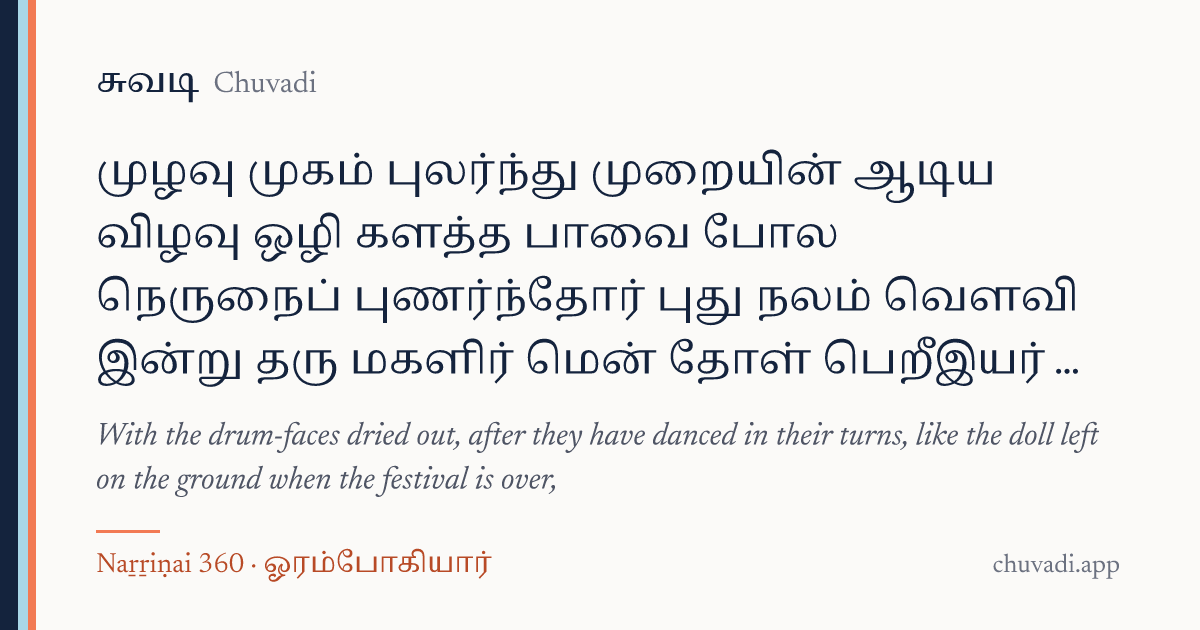

நற்றிணை 360
பாடல் · The poem
Tap a word to see where else it occurs.
பொருள் · Meaning in TamilAI
முழவுகளின் முகம் உலர்ந்து, முறைப்படி ஆடி முடித்த பின், விழா முடிந்த களத்தில் கிடக்கும் பொம்மை போல, நேற்று நீ கூடிய பெண்களின் புதிய அழகைக் கவர்ந்துவிட்டு, இன்று கொண்டுவரப்படும் பெண்களின் மென்மையான தோள்களைப் பெறுவதற்காகப் பெருமானே, நீ போ; உன் பரத்தை சிறப்பாக வாழட்டும். பலரும் பழிப்பதற்கு நாணி விரைவாக நீ வந்திருக்கிறாய். அன்போடு பேணும் பாகர்கள் இரும்புத் தோட்டியால் குத்தி வருத்த, கையில் வைத்த உணவை உண்ணாமல் உடல்மேல் பூசிக்கொள்ளும், உண்ண விரும்பாத யானையின் கவளம் போல, நீ அடைந்த மிகப் பெரிய துன்பத்தைக் கண்டு நான் மகிழ்கிறேன். அதோடு, நாங்கள் வீட்டில் சோம்பலாக உறங்கவும் முடியும்.
மருதத் திணை; தலைவியின் குறிப்பை அறிந்த தோழி பரத்தையிடமிருந்து வந்த தலைவனுக்கு வாயில் மறுத்தது; தலைவி ஊடிச் சொன்னதாகவும் கொள்ளலாம். விழா முடிந்தபின் கைவிடப்படும் பாவை, அவன் கூடிக் கைவிடும் பெண்களைக் குறிக்கிறது. உண்ண மறுக்கும் யானையின் கவள உவமை எதைக் குறிக்கிறது என்பதும், கசிந்தவர் என்ற சொல்லின் சரியான பொருளும் உறுதியாகத் தெரியவில்லை.
ஆங்கிலம் · English translationAI
Translation
- With the drum-faces dried out, after they have danced in their turns,
- like the doll left on the ground when the festival is over,
- you steal the fresh beauty of the women you joined yesterday;
- to win the soft shoulders of the women brought to you today,
- go, great lord; may your courtesan prosper!
- Ashamed of the blame of many, quickly,
- as the fond keepers prod it with the iron spike,
- what is put into its trunk it only smears all over its body:
- like the rice-ball of the unwilling elephant, very great
- is the trouble you have come to; I rejoice in it,
- and besides, we shall have our idle sleep at home.
What the poem says
The friend, having read the heroine's mind, refuses the hero entry after he has been with courtesans (marutam, poem by Ōrampōkiyār). The colophon also allows that the heroine herself speaks in sulking anger.
The first image is cutting. After a festival, when the drums have gone slack and the dancers have finished, the doll used in the celebration is left lying on the empty ground. That is what happens to the women he enjoys: he takes their fresh beauty one day and abandons them for others the next. So go, she says, and may your courtesan flourish.
The second image is harder. An elephant that does not want its food, prodded by its keepers, takes the rice-ball in its trunk but only smears it over its body. Something like that is his situation: driven back home by shame at public blame, he is offered what he does not really want, or the household will take him back only for show. Either way, the speaker says she is glad of his trouble; at least they will sleep in peace.
The application of the elephant simile and the exact sense of 'kacintavar' (the tender or anxious keepers) are uncertain.