



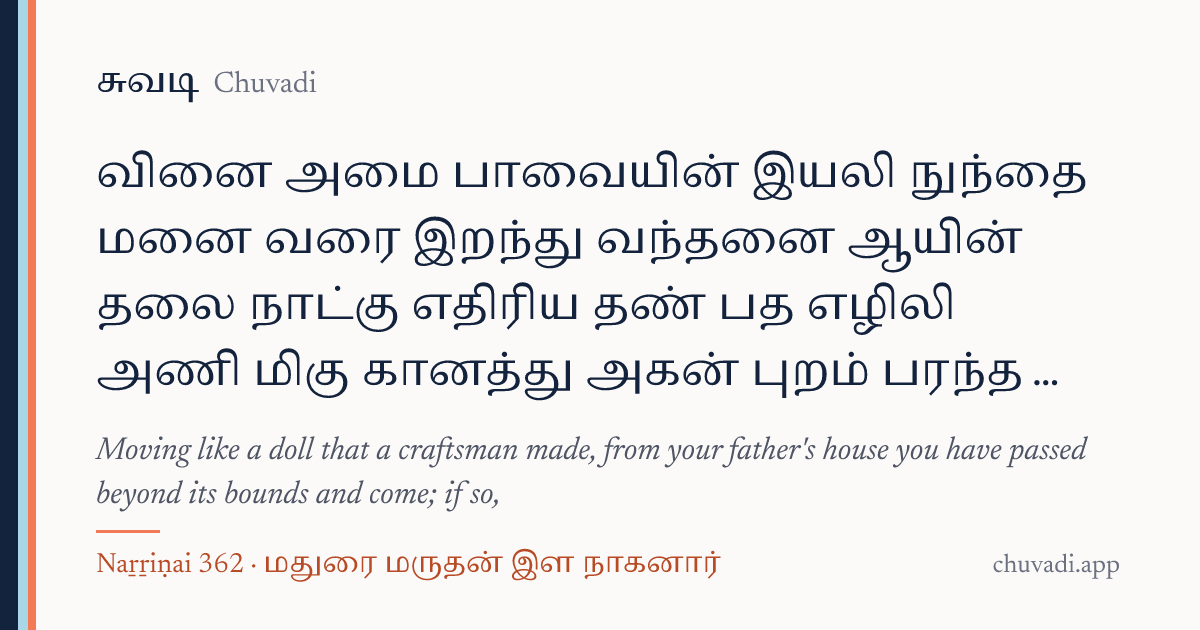

நற்றிணை 362
பாடல் · The poem
Tap a word to see where else it occurs.
பொருள் · Meaning in TamilAI
சிற்பி செய்த பாவையைப் போல அசைந்து நடந்து, உன் தந்தையின் வீட்டு எல்லையைக் கடந்து நீ என்னுடன் வந்துவிட்டாய். அப்படியானால், பருவத்தின் முதல் நாளை எதிர்கொண்டு பெய்த குளிர்ந்த மேகம் இந்த அழகிய காட்டின் அகன்ற பரப்பெங்கும் பரவச் செய்த சிவந்த செம்மூதாய்ப் பூச்சிகளைப் பார்த்தும் பிடித்தும் நீ சிறிது நேரம் விளையாடுவாயாக. நானோ, இளங்களிறு உரசிய பருத்த அடிமரத்தையுடைய வேங்கை மரத்தின் மணல் குவிந்த பக்கத்தில் என் அகன்ற முதுகைச் சாய்த்து நிற்பேன். போர் வந்தால் அஞ்சமாட்டேன், அதை விரட்டியடிப்பேன்; உன் உறவினர் வந்தால் மறைந்துகொள்வேன், மாநிறத்தவளே.
பாலைத் திணை; உடன்போக்கில் தலைவியோடு செல்லும் தலைவன் கூற்று. முதல் மழைக்குப் பின் தோன்றும் செம்மூதாய்ப் பூச்சிகளைக் காட்டி அவளை விளையாடச் சொல்வது, வீட்டைப் பிரிந்த அவளுடைய அச்சத்தைப் போக்கும் அன்பு. பகைவரோடு போரிடுவேன், ஆனால் அவளுடைய சுற்றத்தாரோடு போரிடமாட்டேன் என்பது அவளுடைய குடும்பத்தின் மீது அவன் கொண்ட மதிப்பைக் காட்டுகிறது.
ஆங்கிலம் · English translationAI
Translation
- Moving like a doll that a craftsman made, from your father's
- house you have passed beyond its bounds and come; if so,
- spread by the cool, timely cloud that met the season's first day
- over the broad stretches of this beautiful forest,
- here are the bright red velvet-mites: look at them, gather them,
- and play a little while, you; as for me,
- against the thick-trunked vēṅkai that a young elephant has rubbed,
- on the side where sand is heaped, setting my broad back to it,
- if a fight comes I will not fear it, I will drive it off;
- if your own people come, I will hide, my dark girl.
What the poem says
The hero speaks to the heroine as they elope together, the classic situation of pālai. She has left her father's house, and he encourages her on the journey with tender playfulness. The first rains have brought out the cemmūtāy, the small scarlet velvet-mites that appear on the ground after a shower, and he tells her to look at them and pick them up and play, as though she were still a girl at home.
He himself will stand guard with his back to a vēṅkai tree whose bark an elephant has rubbed, a sign that the forest is wild. The last two lines are the point of the poem: against any attackers he will fight without fear, but if her kinsmen come after them he will hide. He will not fight her family, and that restraint shows his respect for her and for the marriage he hopes will be accepted.
The comparison of her walk to a crafted doll (pāvai) suggests both her delicacy and her unaccustomed stiffness on the road. 'Dark girl' renders māayōḷ, a common term of praise for a woman's dusky complexion.