




நற்றிணை 363
பாடல் · The poem
Tap a word to see where else it occurs.
பொருள் · Meaning in TamilAI
கண்டல் மரங்களை வேலியாகக் கொண்டு, உப்பங்கழிகள் சூழ்ந்த தோட்டங்களையுடைய தெளிந்த கடல் நாட்டுக்குச் செல்கிறேன் என்று சொல்லி நீ பயணம் புறப்பட்டால், ஒரு சிறிதும் தவறாமல், கையில் உள்ள வேலைக்குச் சோர்வடையாத, தளர்வில்லாத கொல்லன் உடைந்த இணைப்புகளைச் சேர்க்கப் பயன்படுத்தும் கடற்கரை மணலைக் கொண்டு வருவாயாக, நீர் நிறைந்த கடற்கரைத் தலைவனே. ஏனென்றால், நேற்று அந்த இனிய மாலையில் உன்னோடு விளையாடியபோது, அவளுடைய பசிய தழையாடை சிதைந்தது, மாலை வாடியது, ஒளிரும் சில வளையல்கள் நெகிழ்ந்தன, நண்டுகளை விரட்டி விளையாடியபோது அவளுடைய சிலம்பும் நசுங்கிவிட்டது.
நெய்தல் திணை; பகற்குறியில் வந்து செல்லும் தலைவனிடம் தோழி கூறியது. சிதைந்த தழையும், வாடிய மாலையும், நசுங்கிய சிலம்பும் களவைக் காட்டிக்கொடுக்கும் சான்றுகள்; அதைச் சரிசெய்ய மணல் கொண்டு வா என்பது விளையாட்டான குத்தல். ஐந்தாம் அடியில் உள்ள பொறி அறு பிணை என்பதன் பொருள் உறுதியாகத் தெரியவில்லை; தலைவனிடம் பேசும்போது தோழி என்ற விளி வருவதும் பொருந்தவில்லை, பாடம் சிதைந்திருக்கலாம்.
ஆங்கிலம் · English translationAI
Translation
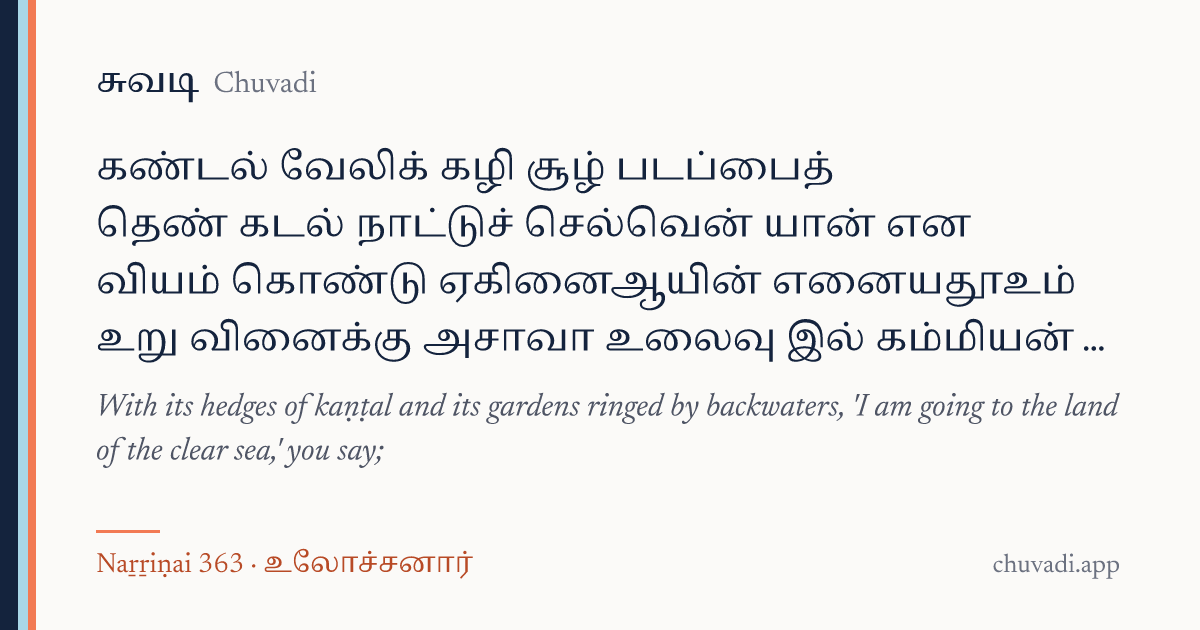
- With its hedges of kaṇṭal and its gardens ringed by backwaters,
- 'I am going to the land of the clear sea,' you say;
- if you set off on that errand, then without fail,
- the tireless smith who never flags at the work in hand
- joins broken links with the sand of the shore: bring some of it
- back with you, friend, O lord of the brimming-water shore,
- for, the fresh leaf-skirt torn and the garland wilting,
- on that fine evening yesterday, playing with you,
- her few bright bangles slipping loose,
- as she chased the crabs, her anklet was crushed out of shape.
What the poem says
The heroine's friend speaks to the hero as he leaves after a daytime meeting. The colophon gives two settings: she asks him to go without worry, since she herself will comfort the heroine, or she is telling the heroine about a gift the hero has brought. The poem itself fits the first best, and it is full of teasing.
The hero says he is going to the seaside country. Then, says the friend, bring back some of the shore sand that the smith uses to join metal, because yesterday evening, while the heroine was playing with you and chasing crabs on the beach, her leaf-skirt was torn, her garland faded, her bangles slipped, and her anklet was bent out of shape. The damage is evidence of their meeting, and an anklet that the household might notice would give the secret away. The request for sand is a playful way of saying: you caused this, now help us hide it.
Line 5 is hard. Smiths are said to use fine sand when joining or finishing metal, but the exact sense of poṟi aṟu piṇai ('a joint without a mark', or 'a broken link') is uncertain. The address 'friend' (tōḻi) in line 6 sits oddly in a speech to the hero; the text may be disturbed there.