



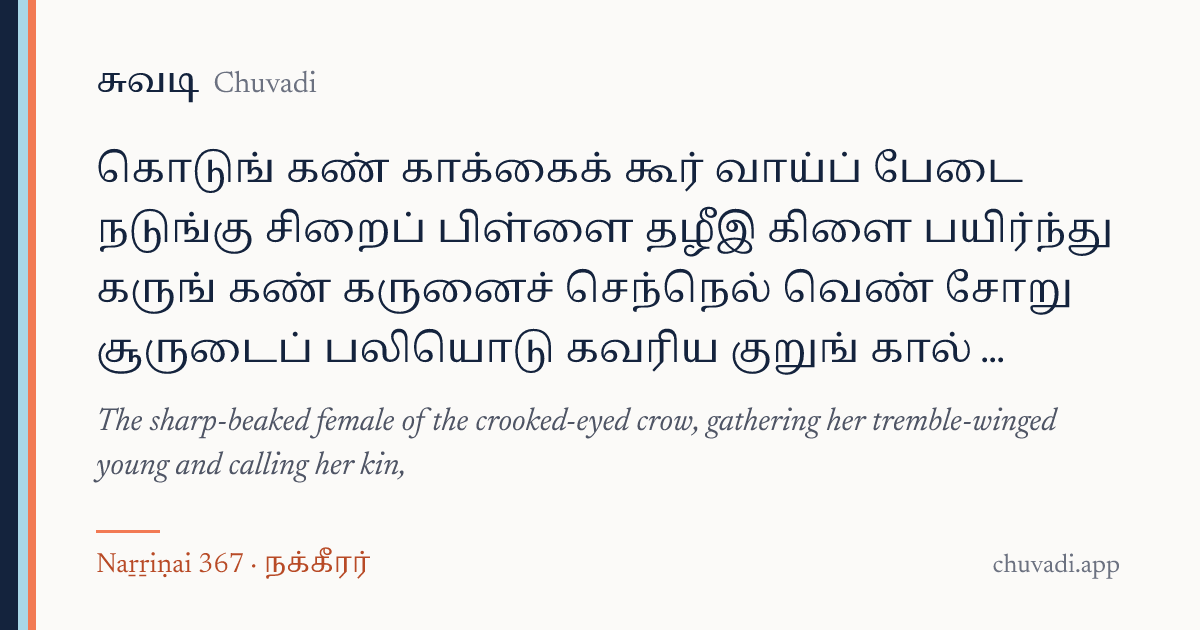

நற்றிணை 367
பாடல் · The poem
Tap a word to see where else it occurs.
பொருள் · Meaning in TamilAI
கோணலான கண்களையுடைய காக்கையின் கூர்மையான அலகையுடைய பெண் காக்கை, நடுங்கும் சிறகுகளையுடைய தன் குஞ்சுகளை அணைத்துக்கொண்டு, தன் சுற்றத்தை அழைக்கிறது. கரிய புள்ளிகளையுடைய பொரியலோடு கூடிய செந்நெல் வெண்சோற்றை, அச்சம் தரும் தெய்வங்களுக்கு இடும் பலியோடு கவர்ந்து உண்பதற்காக, குட்டையான கால்களையுடைய அக்காக்கைகள் உணவு நிறைந்த நல்ல வீடுகளின் அருகே கூட்டமாக இருக்கின்றன. இது பழங்குடிகள் வாழும் அருமன் என்பவனுடைய பெரும்புகழ் பெற்ற சிற்றூர். மென்மையான இயல்புடையவளே, உன் அடர்ந்த கரிய கூந்தலில் உள்ளது போல, குவளையோடு சேர்த்துத் தொடுத்த மணமுள்ள முல்லையின் கட்டவிழ்ந்த மலர்களாலான குளிர்ந்த மாலையைச் சூடிக்கொண்டு அவருடைய இளைஞர்கள் வந்துவிட்டனர். நம்முடையவரும் விரிந்த பிடரிமயிருடைய நல்ல குதிரைகளைச் செலுத்திக்கொண்டு, இந்தப் பனி பெய்யும் நாளில் தவறாமல் வருவார்.
முல்லைத் திணை; தலைவன் வருகையை அறிந்து மகிழ்ந்த தோழி தலைவிக்குக் கூறியது. காக்கை கரைவது விருந்தினர் அல்லது பிரிந்தவர் வருகையை அறிவிக்கும் நிமித்தம் என்ற நம்பிக்கை இங்கே பின்னணியாக உள்ளது. அருமனின் ஊரைப் பற்றிய வருணனை தலைவியின் ஊரைக் குறிக்கிறதா, உவமையாக நிற்கிறதா என்பது பாடலில் தெளிவில்லை.
ஆங்கிலம் · English translationAI
Translation
- The sharp-beaked female of the crooked-eyed crow,
- gathering her tremble-winged young and calling her kin,
- to snatch white rice of red paddy with dark-spotted fried morsels
- set out with the offerings to the fearsome gods, short-legged,
- sit in flocks by the good houses rich in food
- in the far-famed little town of Arumaṉ of ancient lineage;
- gentle girl, like the one in your thick dark hair,
- strung together with kuvaḷai, of fragrant jasmine,
- a cool, fragrant garland of loosened blossoms
- the young men have come wearing; our man too,
- driving his fine horses with their spreading plumes,
- will come without fail on this dewy day.
What the poem says
The colophon says simply 'joy at the arrival'. The heroine's friend tells the heroine that her husband is on his way home. The hero's young men have already arrived, wearing garlands of jasmine and kuvaḷai like the one in the heroine's own hair, and the friend assures her that he himself, driving his plumed horses, will come without delay on this dewy day of the rainy season.
The opening scene of crows is a well-known omen. A crow calling near the house was taken to announce the arrival of a guest or of an absent man, and here the crows flock with their young around the prosperous houses of the town, waiting for the rice and offerings set out for the gods. The image is of a full, contented household, the kind that the hero's return will restore.
Arumaṉ is a chieftain whose town is praised for its old families; little else is known of him from this poem. The connection between the crow scene and the address to the girl is loose: the town may be her own home, or it may stand as an implied comparison, and the text does not make this clear. The meaning of paṟiyātu ('without grieving', 'without delay') in the last line is also open to more than one reading.