




நற்றிணை 368
பாடல் · The poem
Tap a word to see where else it occurs.
பொருள் · Meaning in TamilAI
பெரிய தினைப்புனத்தைக் கவரும் சிறு கிளிகளை ஓட்டியும், கரிய அடிமரத்தையுடைய வேங்கை மரத்தில் கட்டிய ஊஞ்சலில் ஆடியும், வளைந்த அல்குலில் தழையாடை அணிந்தும், உம்மோடு விளையாடி வீடு திரும்புவதைவிட இனியது வேறு ஏதேனும் உண்டோ? ஆனால், பின்னிய கூந்தலில் முதிர்ந்து நிறைந்திருந்த கடுமையான மணத்தையும், பசலை படர்ந்த சிறிய நெற்றியையும் பார்த்து, உள்ளம் உடைந்தவளாய், வேறு ஏதோ ஒன்றைக் காரணமாகச் சுட்டிக்காட்டி, எம் அன்னை வெப்பமான பெருமூச்சு விட்டாள். ஐயனே, நாங்கள் அஞ்சுகிறோம்; நாங்கள் இரங்கத்தக்கவர்கள்.
குறிஞ்சித் திணை; தலைவி இல்லில் செறிக்கப்படப் போவதைத் தோழி தலைவனுக்கு அறிவித்தது. கூந்தலில் உள்ள அயல் மணமும், நெற்றியின் பசலையும் களவைக் காட்டுவதால் அன்னை ஐயம் கொண்டாள். இனிப் புனத்தில் சந்திக்க இயலாது, விரைவில் மணம் பேசி வா என்பது சொல்லாமல் சொல்லப்படுகிறது.
ஆங்கிலம் · English translationAI
Translation
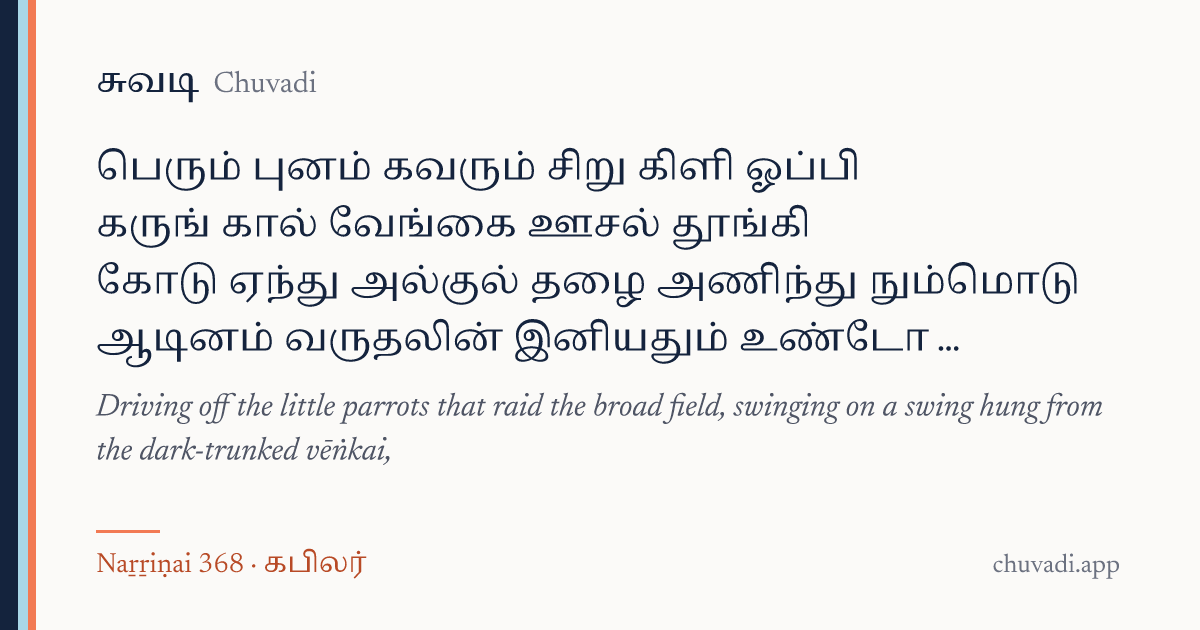
- Driving off the little parrots that raid the broad field,
- swinging on a swing hung from the dark-trunked vēṅkai,
- wearing a leaf-skirt over the curving hips, with you
- to come home after playing — is there anything sweeter?
- But on her braided hair, dark and grown full,
- the heady scent it had taken on, and her small
- brow, overspread with pallor — seeing these,
- with a heart sinking inside, speaking of something else,
- our mother sighed hot sighs;
- sir, we are afraid; we are to be pitied.
What the poem says
The heroine's friend speaks to the hero to let him know that the heroine is about to be confined at home (ceṟippu). She begins by recalling the sweetness of their days in the millet field: scaring off parrots, swinging from the vēṅkai, wearing leaf-skirts, playing with him and coming home. Nothing, she says, could be better.
Then the turn. Mother has noticed two things: the strange fragrance in the heroine's hair, from flowers that did not come from home, and the pallor (pacalai) spreading over her brow, the classic sign of love-sickness. Mother says nothing directly; she speaks of something else and sighs heavily. That silence is more frightening than an accusation. The friend ends with a plain admission of fear.
The message is clear without being stated: the days of meeting in the field are ending, and if he wants the heroine he must come and ask for her in marriage. The phrase veṟi kamaḻ ('heady scent') may also hint at veṟi, the frenzied rite performed when a girl's illness is blamed on a god, and the word may be chosen with that double sense in mind.