



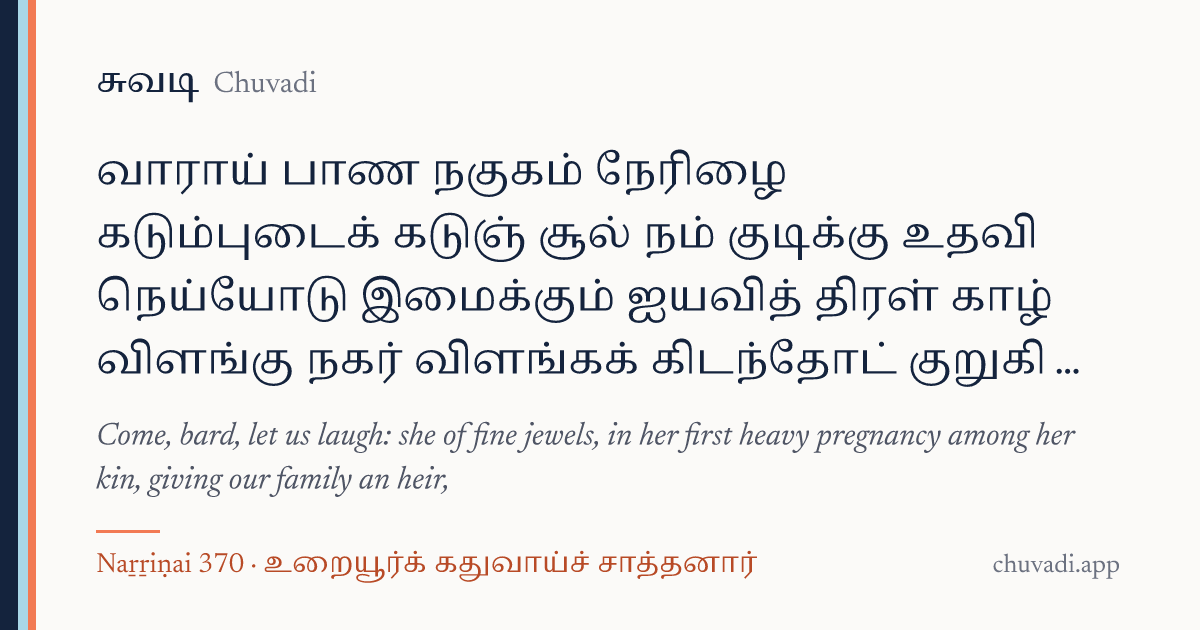

நற்றிணை 370
பாடல் · The poem
Tap a word to see where else it occurs.
பொருள் · Meaning in TamilAI
வா பாணனே, நாம் சிரித்து மகிழ்வோம். அழகிய அணிகலன்களை அணிந்தவள், சுற்றத்தார் சூழ்ந்திருக்க, தன் முதல் கருவைச் சுமந்து, நம் குடிக்கு ஒரு மகனைத் தந்தாள். நெய்யோடு பளபளக்கும் வெண்கடுகுத் திரள்களுக்கு நடுவே, ஒளிரும் மனை மேலும் ஒளிரும்படி படுத்திருந்தாள். அவள் அருகே சென்றேன். மகனைப் பெற்றதால் அவளை வேறு பெயரால் அழைத்து, அழகிய வரிகளும் தேமலும் உடைய அல்குலை உடையவளே, இப்போது நீ முதுபெண்டு ஆகிவிட்டாய், மெல்லிய அழகிய சிலவாகிய கூந்தலை உடையவளே, தூங்குகிறாயா என்று கேட்டு, பலவாறு புகழப்படும் அவள் வயிற்றில் குவளை மலரை ஒற்றினேன். அவளையே நினைத்துக்கொண்டு அங்கே நின்ற என்னைப் பார்த்து, அவள் மெல்ல மொட்டுப் போன்ற நாணப் புன்னகையைக் காட்டி, அழகிய மலர் போன்ற மையுண்ட கண்களைக் கையால் மூடிக்கொண்டாள்.
மருதத் திணை; ஊடல் நீண்டதால் தாங்கமாட்டாத தலைவன் பாணனிடம் கூறியது; முன்பு நடந்ததைப் பாணனுக்குச் சொன்னதாகவும் கொள்ளலாம். பிள்ளை பெற்ற அறையில் காப்பாக வெண்கடுகை நெய்யோடு இடுவது வழக்கம். முதுபெண்டு என்று அழைத்தது தாயான அவளை அன்போடு கேலி செய்வது; அவள் கண்களை மூடிக்கொண்டது நாணத்தின் அடையாளம்.
ஆங்கிலம் · English translationAI
Translation
- Come, bard, let us laugh: she of fine jewels,
- in her first heavy pregnancy among her kin, giving our family an heir,
- with clusters of white mustard seed glistening with ghee,
- lay making the bright house brighter; I drew near her,
- and since she had borne a son, calling her by a new name, her of the lovely streaked,
- titalai-spotted hips, now become a matron,
- 'Are you asleep, soft one with the lovely fine hair?' I said,
- and pressed a kuvaḷai flower against her much-praised belly;
- as I stayed there thinking of her, she saw me, and slowly
- showing a shy smile like an opening bud,
- she covered her lovely flower-like kohl-darkened eyes with her hand.
What the poem says
The hero speaks to the bard (pāṇaṉ). His wife's sulking has gone on too long and he cannot bear it, so he recalls, perhaps half for comfort and half as a story to be carried to her, a tender moment from the past. The colophon gives this second reading as an alternative: he is telling the bard of something that happened before.
She had just given birth to their first son, among her own kin. White mustard seed mixed with ghee, used in the lying-in chamber as protection, glistened around her. He came close, teasingly called her by a new title as an 'old woman', a matron now that she was a mother, asked if she was asleep, and laid a kuvaḷai flower on her belly. She saw him, smiled shyly, and hid her eyes with her hand.
The poem belongs to marutam, the landscape of sulking (ūṭal), but its centre is a memory of intimacy within marriage. 'Let us laugh' invites the bard to share the delight of the scene; it may also be gently rueful, set against her present anger. Titalai refers to the pale spots on a woman's skin, conventionally thought beautiful and often linked with motherhood.