




நற்றிணை 371
பாடல் · The poem
Tap a word to see where else it occurs.
பொருள் · Meaning in TamilAI
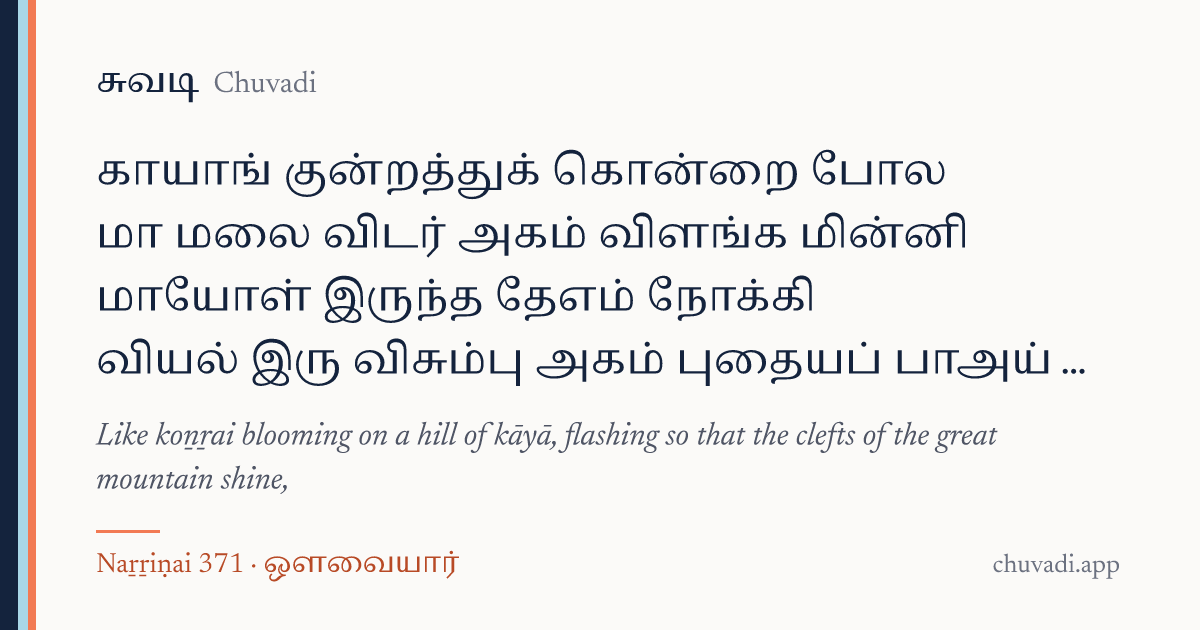
காயா மலர்கள் நிறைந்த குன்றில் பூத்த கொன்றை மலர் போல, பெரிய மலையின் பிளவுகள் ஒளிரும்படி மின்னி, மாநிறத்தவளாகிய என் தலைவி இருக்கும் நாட்டை நோக்கி, அகன்ற கரிய வானம் முழுவதும் மறையும்படி பரவி, இதுவரை மழை பெய்யாத மேகங்கள் இப்போது பெய்யத் தொடங்கிவிட்டன. ஒளிவீசும் அவளுடைய வளையல்கள் கழன்று விழ, ஏங்கி, அழகிய அணிகலன்களை அணிந்த அவள் துயரத்தால் வெந்து அழத் தொடங்கியிருப்பாள். அதற்கு எதிராக, முழங்கும் இடியோசையுடைய இந்த இரவில் இடையர்களும் குழல் ஊதத் தொடங்கிவிட்டனர்.
முல்லைத் திணை; வினை முடிந்து திரும்பும் தலைவன் தேர்ப்பாகனிடம் கூறியது. நீல நிறக் காயா மலர்களுக்கு இடையே பொன்னிறக் கொன்றை பூத்தது போல, கரிய மேகத்தில் மின்னல் தோன்றுகிறது. மழையும், தலைவியின் அழுகையும், இடையர் குழலும் ஒருசேரத் தொடங்கின என்று சொல்வதன் மூலம், தேரை விரைந்து செலுத்து என்பதைச் சொல்லாமல் சொல்கிறான்.
ஆங்கிலம் · English translationAI
Translation
- Like koṉṟai blooming on a hill of kāyā,
- flashing so that the clefts of the great mountain shine,
- towards the land where my dark girl stays,
- spreading till the wide dark sky is covered over,
- the clouds that held back their rain have begun to rain;
- her bright, glinting bangles slipping loose, sobbing,
- she of chosen jewels must have begun to burn with grief; and against that
- the herdsmen have begun their flutes
- in this night of the thunder's resounding voice.
What the poem says
The hero speaks to his charioteer as he hurries home, his task completed. The rains have broken, and in mullai convention the rains are the season by which a man has promised to return. Watching the storm move towards the place where his wife waits, he imagines her at that moment.
The opening simile is precise. Kāyā has dark blue flowers and koṉṟai bright golden ones; lightning flashing against the black cloud is like koṉṟai blossoms on a hillside dark with kāyā. The poem then builds with a series of 'have begun': the rain has begun, she has begun to weep, the herdsmen have begun to play their flutes. The threefold repetition of tolaṅkiṉa ('began') in lines 5, 7 and 8 gives the poem its rhythm and its urgency.
The herdsmen's flutes at evening are a stock mullai sound, sweet in themselves but painful to a woman alone. The unstated message to the charioteer is: drive faster. This is one of several poems in Naṟṟiṇai ascribed to Auvaiyār.