




நற்றிணை 372
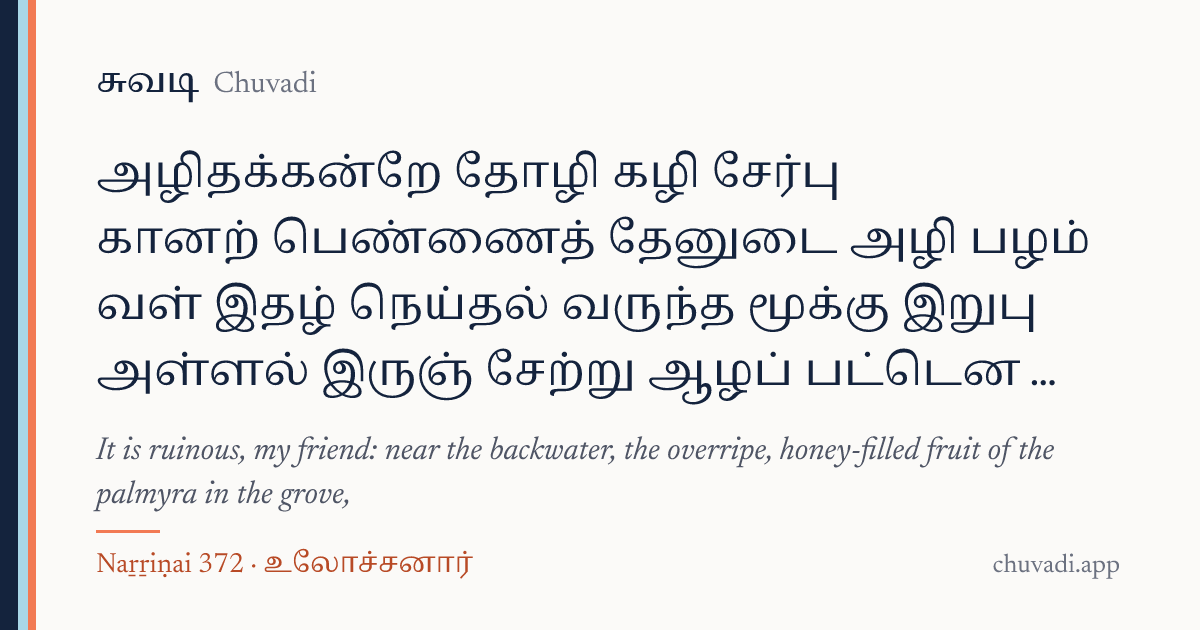
பாடல் · The poem
Tap a word to see where else it occurs.
பொருள் · Meaning in TamilAI
தோழி, இது அழிவைத் தருவதாக இருக்கிறது. உப்பங்கழியை ஒட்டிய கானலில் உள்ள பனையின் தேன் நிறைந்த கனிந்த பழம், காம்பு முறிந்து, பெரிய இதழ்களையுடைய நெய்தல் மலர் நசுங்கும்படி விழுந்து, கரிய குழைசேற்றில் ஆழமாகப் புதைந்ததால், கூட்டமான நாரைகள் அஞ்சிப் பறந்தோடுகின்றன. அத்தகைய துறையின் தலைவன், சங்கின் வளைவு போன்ற வெண்மணலின் உள்ளிடத்தில், என்னை விரும்பிய பெருந்தகையாக, அன்புள்ளத்தோடு அமர்ந்து என்னை இனிதாகப் பார்த்தான். அன்னை தந்த அசையும் வெண்சங்கு வளையல்கள் நான் அவனைத் தழுவியபோது உடைந்தது போல நான் வருந்துவேனோ என்று அஞ்சி, வருந்தாதே என்று சொன்னான் என்று, கரிய கழியைத் துழாவும் குளிர்ந்த தலையையுடைய பரதவர்கள் வீட்டிலிருந்தபடியே, உறுதியான படகுகளின் விளக்குகளை எண்ணிக்கொண்டு, கண்டல் வேலியுடைய கழி சூழ்ந்த நம் நல்ல ஊரில் பேசுகிறார்கள்.
நெய்தல் திணை; தான் இல்லில் செறிக்கப்படுவதை அறிந்து வருந்திய தலைவி, தலைவன் வேலிப்புறத்தே கேட்கும்படி தோழியிடம் கூறியது. பனம்பழம் விழுந்து நெய்தலை நசுக்க நாரைகள் அஞ்சி ஓடுவது, ஒரு சிறு செய்தி ஊர் முழுதும் அலராகப் பரவியதைக் குறிக்கும் உள்ளுறை. ஐந்து முதல் பத்து வரையிலான அடிகளின் தொடர்பு கடினமானது; அவற்றின் பொருள் உறுதியாகத் தெரியவில்லை.
ஆங்கிலம் · English translationAI
Translation
- It is ruinous, my friend: near the backwater,
- the overripe, honey-filled fruit of the palmyra in the grove,
- its stalk snapping, bruising the large-petalled neytal,
- sank deep into the dark, sticky mud, and at that
- the flock of herons flies off in fright — the lord of that shore; like a curving conch
- the white sand, in a sheltered place there, he who desired me,
- the noble one, with a loving heart, sat with me and gazed at me sweetly;
- and the swaying white conch-bangles that mother gave me,
- fearing I would suffer as if they were broken, when I clung to him,
- 'Do not grieve,' he said — so they say, sitting at home,
- the fishermen with cold-drenched heads who stir the dark backwater,
- who count the lights of the sturdy boats,
- in our good town by the backwater, hedged with kaṇṭal.
What the poem says
The heroine speaks to her friend, but, as the colophon explains, the hero is listening nearby. She has learned that she is to be confined to the house, and she speaks of the gossip in the town as though talking of the world in general, so that he will understand that the secret is out.
The opening image carries the hidden meaning (uḷḷuṟai). A ripe palmyra fruit falls, crushes a neytal flower, sinks into the mud, and the herons scatter in alarm. One small event sends a whole flock flying: so the rumour of their meeting has spread from a single seed and frightened everyone.
The middle lines, recalling their meeting on the white sand, are compressed and difficult. As read here, the hero gazed at her lovingly and told her not to grieve when her conch-bangles, a gift from her mother, were in danger of breaking as she held him; and this is exactly what the town now repeats. 'They say' (eṉpa) points to the fishermen, idle on the shore at night counting boat lights, as the source of the talk. The precise syntax of lines 5 to 10 is uncertain, and other ways of dividing them are possible.