




நற்றிணை 373
பாடல் · The poem
Tap a word to see where else it occurs.
பொருள் · Meaning in TamilAI
முற்றத்தில் உள்ள பலாமரத்தின் கனிந்த சுளைகளைத் தின்று, சிறிய தலையையுடைய பெண்குரங்கு இடத்தைக் குப்பையாக்குகிறது. அப்போது மலைநாட்டுப் பெண் ஐவன வெண்ணெல்லைக் குற்றிக்கொண்டே, தன் தந்தையின் மேகம் படிந்த பெரிய மலையைப் பாடுகிறாள். இந்நாட்டுத் தலைவனோடு, தெய்வம் உறையும் மலைச்சாரலின் அருவியில் நீராடி, மழைக்காலத்தில் அரும்புகள் மலர்ந்த, காலத்தைக் கணித்துச் சொல்லும் வேங்கை மரத்தின் அருகே, பலகைகள் பரப்பிய பரணில் ஏறி, வளைந்த கதிர்களையுடைய சிறு தினையிலிருந்து பச்சைக் கிளிக் கூட்டங்களை விரட்டி, இவ்வாறு நாளையும் நாம் அவனோடு கூடியிருக்க முடியுமோ?
குறிஞ்சித் திணை; தலைவி இல்லில் செறிக்கப்படப் போவதைத் தலைவன் அறியும்படி தோழி கூறியது. தினை அறுவடையானதும் புனக்காவல் முடிந்துவிடும்; பிறகு சந்திப்பு இயலாது என்பதே உட்கருத்து. வேங்கை பூப்பது மணத்துக்குரிய நல்ல காலத்தைக் காட்டும் என்பதால் அதைக் கணி என்றனர்; மணம் பேச வேண்டும் என்ற குறிப்பு இதில் உள்ளது.
ஆங்கிலம் · English translationAI
Translation
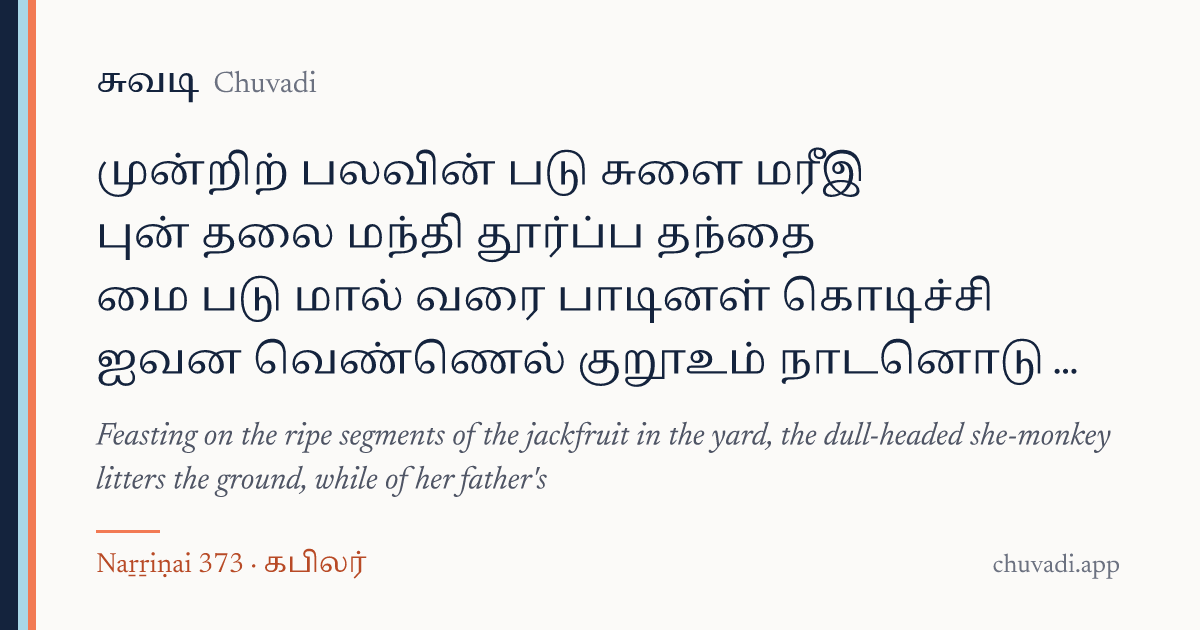
- Feasting on the ripe segments of the jackfruit in the yard,
- the dull-headed she-monkey litters the ground, while of her father's
- great mountain, dark with clouds, the hill-girl sang,
- pounding white aivaṉam rice; with the man of this land,
- bathing in the waterfall of the god-haunted slope,
- then, by the vēṅkai, the tree that reads the seasons, its buds opened by the rains,
- climbing the platform with its spread floor, the green flocks
- to drive from the small millet with its curving heads —
- will that be ours tomorrow too, together?
What the poem says
The colophon says the purpose of this poem is to let the hero know that the heroine will be confined at home. The speaker is the friend, addressing the heroine within the hero's hearing. She paints the life of the hill-village: a monkey eating jackfruit in the front yard and scattering the remains, a girl of the hills singing of her father's mountain as she pounds rice.
The second half lists the pleasures the two girls have shared with the hero: bathing with him in a waterfall on a slope haunted by a god (cūr), climbing the raised platform under the vēṅkai to scare parrots from the millet. The question at the end, 'will we have this tomorrow too?', is the real message. Once the millet is harvested and the heroine is kept indoors, the meetings will stop.
The vēṅkai is called kaṇi vāy, 'with the mouth of an astrologer', because its flowering was taken to mark the auspicious season for marriage; the epithet hints at what the hero should do. Aivaṉam is a kind of hill-rice grown without irrigation.