




நற்றிணை 374
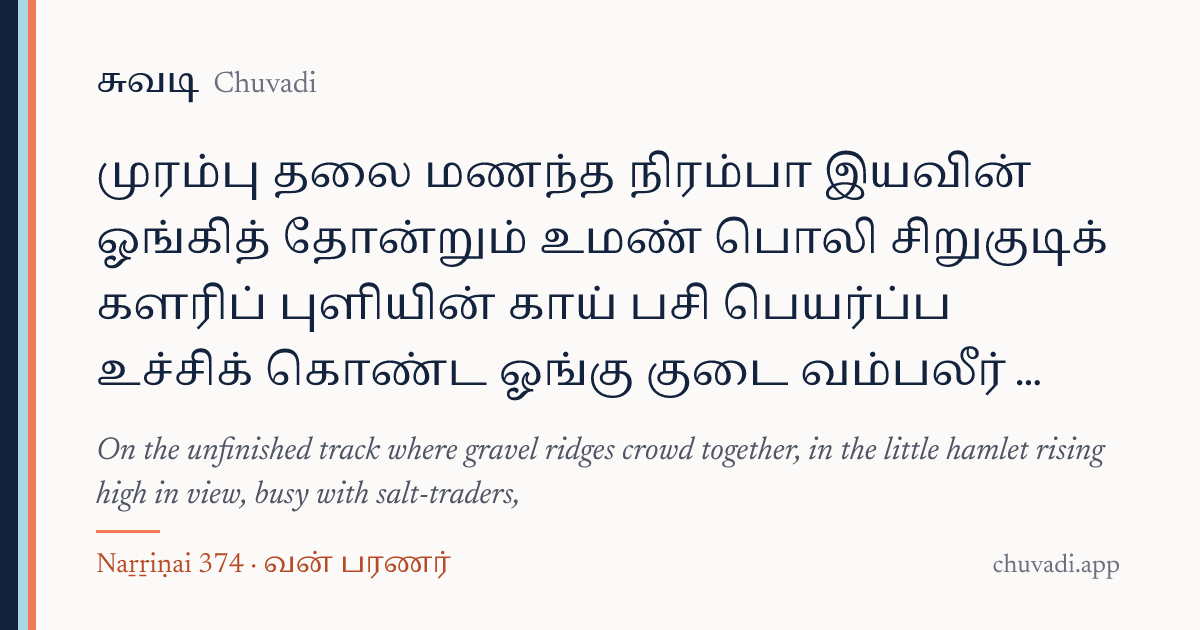
பாடல் · The poem
Tap a word to see where else it occurs.
பொருள் · Meaning in TamilAI
சரளைக் கற்கள் நிறைந்த மேடுகள் கூடிய, முழுமையாக அமையாத பாதையில், உப்பு வணிகர்கள் நிறைந்து உயரத்தில் தோன்றும் சிற்றூரில், உவர்நிலத்தில் வளர்ந்த புளியின் காய் பசியைப் போக்கும் இடத்தில், தலைக்கு மேல் உயர்ந்த குடை பிடித்து வரும் வழிப்போக்கர்களே, அவள் முன்பு எம்மிடம் இருந்தது போலவே இருக்கிறாளா? அதன் பிறகு, கருநீலமணி போன்ற, முடித்த நீண்ட கூந்தல் அவிழ்ந்து தொங்க, கண்ணீர்த் துளிகள் வழிந்து மார்பை நனைக்க, விருந்தினரை உபசரிக்கும் விருப்பமுடைய அவள் வருந்துகிறாளா? அழகிய அணிகலன்களையும் இனிய மொழியையும் உடைய அவளுடைய நிலை எப்படி இருக்கிறது?
முல்லைத் திணை; வினை முடிந்து திரும்பும் தலைவன் வழியில் கண்ட வழிப்போக்கர்களிடம் கேட்டது. விருந்து அயர் விருப்பினள் என்ற தொடர் நற்றிணையின் முந்நூற்று அறுபத்தொன்றாம் பாடலிலும் மகிழ்ந்த தலைவியைக் குறிக்க வருகிறது; இங்கே அது வருந்தும் என்பதோடு சேர்ந்து வருவது கூர்மையான முரண். ஐந்தாம் அடியின் பொருள் உறுதியாகத் தெரியவில்லை.
ஆங்கிலம் · English translationAI
Translation
- On the unfinished track where gravel ridges crowd together,
- in the little hamlet rising high in view, busy with salt-traders,
- where the fruit of the tamarind on salty ground drives off hunger,
- you strangers, holding tall umbrellas over your heads,
- was she as before, as she was with us? And afterwards,
- her long dressed hair, dark as a fine sapphire, hanging down,
- tears running in drops to wet her breast,
- she who longs to make a feast for guests, grieving —
- what is the state of that sweet-voiced girl with fine jewels?
What the poem says
The colophon says the hero, returning home with his task done, speaks to people he meets on the way through the wasteland. He has come to a small hamlet on a rough road where salt-traders (umaṇar) halt, and where the wild tamarind is the only food against hunger. The travellers he addresses carry tall umbrellas, perhaps coming from the direction of his own town.
He asks after the heroine. The questions show what he fears: that her hair is unbound and hanging, that tears fall on her breast, that she who longs to welcome guests as a wife should is instead grieving. Line 8 repeats almost word for word the last line of Naṟṟiṇai 361, where the same phrase describes a wife at peace; here it comes before 'grieving', and the contrast is pointed.
Line 5 is obscure. Muṟṟaiyum uṭaiyamō may mean 'do we still have her as before?' or 'was it so before as well?'; the reading given here is tentative. The poem is placed in mullai, the landscape of patient waiting, but its setting is the dry track of pālai, and the label refers to the theme of return rather than to the scenery.