




நற்றிணை 375
பாடல் · The poem
Tap a word to see where else it occurs.
பொருள் · Meaning in TamilAI
நீண்ட கிளைகளையுடைய புன்னை மரத்தின் மணமுள்ள மகரந்தம் உதிரும்படி, அதன் கிளைகளில் தங்கியிருந்த நாரைக் கூட்டம் எழுந்து செல்லும், பல பூக்கள் நிறைந்த கானலையுடைய, நீர் நிறைந்த கடற்கரைத் தலைவனே, உனக்கு அன்பு இல்லை. ஆதலால், அவளுடைய மனவிருப்பத்தைப் போற்றும் நானும், அவளுடைய நாணமும், அழகிய நெற்றியையுடைய அவளும் மகிழும்படி நீ முறைப்படி வந்தால் நல்லது. பெருங்கடலில் இரவு தொடங்கி நிலவு நகர்ந்ததும், வலிமையான அலைகள் வீசி எறிவது போல வந்து மோதும், உயர்ந்த மணல்மேட்டில் தோட்டங்களையுடைய நாங்கள் வாழும் ஊருக்கு வருவாயாக.
நெய்தல் திணை; மணம் செய்யாமல் நெடுநாள் களவில் வந்துபோகும் தலைவனிடம், தலைவியின் நிலையை உணர்ந்த தோழி வரைவு கடாவியது. நாணத்தையும் மகிழ வேண்டிய ஒருத்தியாகச் சொல்வது நயமானது. இரவில் மோதும் அலைகள் தலைவியின் அமைதியின்மையையும் இரவுக்குறியின் இடரையும் குறிக்கலாம். நான்காம் அடியின் பொருள் உறுதியாகத் தெரியவில்லை.
ஆங்கிலம் · English translationAI
Translation
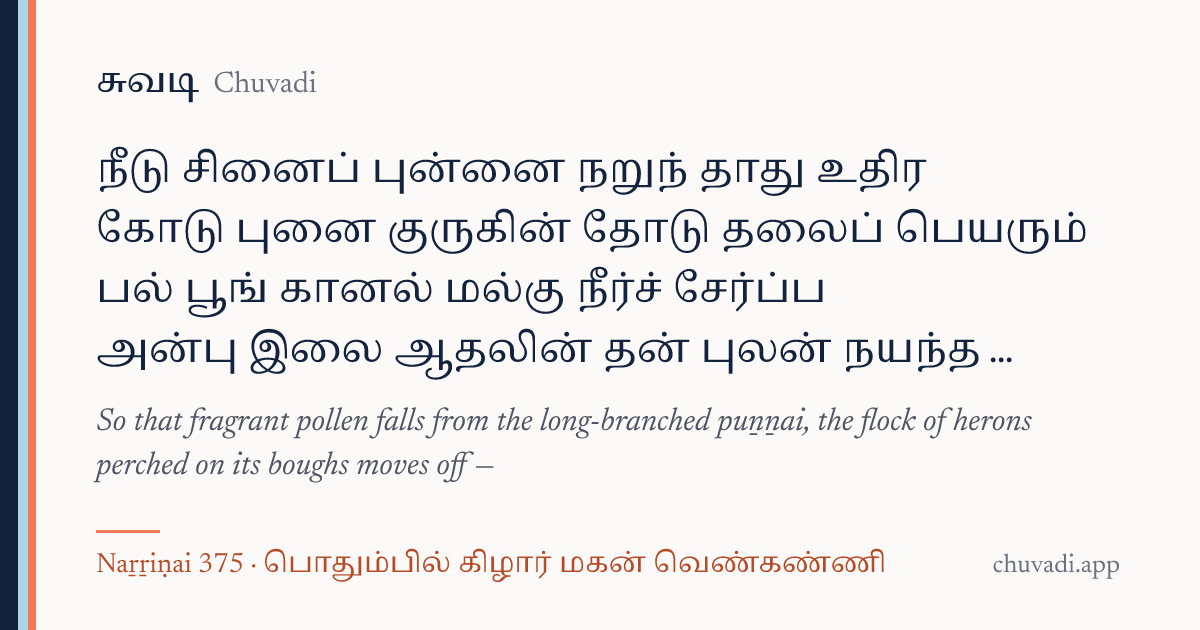
- So that fragrant pollen falls from the long-branched puṉṉai,
- the flock of herons perched on its boughs moves off —
- O lord of the brimming-water shore with its grove of many flowers,
- since you have no love: so that I, who prized her heart's wishes,
- and her modesty too, and she of the fine brow, may be glad,
- if you would come, that would be good; where the great sea,
- at nightfall, when the moon has moved across, its strong waves
- come on as though they were hurling themselves,
- to our home town with its gardens on the high dunes.
What the poem says
The heroine's friend speaks to the hero. He has gone on visiting the heroine in secret for a long time without marrying her, and the friend, seeing how she suffers, presses him to come in the open and ask for her hand (varaivu kaṭāvutal).
The friend is blunt: 'you have no love.' If he would only come properly, to the town by the sea where waves pound the high dunes at night, three would be glad together: the friend herself, the heroine's modesty (nāṇ), which is strained by secret meetings, and the heroine. Treating modesty as a separate party to be pleased is a neat touch.
The opening image of herons shaking pollen from the puṉṉai as they lift off may carry a hint: a casual departure scatters what is precious. The night sea, its waves rising under the moon, conveys both the restlessness of the heroine's waiting and the danger of night visits. Line 4 is difficult; taṉ pulaṉ nayanta may mean 'who cherished her heart' or 'who desired her good', and the reading here is tentative.