




நற்றிணை 376
பாடல் · The poem
Tap a word to see where else it occurs.
பொருள் · Meaning in TamilAI
முறம் போன்ற காதுகளையுடைய யானையின் பெரிய துதிக்கையைப் போல வளைந்து, தாழ்ந்த கதிர்களையும் பசிய தாள்களையும் உடைய செந்தினையை, மலைநாட்டுத் தலைவனின் கொடையைப் பலர் பகிர்ந்து உண்பது போல, உங்கள் சுற்றத்தோடு கூடி உண்ணும் வளைந்த அலகையுடைய பச்சைக் கிளிக் கூட்டமே! குல்லை, குளவி, கூதளம், குவளை ஆகியவற்றை இல்லம் பூவோடு கலந்து தொடுத்த குளிர்ந்த கண்ணியை அணிந்தவன்; கட்டமைந்த வில்லை உடையவன்; அசோகத் தளிரோடு தோன்றுபவன்; நல்ல மாலை அணிந்த மார்பை உடையவன். அவனைக் கண்டால், அவன் நன்கு அறியும்படி சிறிது சொல்லுங்கள்: இனிமேல், துன்பத்தின் மேல் துன்பம் தருவது போல வருத்தி, அறுவடையான வெறும் புனத்தைக் காக்க அறமில்லாத எம் அன்னை அவளை அனுப்பமாட்டாள் என்பதை நீங்கள் அறியவில்லையா?
குறிஞ்சித் திணை; கிளிகளிடம் சொல்வது போலத் தலைவன் கேட்கும்படி, தலைவியின் இற்செறிப்பைத் தோழி அறிவித்தது. புனக்காவல் முடிந்தால் சந்திப்பு நின்றுவிடும்; ஆகவே விரைந்து மணம் பேச வேண்டும் என்பது உட்கருத்து. பத்தாம் அடியில் அணங்கு என்ற சொல் மும்முறை வருவதன் சரியான பொருள் உறுதியாகத் தெரியவில்லை.
ஆங்கிலம் · English translationAI
Translation
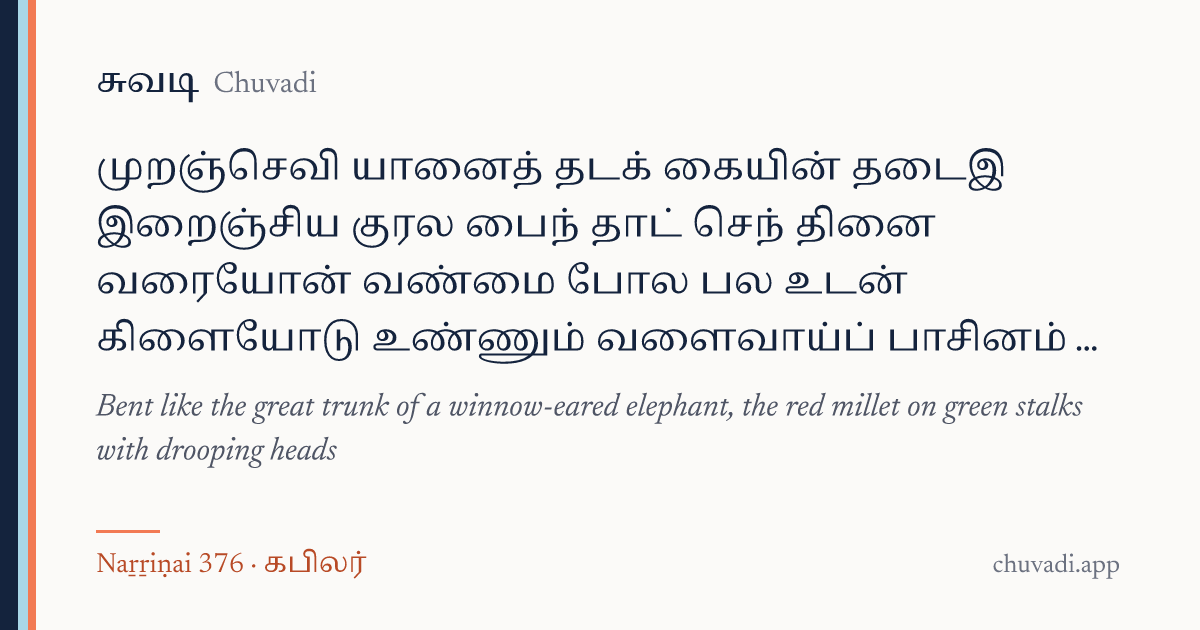
- Bent like the great trunk of a winnow-eared elephant,
- the red millet on green stalks with drooping heads
- you eat, like the bounty of the mountain lord, many together
- with your kin, O green flock with curving beaks:
- kullai, kuḷavi, kūtaḷam, kuvaḷai,
- woven with illam, he wears a cool, fresh chaplet,
- he with the well-bound bow, who appears with sprays of ceyalai,
- the man with a fine garland on his chest — if you see him, a little,
- tell him clearly so he knows it: that afterwards,
- tormenting like one torment upon another,
- she will not let her go to guard the emptied field —
- did you not know it? — our mother, who has no justice.
What the poem says
The heroine's friend addresses the parrots in the millet field, but the hero is within earshot, and the colophon says her real aim is to tell him that the heroine is to be confined at home. Speaking to birds or other creatures so that a hidden listener will hear is a common device of kuṟiñci.
The millet heads hang like an elephant's curled trunk, and the parrots feast on them in a crowd, just as many people share the generosity of the mountain chieftain. Then the friend describes the hero for the birds, by his chaplet of five hill-flowers (kullai, kuḷavi, kūtaḷam, kuvaḷai, illam), his bow and his garland, so that they may recognise him and give him the message.
The message is in the last lines. Once the field is harvested, mother will no longer send the heroine to guard it, and the secret meetings will end. Mother is called 'without justice' (aṟaṉ il), an affectionate exaggeration typical of the friend's voice. Line 10 is obscure: aṇaṅkum aṇaṅkum pōlum aṇaṅki seems to pile up the word for 'torment' or 'possessing spirit', perhaps meaning that mother afflicts them like a goddess; the exact sense is uncertain.