



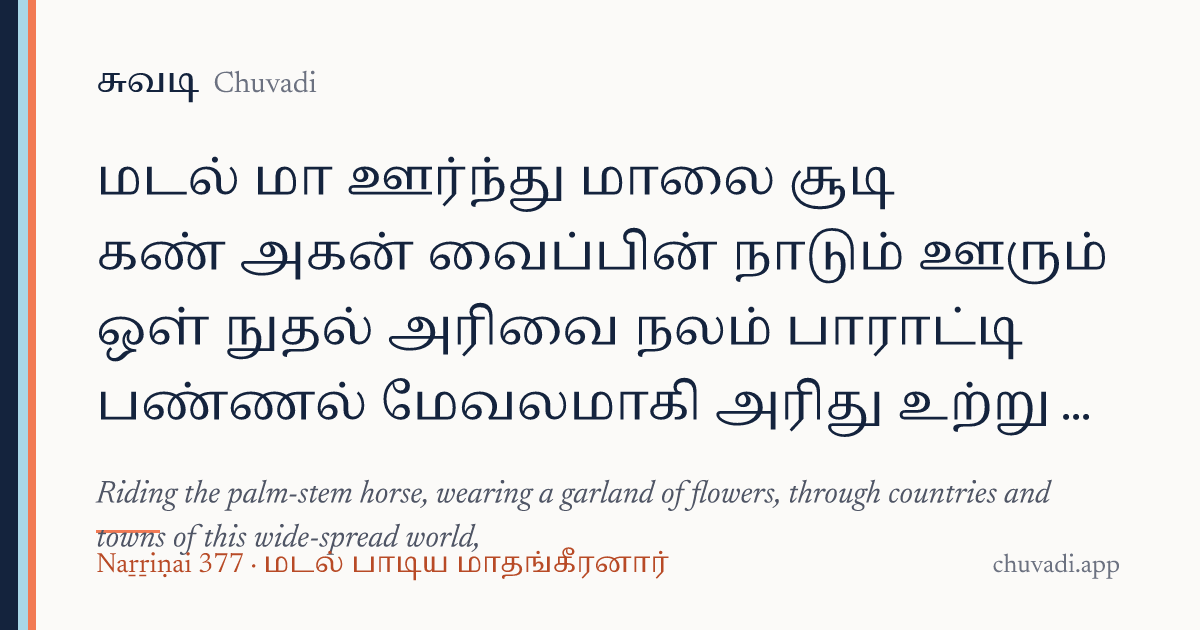

நற்றிணை 377
பாடல் · The poem
Tap a word to see where else it occurs.
பொருள் · Meaning in TamilAI
பனைமடலால் செய்த குதிரையில் ஏறி, மாலை சூடி, அகன்ற இடங்களையுடைய நாடுகளிலும் ஊர்களிலும் ஒளிரும் நெற்றியையுடைய அவளுடைய அழகைப் புகழ்ந்து திரிவதை நான் விரும்பவில்லை. ஆயினும், அரிய துன்பத்தை அடைந்து, அதுவே நோயாக மாறி நான் இறந்துபோவேனோ? அகன்ற கரிய வானத்தில் பாம்பு விழுங்கிக் குறைத்த, பசிய கதிர்களையுடைய நிலவின் பரந்த ஒளியைப் போல, சுருண்ட கூந்தல் சேர்ந்த அவளுடைய அழகிய நெற்றி என்னைக் கடிந்து மெலியச் செய்யும் நோயாக ஆகிவிட்டது.
குறிஞ்சித் திணை; தோழியால் சேட்படுக்கப்பட்டுத் தாங்கமாட்டாத தலைவன், தோழி கேட்கும்படி தனக்குள் சொன்னது. மடல் ஏறுதல் என்பது விரும்பிய பெண்ணை மணக்க மறுக்கப்பட்டவன் பனைமடல் குதிரையில் ஏறி ஊரெல்லாம் அவள் பெயரைச் சொல்லித் திரியும் வழக்கம்; அதைச் செய்வேன் என்று மறைமுகமாக அச்சுறுத்துகிறான். கூந்தல் சூழ்ந்த நெற்றி, பாம்பு பற்றிய நிலவாக உவமிக்கப்படுகிறது. நான்காம் அடியின் பொருளை மறுப்பாகக் கொண்டோம்; அது உறுதியானது அன்று.
ஆங்கிலம் · English translationAI
Translation
- Riding the palm-stem horse, wearing a garland of flowers,
- through countries and towns of this wide-spread world,
- proclaiming the beauty of the bright-browed girl —
- I have had no wish to do it; and yet, suffering hard,
- must I perish with this as my sickness?
- In the wide dark sky, bitten into by the serpent,
- like the broad moonlight of the fresh-rayed moon,
- her lovely brow, where the curling locks gather,
- has become a sickness that chides me and wears me down.
What the poem says
The hero speaks to himself, but loud enough for the heroine's friend to hear. She has kept him at a distance (cēṭpaṭuttal), refusing to help him meet the heroine, and he can no longer bear it. He raises the threat of maṭal: the desperate public act in which a rejected lover rides a 'horse' made of palmyra stems, wearing a garland of erukkam or other flowers, and parades the beloved's name through the streets to shame her family into giving her to him.
He says he has no wish to do this, but asks whether he must simply die of his love instead. The last lines name the cause. Her brow, framed by her curling hair, is like the moon partly swallowed by the serpent in an eclipse, with broad light still pouring from it. The image joins beauty and affliction: the brow is bright, the dark hair encroaches on it like the eclipse, and that beauty 'rebukes' him and makes him waste.
The poet's name, Maṭal pāṭiya Mātaṅkīraṉār, means 'Mātaṅkīraṉār who sang of the maṭal', apparently from this poem. Line 4 is compressed; paṇṇal mēvalam ākī is read here as a negative, 'not wishing to do it', which suits the following question.