




நற்றிணை 379
பாடல் · The poem
Tap a word to see where else it occurs.
பொருள் · Meaning in TamilAI
சிறிய தலையையுடைய பெண்குரங்கின் அடங்காத வலிய குட்டி, குன்றை ஒட்டிய முற்றத்தை விட்டுப் போகாமல், நெருப்பு எரிவது போல நெருங்கிய பூங்கொத்துகளையுடைய வேங்கை மரத்தின் தாழ்ந்த கிளையைப் பற்றிக்கொண்டு, அவள் கையில் இருந்த தேன் கலந்த இனிய பாலைப் பறித்துக்கொண்டது. அதனால் மலைநாட்டுப் பெண்ணின் கண்கள், மை தீட்டிய அழகு சிதையும்படி அழுது, தேர்க்கொடை மிக்க சோழர்களின் குடந்தை நகர வாயிலில், மழைநீர் நிறைந்த அகழியில் புதிதாக மலர்ந்து மழையில் நனைந்த நீலமலர்களைப் போல் ஆயின. அவள் தன் அழகிய வயிற்றில் ஓயாமல் அடித்துக்கொண்டதால், அவளுடைய விரல்கள், அசையும் மேகங்கள் தவழும் உயர்ந்த சிகரங்களையுடைய பொதியில் மலையின் ஓங்கிய கரிய சாரலில் பூத்த செழுமையான காந்தள் மொட்டுகளைப் போலச் சிவந்துவிட்டன.
குறிஞ்சித் திணை; தோழி தலைவனிடம் தலைவியின் மடமையைக் கூறியது; காவல் மிகுந்தபோது தலைவி தோழிக்குக் கூறியதாகவும் கொள்ளலாம். குரங்கு பாலைப் பறித்ததற்குக் குழந்தை போல அழும் இவள் இன்னும் உலகியல் அறியாதவள்; ஆகவே விரைவில் மணந்து காப்பாயாக என்பது குறிப்பு. குடந்தை இன்றைய கும்பகோணம் என்பது மரபான கருத்து.
ஆங்கிலம் · English translationAI
Translation
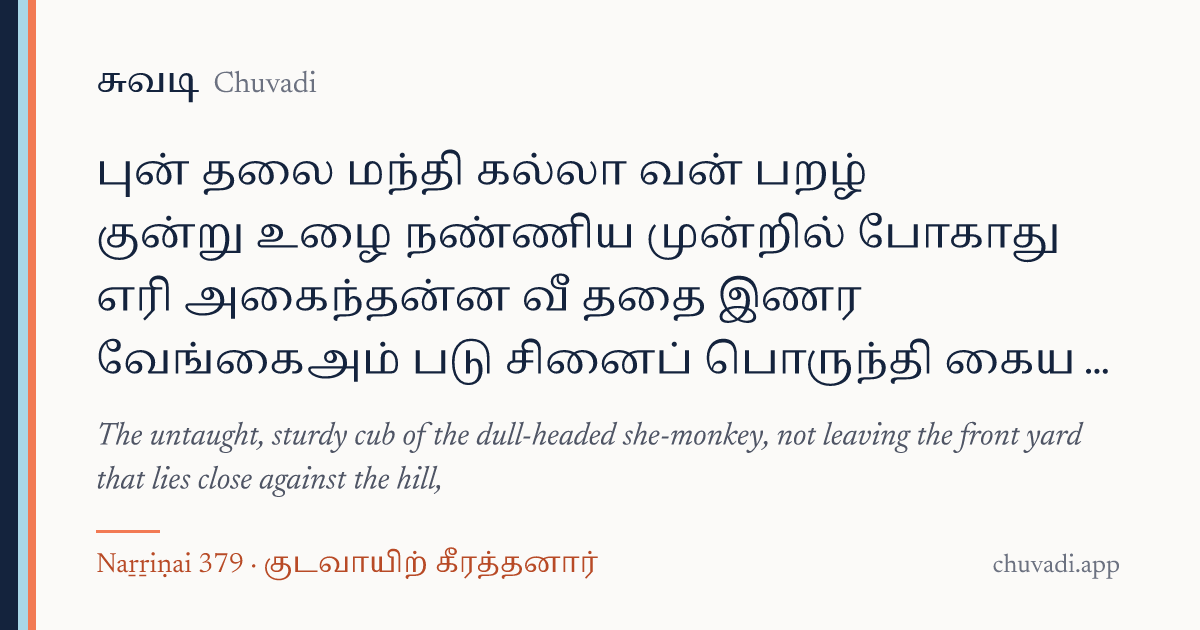
- The untaught, sturdy cub of the dull-headed she-monkey,
- not leaving the front yard that lies close against the hill,
- with clusters thick with flowers like blazing fire,
- clinging to a low branch of the vēṅkai, from her hands
- snatched the sweet milk mixed with honey, and the hill-girl's
- eyes, weeping till their painted beauty was spoiled,
- like, at Kuṭantaivāyil of the Cōḻas generous with chariots,
- those opening fresh in the rain-filled moat,
- the rain-struck blue lilies — so they were; and her fingers,
- as she beat her lovely belly again and again,
- like, on high-peaked Potiyil where drifting clouds creep,
- blooming on its tall dark slopes,
- the plump buds of kāntaḷ — so they reddened.
What the poem says
The first colophon says the friend speaks to the hero about the heroine's innocence (maṭamai); the second makes it the heroine speaking to her friend when the watch on her has grown too strict. On the first reading, the friend tells a small story to show how childlike the girl still is.
A young monkey, perched on a flowering vēṅkai by the house, snatched the bowl of milk and honey from the hill-girl's hands. She wept like a child, so hard that the painted lines around her eyes were smudged. Her eyes were like blue lilies (nīlam) beaten by rain in the moat of Kuṭantai, a Cōḻa town; and as she beat her belly in her grief, her fingers turned as red as plump kāntaḷ buds on Mount Potiyil.
The two similes, one from the Cōḻa plains and one from the southern Potiyil mountain, give an ordinary tantrum an extravagant beauty, and the humour is gentle. The implied message to the hero is that she is too young and unworldly to be kept in secret; he should marry her and protect her. Kuṭantai is traditionally identified with modern Kumbakonam. Potiyil is the mountain of the far south, associated with the Pāṇṭiya country.