




நற்றிணை 380
பாடல் · The poem
Tap a word to see where else it occurs.
பொருள் · Meaning in TamilAI
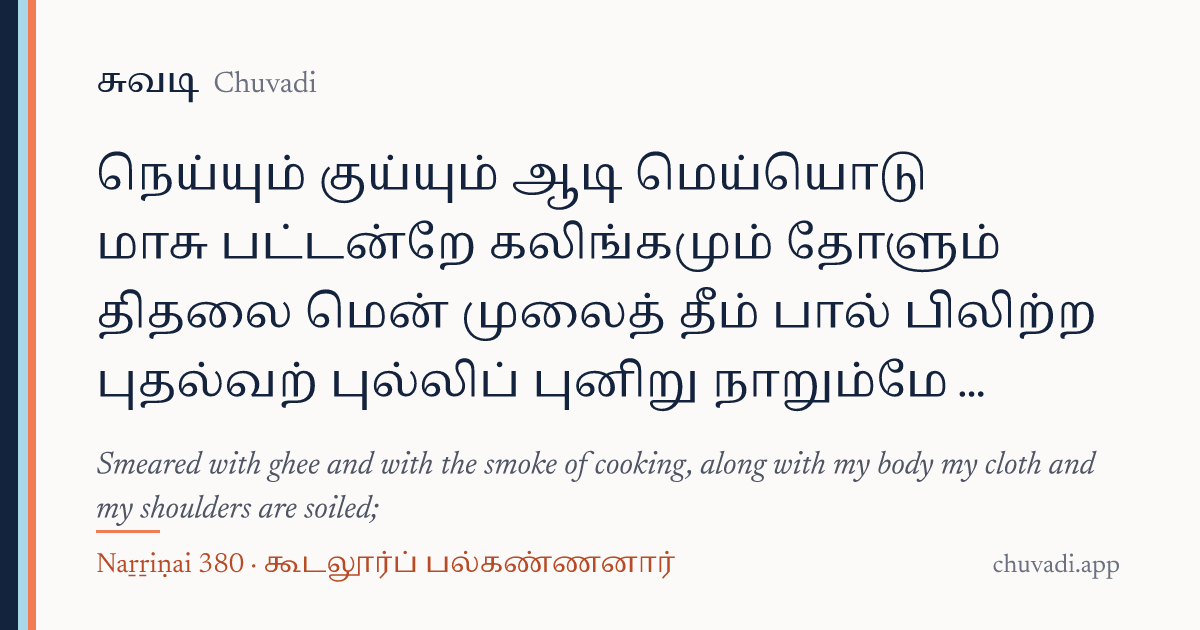
நெய்யிலும் தாளிப்புப் புகையிலும் தோய்ந்து, என் உடலோடு என் ஆடையும் தோள்களும் அழுக்கடைந்துவிட்டன. தேமல் படர்ந்த மென்மையான மார்புகள் இனிய பாலைச் சுரக்க, மகனை அணைத்துக்கொண்டிருப்பதால், புதிதாய்ப் பிள்ளை பெற்றவளின் மணம் என்மேல் வீசுகிறது. ஒளிரும் அணிகலன்களை அணிந்த பெண்கள் வாழும் தெருவில் காணப்படும் தேரையுடைய அவருக்கு நாங்கள் ஈடானவர்கள் அல்லோம். ஆதலால், பாணனே, பொன் போன்ற நரம்புகளையும் இனிய ஓசையையும் உடைய உன் சிறிய யாழை, நீ வல்லவனாக இருந்தாலும் இசைக்காதே; எம்மை வணங்காதே. குளிர்ந்த துறையையுடைய ஊரனாகிய உன் தலைவனை அழைத்துக்கொண்டு செல். இந்த வீட்டில் பாடுவது பொருந்தாது. நெடுநேரம் நின்றதால் குதிரைகளும் பூட்டிய நிலையில் நிற்பதை வெறுக்கும். நாங்கள் விரும்புவது எதுவும் இல்லாத இடத்தில் பயனில்லாத சொற்களைப் பேசாதே.
மருதத் திணை; பரத்தையிடம் சென்ற தலைவனுக்காகத் தூது வந்த பாணனுக்குத் தோழி வாயில் மறுத்தது. தோழி தலைவியின் குரலிலேயே பேசுகிறாள். பிள்ளை பெற்ற தாயின் எளிய நிலையையும் அணிகலன் பூண்ட பரத்தையரையும் ஒப்பிட்டு, அவருக்கு நாங்கள் ஈடல்லோம் என்பது ஏளனமான சொல். பத்து, பதினொன்றாம் அடிகளின் பொருள் சற்றுத் தெளிவில்லை.
ஆங்கிலம் · English translationAI
Translation
- Smeared with ghee and with the smoke of cooking, along with my body
- my cloth and my shoulders are soiled;
- my soft, spotted breasts spurting sweet milk,
- holding my son close, I smell of new childbirth;
- he who shows himself in the street of the women with bright jewels,
- the man of the chariot — we are no match for him; and so,
- your small lute, sweet-voiced, with strings that shine like gold,
- skilled though you are, do not play it; do not bow to us;
- take him away with you, bard, your man of the town by the cool ford;
- singing here at our house will not do; standing so long,
- even the horses will grow weary of the harness;
- do not talk nonsense where there is nothing that we want.
What the poem says
The bard has come as the hero's go-between, to win him back into his wife's house after his visits to other women. The colophon says it is the heroine's friend who refuses him entry (vāyil maṟuttal), but she speaks in the wife's voice, using 'I' and 'we' for the household.
The opening is strikingly domestic. The wife is a new mother, her clothes stained with ghee and kitchen smoke, her breasts leaking milk, smelling of childbirth as she holds her son. She sets this plainly against the bright-jewelled courtesans in whose street the hero's chariot is seen. 'We are no match for him' is said with irony, not humility.
So she tells the bard: however skilled you are, do not play your lute, do not bow and plead; take your master away; even his horses are tired of standing in harness outside. The last line dismisses the whole mission: no need to talk where we want nothing. Lines 10 and 11 are compressed, and 'singing at our house' (pāṭu maṉaip pāṭal) could also mean singing in the house where his songs are heard.