




நற்றிணை 381
பாடல் · The poem
Tap a word to see where else it occurs.
பொருள் · Meaning in TamilAI
அரிய துயரத்தை அனுபவிப்பதால், உயிரோடு இருப்பதே போதும் என்று எண்ணுகிறேன். சாவு இன்னும் வராததால், நான் இல்லாதவளும் அல்லேன். கரையை மோதிக்கொண்டு பாயும் காட்டாற்றின் இடிந்துவிழும் கரையில், வேர்கள் வெளியே தெரியும் மராமரத்தின் அழகிய தளிர்களைப் போல, ஓயாமல் நடுங்கும் நெஞ்சத்தோடு இத்துன்பத்தை நான் எப்படித் தாங்குவேன்? உயர்ந்த நடையையும் கடுமையான களிற்றுயானைகளையும் உடைய நெடுமான் அஞ்சியின், அன்புள்ள நெஞ்சத்தால் புகழ் தொலைவிலும் விளங்க, தேர்களை வாரி வழங்கும் அவனுடைய அவையைப் போல, மேகம் மழையைத் தேக்கி வைத்துக்கொண்டு இருண்டு நிற்கிறது.
முல்லைத் திணை; பிரிவில் தாங்க இயலாத தலைவி பருவம் வந்ததைக் கண்டு கூறியது. வேர் வெளிப்பட்ட மரத்தின் நடுங்கும் தளிர், நிலைகுலையும் அவள் உள்ளத்தைக் காட்டுகிறது. நெடுமான் அஞ்சி ஔவையாரைப் புரந்த அதியமான் ஆவான்; அவன் கொடையோடு மழை ஒப்பிடப்படுகிறது. முதல் அடியில் உள்ள சான்ம் என்ற சொல் வழக்கத்துக்கு மாறானது; அதன் பொருள் உறுதியாகத் தெரியவில்லை.
ஆங்கிலம் · English translationAI
Translation
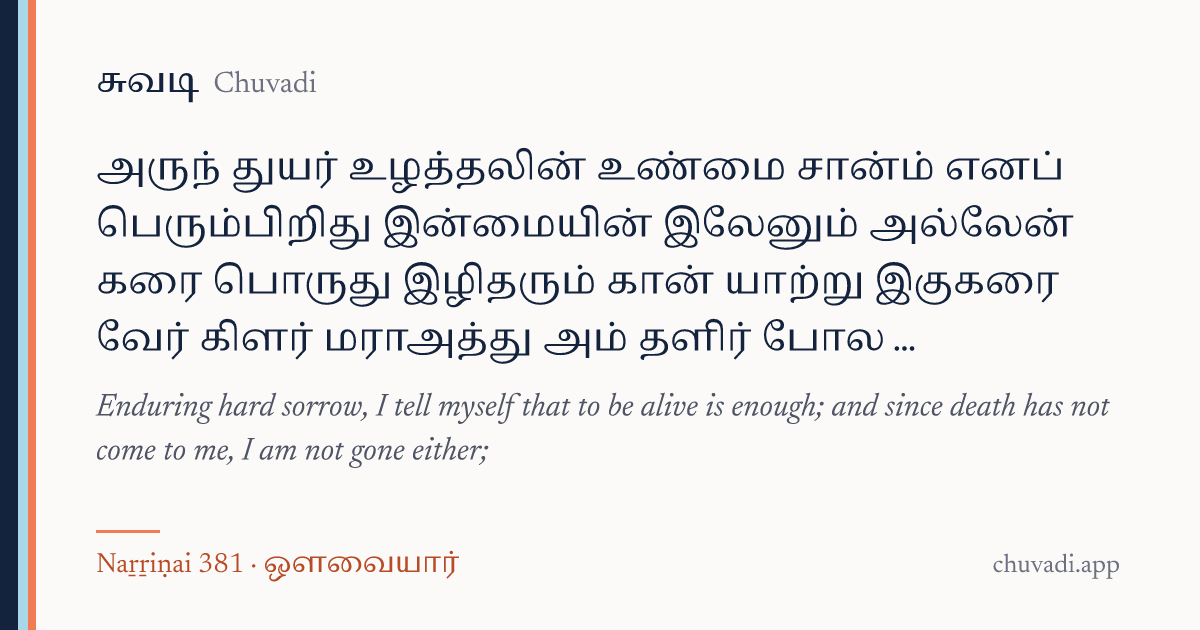
- Enduring hard sorrow, I tell myself that to be alive is enough;
- and since death has not come to me, I am not gone either;
- on the crumbling bank of a forest stream that pours down beating its banks,
- like the lovely young leaves of a marā tree whose roots stand bare,
- with a heart that never stops trembling, this distress —
- how shall I bear it? For, of lofty gait,
- with fierce bull-elephants, Neṭumāṉ Añci,
- whose kindly heart makes his fame shine far,
- like his court where chariots are flung out as gifts,
- the clouds have settled in to rain and grown dark.
What the poem says
The heroine speaks during her husband's absence, as the rainy season he promised to return by arrives. She is alive only in the sense that she has not died; her heart trembles like the young leaves of a marā tree on a riverbank that the current is eating away, its roots already exposed. The simile is exact: the tree stands, but it is losing its hold, and every leaf shakes.
The ending turns to the clouds. They have gathered and darkened, ready to pour, like the court of Neṭumāṉ Añci, where chariots are given away without stint. Generosity was often likened to rain; here the comparison is turned against the waiting woman, for the abundant rain is the sign that the season has come and he has not.
Neṭumāṉ Añci is Atiyamāṉ Neṭumāṉ Añci, the chieftain of Takaṭūr who was Auvaiyār's patron and is praised in many of her poems. The first line is uncertain: uṇmai cāṉm eṉa seems to mean 'I say existence is enough' or 'that I am still alive suffices', but the form cāṉm is unusual and the text may be damaged. Peru-piṟitu in line 2 is a known euphemism for death, 'the great other thing'.