



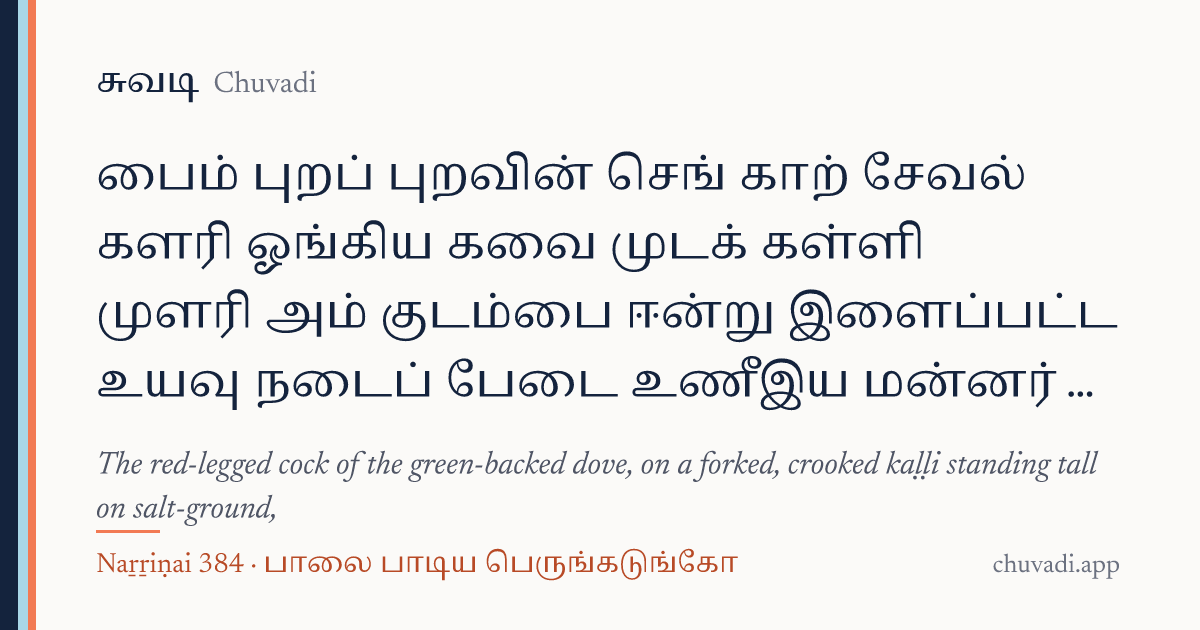

நற்றிணை 384
பாடல் · The poem
Tap a word to see where else it occurs.
பொருள் · Meaning in TamilAI
பசிய முதுகையுடைய புறாவின் சிவந்த கால்களையுடைய ஆண்புறா, உவர்நிலத்தில் உயர்ந்து வளர்ந்த கிளைத்த வளைந்த கள்ளிச்செடியில் சுள்ளிகளாலான கூட்டில் முட்டையிட்டுச் சோர்ந்து, வருந்தி நடக்கும் பெண்புறாவுக்கு உணவு ஊட்டுவதற்காக, அரசர்கள் எல்லையைக் கவர்ந்ததால் பாழான பழைய ஊர்களில் சிந்திக் கிடக்கும் நெல்லைப் பெறுகிறது. காவல் அரண் இல்லாத அத்தகைய தொலைவான நாட்டின் வழியில் மலர்ந்த, நல்ல நாளைக் காட்டும் வேங்கையின் பொன் போன்ற புதிய பூக்கள் பரவிக் கிடக்க, அவற்றின் மேல் அவள் நடப்பதை நான் கண்டேன். என் நெஞ்சே, வாழ்வாயாக, இப்போது பார்: நான் அரிய துயரத்தில் வாடியபோது, நாணத்தைக் கைவிட்டு என் நோய்க்கு மருந்து என்று சொல்லப்படும் இந்த இளம்பெண்ணை.
பாலைத் திணை; உடன்போக்கில் தலைவியோடு செல்லும் தலைவன் மகிழ்ந்து தன் நெஞ்சுக்குக் கூறியது. பாழ்நிலத்திலும் தன் இணைக்கு உணவு தேடும் புறா, தன்னை நம்பி வந்தவளைக் காக்கும் தலைவனின் அன்பைக் குறிக்கிறது. வேங்கை பூக்கும் காலம் மணத்துக்கு உரிய நல்ல காலம் என்பதால், அப்பூக்களின் மேல் அவள் நடப்பது அவர்களுடைய மணத்தை வாழ்த்துவது போல் அமைகிறது.
ஆங்கிலம் · English translationAI
Translation
- The red-legged cock of the green-backed dove,
- on a forked, crooked kaḷḷi standing tall on salt-ground,
- in a nest of twigs, for the hen grown weak from laying,
- walking in pain, to feed her, where kings
- have raided the border, gleans spilled grain in the old ruins —
- on the paths of that far, defenceless country, there had blossomed
- the gold-seeming new flowers of the vēṅkai of the auspicious day,
- scattered, as she walked over them: I saw it.
- See it now, my heart, bless you: she who, giving up shame,
- when I was suffering hard sorrow,
- was called my medicine — that innocent girl.
What the poem says
The hero speaks to his own heart as he travels with the heroine, who has eloped with him; the colophon says he is full of joy. The poem is by Pālai pāṭiya Peruṅkaṭuṅkō, 'Peruṅkaṭuṅkō who sang of pālai', a poet known for his wasteland poems.
The landscape is harsh: salt-ground, a twisted kaḷḷi (spurge), ruins of villages left empty by kings' border raids. Yet even here there is tenderness. A dove builds a nest of twigs and goes looking for spilled grain in the ruins to feed his mate, who is weak after laying. The dove's care is a mirror of the hero's own care for the young woman who has left everything to come with him.
Then the bright moment: on this desolate road the vēṅkai has scattered its golden new flowers, and she walks on them. The vēṅkai's blossoming marked the auspicious time for marriage, so the image quietly blesses their union. He tells his heart to look at her: the girl who set aside her modesty when he was suffering, and who was his 'medicine'. Naṟṟiṇai 391 is by the same poet.