




நற்றிணை 385
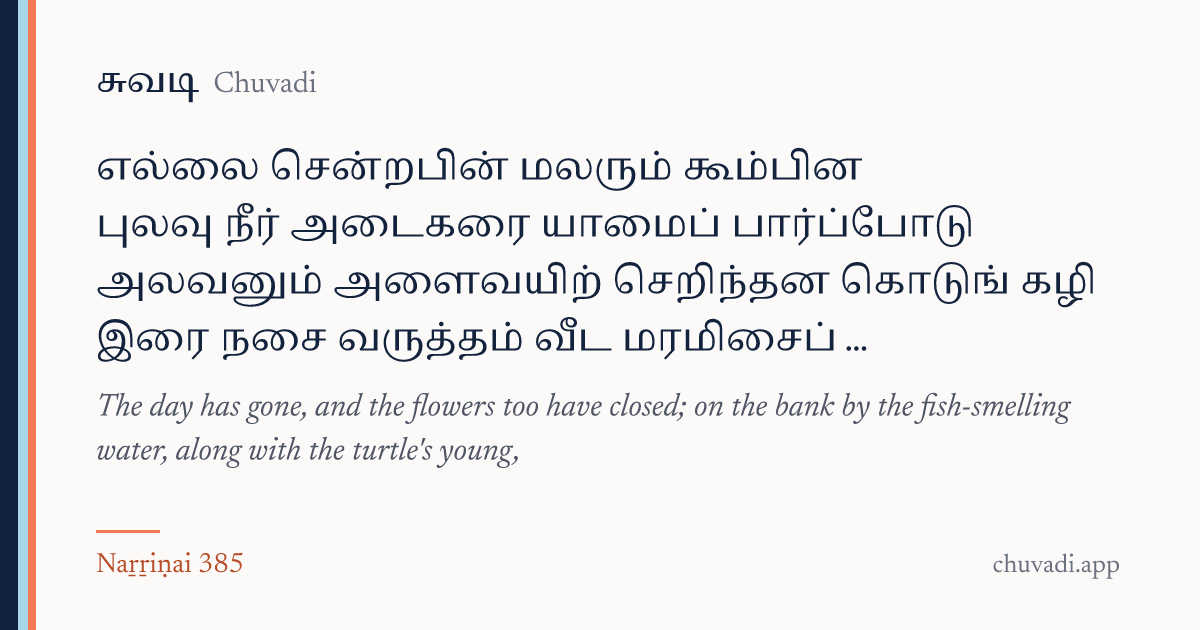
பாடல் · The poem
Tap a word to see where else it occurs.
பொருள் · Meaning in TamilAI
பகல் கழிந்த பிறகு மலர்களும் குவிந்துவிட்டன. புலால் நாற்றம் வீசும் நீர்க்கரையில், ஆமைக் குஞ்சுகளோடு நண்டுகளும் வளைகளுக்குள் நெருங்கிப் புகுந்துவிட்டன. வளைந்த உப்பங்கழியில் இரை தேடிய வருத்தம் தீர்ந்து, மரங்களின் மேல் பறவைகளும் தம் குஞ்சுகளோடு தங்கிவிட்டன. ஆதலால், இது வருவதற்கு உரிய பொழுது அன்று; அப்படியிருந்தும் நீ தனியாக வருகிறாய். மை தீட்டிய அழகிய கண்கள் கலங்க... (பாடல் இங்கே முடிவின்றி நிற்கிறது.)
நெய்தல் திணை; பாடலின் ஏழு அடிகள் மட்டுமே கிடைக்கின்றன; இறுதி அடியும் இடையில் அறுந்துவிட்டது; புலவர் பெயரும் கொளுவும் இல்லை. எல்லா உயிர்களும் தம் இருப்பிடம் சேர்ந்த மாலையில் தனியாக வரும் தலைவனைத் தோழி கடிந்துகொள்வதாகத் தோன்றுகிறது. இறுதி அடியின் பொருள் உறுதியாகத் தெரியவில்லை; பாடலின் முடிவு கிடைக்கவில்லை.
ஆங்கிலம் · English translationAI
Translation
- The day has gone, and the flowers too have closed;
- on the bank by the fish-smelling water, along with the turtle's young,
- the crabs have crowded into their holes; by the winding backwater,
- their weary hunt for food now over, up in the trees
- the birds too have settled with their young; and therefore,
- since this is not the hour, you come here alone;
- the painted beauty of her eyes, darkening with tears —
What the poem says
Only seven lines of this poem survive, and the last of them breaks off in mid-phrase; no poet or colophon is recorded. It should therefore be read as incomplete, and anything said about its ending is guesswork.
What remains is a neytal evening. The flowers have closed, turtles and crabs have gone into their holes on the bank, and the birds have finished hunting and settled in the trees with their young. Every creature is at home. Against this the speaker sets the hero, who comes 'alone' at an hour that is 'not the time'. The speaker is most likely the heroine's friend, warning him against the dangers of coming at night, or reproaching him for coming alone instead of with the formal party that would ask for the heroine in marriage.
The broken last line, eḻutu eḻil maḻaikka, seems to speak of painted eyes (or painted beauty) growing dark or wet, perhaps with tears; the rest of the sentence is lost, and the rendering here is only a tentative reading of the surviving words.