



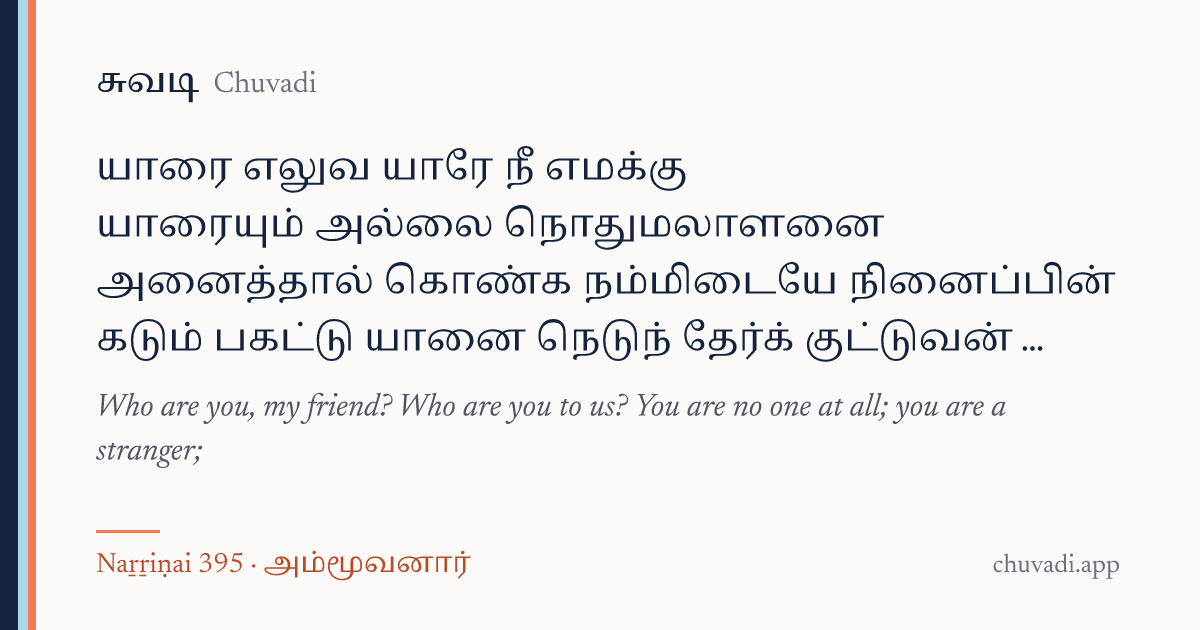

நற்றிணை 395
பாடல் · The poem
Tap a word to see where else it occurs.
பொருள் · Meaning in TamilAI
நண்பனே, நீ யார்? எமக்கு நீ யார்? நீ எமக்கு ஒருவனும் அல்லன்; அயலான். கடற்கரைத் தலைவனே, எண்ணிப் பார்த்தால் நமக்கிடையே உள்ள உறவு இவ்வளவுதான். கடுமையான களிற்றுயானைகளையும் நெடிய தேர்களையும் உடைய குட்டுவனின், அரசர்களைக் கொல்லும் போர்க்கலப்பில் முழங்கும் முரசு போல, உயர்ந்த அலைகள் ஆர்ப்பரிக்கும் கடலில் பாய்ந்து விளையாடும் பெண்கள் அணிந்து எறிந்த பல பூக்களையும் மேய்ந்து நிறைவடைந்த பசுக்கள் மேய்ச்சல் நிலத்துக்குத் திரும்பும், பேரொலியுடைய மாலைப்பொழுதையுடைய, கடலைச் சார்ந்த மாந்தை நகரைப் போன்றது எம் அழகு. அதை நீ இப்போது விரும்பவில்லை; ஆதலால் அதைத் திருப்பித் தந்துவிட்டுச் செல்.
நெய்தல் திணை; தலைவியின் அழகு அழிந்ததைச் சொல்லித் தோழி தலைவனை வரைவு கடாயது. மாந்தை சேர மன்னன் குட்டுவனின் கடற்கரை நகரம்; அதன் வளம் தலைவியின் பழைய அழகுக்கு உவமை. நலம் தந்து செல் என்பது, கவர்ந்த அழகைத் திருப்பித் தர முடியாதாதலால் மணந்துகொள்வதே வழி என்பதைக் குறிக்கும் மரபான சொல்.
ஆங்கிலம் · English translationAI
Translation
- Who are you, my friend? Who are you to us?
- You are no one at all; you are a stranger;
- that is how it is between us, lord of the shore, if one thinks of it;
- of Kuṭṭuvaṉ with fierce bull-elephants and tall chariots,
- like his drums thundering in the melee where kings are slain,
- where women leap into the towering surf and play,
- having eaten their fill of the many flowers they wore and cast off,
- the cows come home to their pastures, in the evening loud with noise,
- Māntai by the sea — like it was our
- beauty; you no longer desire it; give it back, and go.
What the poem says
The heroine's friend speaks to the hero, telling him that the heroine's beauty has been lost, and pressing him to marry her. The opening is sharp and almost cruel: 'Who are you? You are nothing to us, a stranger.' The friend speaks as though the hero, who has come and gone in secret for so long without marrying, has forfeited any claim to closeness.
The heroine's lost beauty is compared to Māntai, a seaport of the Cēra king Kuṭṭuvaṉ, a place famous for its noise and wealth. The sea there thunders like the king's war-drums, women dive and play in the surf, and the garlands they discard are eaten by cows coming home at evening. The busy, prosperous town is a measure of the beauty the heroine once had.
The last line contains a well-known convention: the lover is told to return the beauty (nalam) he took. Since he no longer desires it, he should give it back, as if it were a loan. The demand cannot be met, and the only way to restore her beauty is to marry her. 'Eluva', 'friend', is a familiar form of address, used here with heavy irony.