



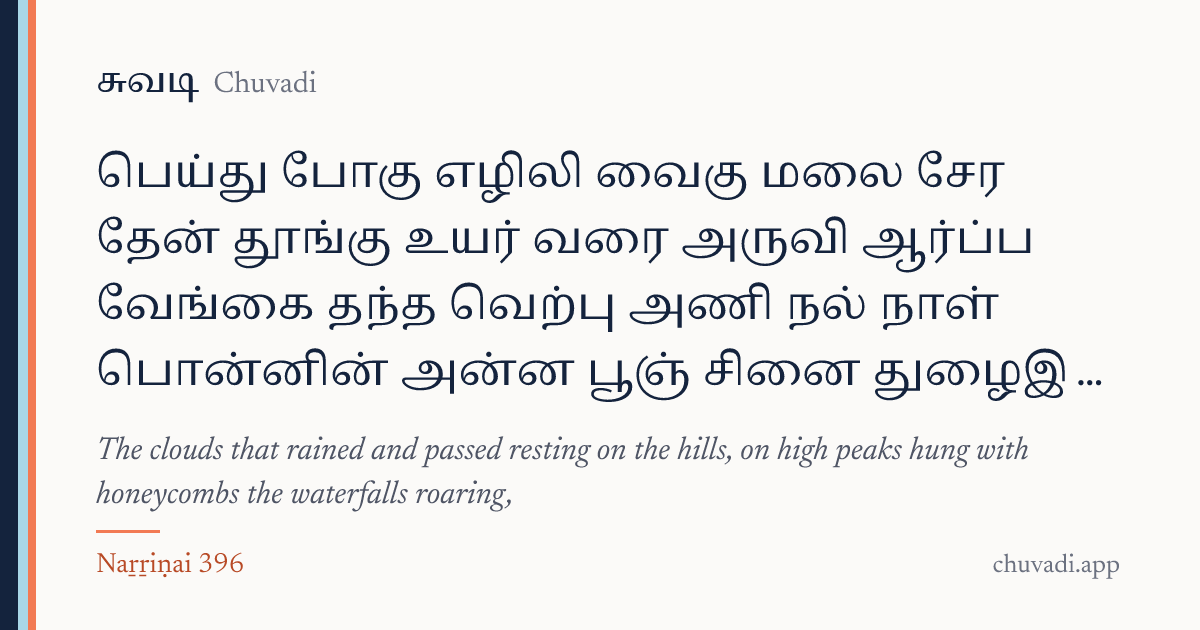

நற்றிணை 396
பாடல் · The poem
Tap a word to see where else it occurs.
பொருள் · Meaning in TamilAI
மழையைப் பெய்துவிட்டுச் செல்லும் மேகங்கள் மலைகளில் தங்கியிருக்க, தேன்கூடுகள் தொங்கும் உயர்ந்த மலைகளில் அருவிகள் முழங்க, வேங்கை மலர்கள் மலையை அழகுபடுத்திய நல்ல நாளில், பொன் போன்ற பூங்கிளைகளைத் துழாவி, மணமுள்ள மகரந்தத்தில் தோய்ந்த அழகிய மயில்கள், பாசி படிந்த பாறைகளின் மேல் கூட்டமாகக் கூடி, கதிரவனின் இளவெயிலை நுகரும் நாட்டின் தலைவனே, உன் மார்பு அவளுக்கு உண்டாக்கிய தீராத அரிய நோயை நான் யாரிடம் வருந்திச் சொல்வேன்? பல நாள் மிக இனிய சொற்களைச் சொல்லி, உனக்கு நான் காவல் என்று சொன்னாய்; ஆனால் அருள் காட்டாமல் நீ மாறிவிட்டாய்.
குறிஞ்சித் திணை; புலவர் பெயர் இல்லை. தோழி தலைவனை வரைவு கடாயதாகவும், மணச்செய்தி அறிந்தும் தலைவி ஆற்றாது கூறியதாகவும், இரவுக்குறியைத் தோழி மறுத்ததாகவும் கொளு மூன்று சூழல்களைத் தருகிறது. மழைக்குப் பின் இளவெயிலில் இன்புறும் மயில்கள், துயருறும் தலைவியோடு முரண்படுகின்றன. இறுதி அடியின் பொருள் உறுதியாகத் தெரியவில்லை.
ஆங்கிலம் · English translationAI
Translation
- The clouds that rained and passed resting on the hills,
- on high peaks hung with honeycombs the waterfalls roaring,
- on the fine day when the vēṅkai has adorned the mountain,
- stirring its flowering branches, golden as they are,
- the lovely peacock that has bathed in fragrant pollen,
- gathering in flocks on top of the mossy rocks, of the sun's
- strong rays enjoys the young warmth — man of that land,
- the unending hard sickness that your chest has caused her,
- to whom shall I tell it in my pain? For many days
- saying the most lovely words,
- you promised refuge, yet showed no grace; you have wavered.
What the poem says
No poet is recorded for this poem. The colophon gives three possible settings: the heroine's friend presses the hero to marry; or the heroine, told of the coming marriage, speaks while still in distress; or the friend refuses a night meeting. The poem reads most simply as the friend's reproach to the hero.
The landscape is a kuṟiñci morning after rain. The clouds have emptied and rest on the hills, the waterfalls roar, and the vēṅkai is in flower. Peacocks that have brushed through the golden branches, their feathers dusted with pollen, gather on the rocks to warm themselves in the early sun. The scene is one of ease and comfort after the storm.
Against this the friend sets the heroine's suffering, caused by the hero's chest, the embrace that has bound her to him. To whom can she complain? He spoke loving words for many days and promised protection, but has not shown grace. The last line is uncertain: aruḷāy can mean either 'you showed no grace' or 'be gracious', and mayaṅkiṉaiyē may mean that he wavered, or that he led her astray.